The Demise of the Alba Party
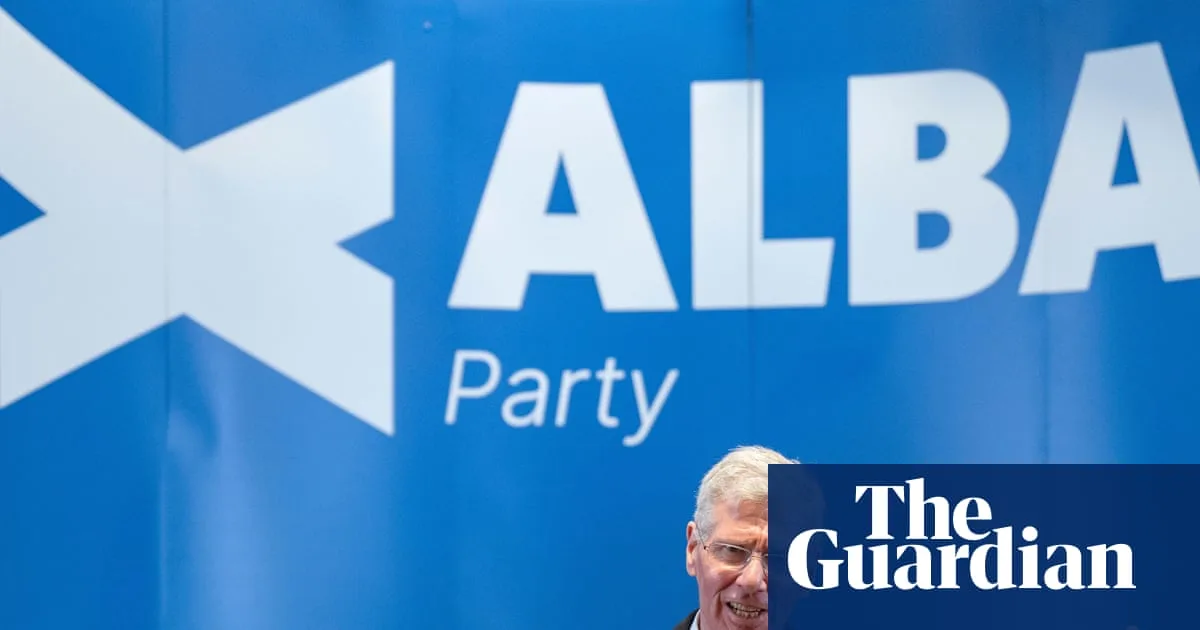
The Alba Party is being formally wound up, marking the end of what was essentially a bitter vanity project for former First Minister Alex Salmond. Its brief moment in the political spotlight – achieving just 1.7 per cent of the regional list vote in the 2021 Holyrood election – now seems as distant and forgotten as the works of Ozymandias.
As Monty Python might have eulogised, the party is now bereft of life. It rests in peace, having pushed up the daisies, kicked the bucket, shuffled off this mortal coil, run down the curtain, and joined the choir invisible. This is, in every sense, an ex-parrot of a political movement.
A Project Doomed from the Start
Launched in February 2021, Alba laboured under three distinct disadvantages from its inception. Few people even pronounced its name correctly – the Gaelic word for Scotland is the trisyllabic Al-uh-ba. The nation was still enduring a sweaty-masked global pandemic. Most crucially, the stardust that Salmond had once effortlessly sprinkled had completely forsaken him.
In hindsight, Alba was toast the moment it was born. The cunning plan had been to rack up pro-independence MSPs on the regional-list vote at Holyrood, a strategy the SNP – given its overwhelming advantage in constituency elections – now struggles to execute. It failed spectacularly because most voters wearily longed for Salmond to simply get off the stage, and the second preference of fanatical Nationalist voters was already firmly engrained for the Scottish Greens.
A History of Political Ex-Parrots
But Alba was hardly the first ex-parrot in the inglorious history of party-political ventures. Sir Oswald Mosley’s 1931 New Party proved such a useless chocolate teapot that he soon donned black breeches, invented the British Union of Fascists, and spent most of Hitler’s war in prison.
Jim Sillars, then Labour MP for South Ayrshire, spurned the offer of a junior ministry in 1976 – frustrated at his Government’s fumbling of devolution – and launched the breakaway ‘Scottish Labour Party’. The SLP won all of three seats in the 1977 district council elections, was wrecked by International Marxist Group entryism, and secured just 583 votes at the 1978 Glasgow Garscadden by-election. The party was formally wound up in 1981.
Other Notable Failures
The whitened bones of crazed electoral ventures are scattered across the political landscape. Former Labour MP and daytime TV host Robert Kilroy-Silk won election as a UKIP MEP in 2004, but within ten minutes was hollering for the party leadership. UKIP did not share his enthusiasm, and in January 2005, Kilroy-Silk repudiated the party and founded his own – Veritas. It would, he preened, take the fight to the ‘supercilious metropolitan elite’. It did not trouble the engravers: at that year’s General Election, contesting the Erewash constituency, Kilroy-Silk won just 5.8 per cent of the poll.
The Social Democratic Party, founded in 1981 by the ‘Gang of Four’ with high hopes and vertiginous opinion poll ratings, even touched 50 per cent in popular support in December 1981. But it felt very much like the confection of London journalists. In sociologist Ralf Dahrendorf’s damning phrase, it was ‘the party for a better yesterday’. The SDP entered the 1983 General Election with 29 MPs and emerged with just six. By 1990, it was beaten at the Bootle by-election by Labour, the Tories, the Liberal Democrats, the continuing Liberal Party, the Green Party, and even the Monster Raving Loony Party.
More Recent Scottish Failures
Then there was RISE – Scotland’s Left Alliance, whipped up expressly to contest the 2016 Scottish parliament election. RISE, um, didn’t. It is remembered, if at all, for the risible Cat Boyd, then a columnist for The National newspaper, who giggled her way through a BBC Question Time appearance in November 2016. Pressed by David Dimbleby as to what box she had ticked in the EU referendum, Boyd simpered, ‘I didn’t actually vote. I abstained…’ As one aghast audience member howled back, ‘How can you sit there and talk about it if you didn’t even vote?’ That May, including her, RISE had taken just 1 per cent of the Glasgow vote at the Holyrood election.
The formal winding up of the Alba Party simply adds another name to this long and undistinguished list of political ventures that promised much but delivered little, ultimately becoming footnotes in the complex history of British and Scottish politics.