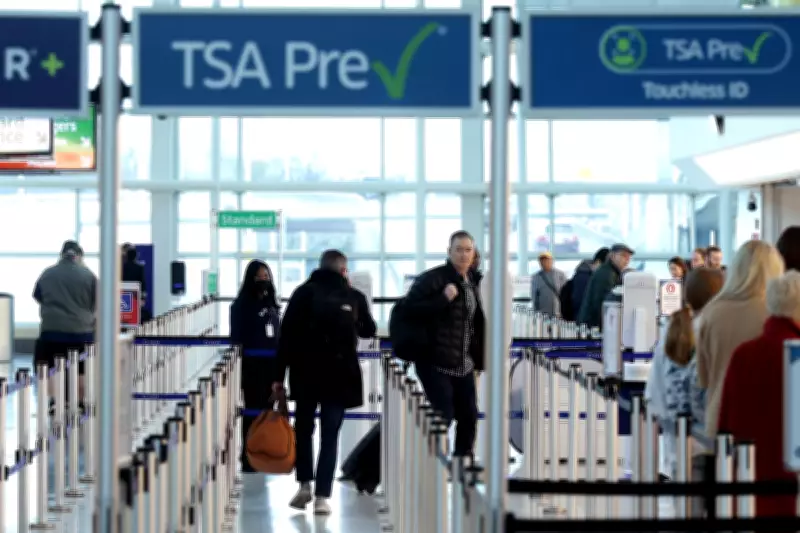
Airports Mobilise Support for Unpaid TSA Screeners as Funding Lapse Continues
Airports throughout the United States are stepping up to provide critical assistance to Transportation Security Administration (TSA) screeners, who are confronting their second period without pay within just six months. This financial hardship stems from a congressional freeze on Department of Homeland Security (DHS) funding, which has now extended to five weeks. In response, airports are coordinating food drives and accepting various donations to aid these essential federal workers.
Mounting Financial Strain on Federal Employees
Approximately 50,000 TSA officers are reportedly just six days away from missing a second full paycheck. Many are still struggling with debts accumulated during last year's 43-day government shutdown. Despite this severe financial pressure, employees are being compelled to continue working, which has led to noticeably extended security screening times at several major airports.
Kimberly Kraynak-Lambert, a trustee for the Pittsburgh chapter of the American Federation of Government Employees (AFGE) union, emphasised the cumulative toll on workers. "The 43-day shutdown in the fall meant a lot of TSA officers didn't get paid for 50 days. They haven't recovered from that, and it was only two or three months ago," she stated, highlighting the precarious situation.

Airport Initiatives and Community Support
Airport authorities and local officials are urgently mobilising to help TSA staff meet basic needs, aiming to prevent a sharp increase in absences among screeners, who earn an average annual salary of $61,000 according to federal data. Rebecca Wolf, president of AFGE Local 1127 representing officers at 47 airports across western states, revealed that many workers are resorting to side jobs like Amazon deliveries or driving for ride-sharing services to make ends meet.
"Many have applied for food stamps within their states," Wolf reported. "I have officers in one state who are sleeping in their cars, and one has already been evicted." The union is actively alerting members nationwide to available food drives and free grocery pantries.
Specific airport initiatives include:
- Minneapolis-St. Paul and Phoenix airports accepting donations of gasoline gift cards, food, and essential items like baby goods.
- Seattle-Tacoma International Airport opening a dedicated food pantry for workers.
- Dallas Fort Worth International Airport supervisors delivering food directly to security checkpoints twice weekly.
- Atlanta's Hartsfield-Jackson Airport providing vouchers for one free meal per shift, along with free parking and public transport passes.
Atlanta Mayor Andre Dickens acknowledged the screeners' dedication in a statement, noting they "continue to show up every day to protect millions of travelers, even as they face uncertainty at home."
Political Deadlock and Workforce Impact
The funding impasse remains unresolved. Democrats in Congress agreed in February to fund most government operations but withheld DHS funds following high-profile killings of two U.S. residents in Minnesota by immigration authorities. Senate Majority Leader John Thune indicated on Friday that a bipartisan group of senators has narrowed the remaining issues in DHS funding talks, though a final deal's timing is uncertain.
Everett Kelley, national president of the AFGE, condemned the situation: "A Transportation Security Officer selling plasma to keep the lights on is unconscionable. Tens of thousands of families turning to food banks because Congress refuses to do its job is a national disgrace."
The crisis is having tangible operational impacts. Officials warn that smaller U.S. airports may face closure due to security screener shortages. According to DHS data, 366 TSA officers have resigned since the shutdown began. Workers seeking leniency from creditors by presenting DHS letters requesting fee waivers or payment deferrals are finding less sympathy this time, noted Kraynak-Lambert. Union officials also report that workers calling in sick must now provide a doctor's note as proof.

Cathy Creighton, director at Cornell University's School of Industrial and Labor Relations, warned of lasting consequences: "We can expect TSA job shortages to continue and grow as a result of the shabby treatment these workers have endured." As airports and communities rally to support unpaid screeners, the broader political stalemate over DHS funding shows no immediate signs of resolution, leaving thousands of federal employees in a state of prolonged financial insecurity.