Louisiana Republican leadership has suspended the upcoming primary elections for six House seats after the Supreme Court ruled the state must redraw its congressional map, according to a report. Governor Jeff Landry, appointed by President Donald Trump as special envoy to Greenland, announced the decision on Thursday, just two days before early voting was set to begin for the May 16 primaries, despite overseas ballots already being mailed.
Governor's Statement
In a joint statement with Attorney General Liz Murrill, Landry said: "Yesterday's historic Supreme Court victory for Louisiana has an immediate consequence for the State. The Supreme Court previously stayed an injunction against the State's enforcement of the current Congressional map. By the Court's order, however, that stay automatically terminated with yesterday's decision. Accordingly, the State is currently enjoined from carrying out congressional elections under the current map. We are working together with the Legislature and the Secretary of State's office to develop a path forward."
Supreme Court Ruling
The move follows the Supreme Court's ruling on Wednesday that the creation of a second Black-majority district was an "unconstitutional racial gerrymander." The decision could benefit Republicans in upcoming elections. Louisiana currently has four Republican and two Democratic House representatives.
Democratic Criticism
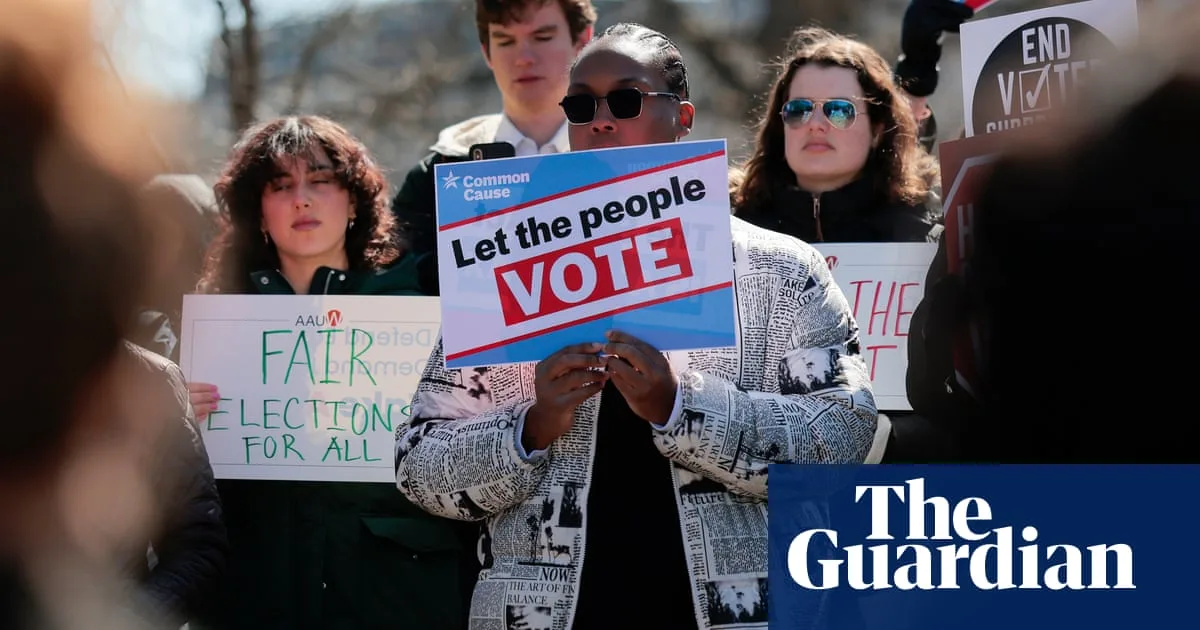
Democrats have criticized the suspension as legally questionable. State Senator Royce Duplessis told the Louisiana Illuminator: "Legally, I don't believe they can do that. But in terms of fairness, I believe that it is absolutely wrong for them to even be thinking about undoing the election that has already been done." Utah Democratic State Senator Nate Blouin posted on X that "suspending elections is the end of the road." Political analyst Drew Savicki accused Republicans of "openly trying to steal an election," while historian Brian Rosenwald said the move would likely be "immediately challenged" in court.
Navy veteran David Earl Williams reacted: "In Louisiana trying to suspend a primary in hopes of maybe getting 1-2 Republican seats just weeks before Election Day in 2026 is legally shaky at best. Early voting is about to begin, ballots are set, and courts generally reject last-minute changes that disrupt voters. If this isn't strictly required to comply with a ruling, it's likely to get blocked fast."
Implications for Midterms
The Supreme Court decision may affect the midterm elections by encouraging other Republican-led states to draw maps with a looser interpretation of Section 2 of the Voting Rights Act. Landry celebrated the ruling, stating: "The Supreme Court has affirmed what we have said for years: drawing districts for political reasons is the States' prerogative, not a federal civil-rights violation. Federal judges cannot force a State to engage in race-based redistricting, and plaintiffs can no longer repackage partisan disagreements as Voting Rights Act cases."






