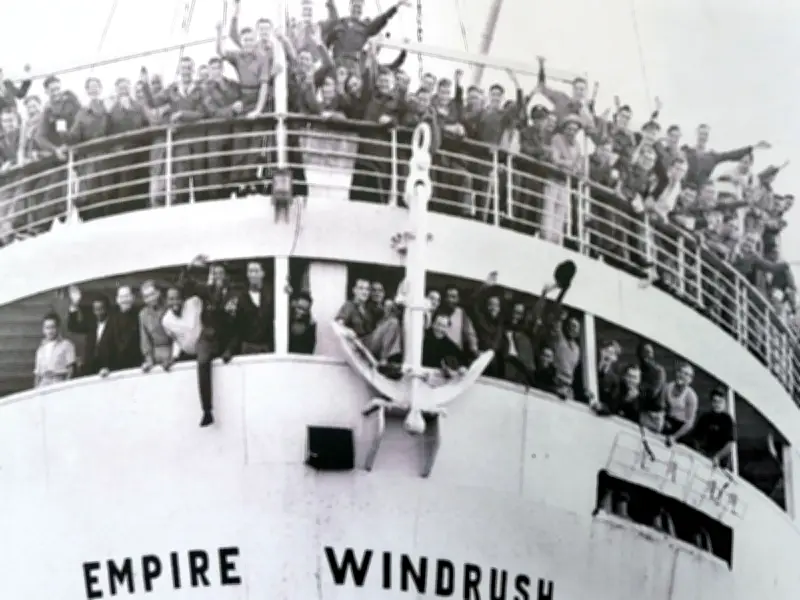
Nearly eight decades after HMT Empire Windrush arrived in Britain, thousands of victims and their families are still awaiting justice. As the UK marks Windrush Day and the 78th anniversary of the Empire Windrush’s arrival at Tilbury Docks, campaigners will gather outside Downing Street to demand ministers honour promises made to those affected by the scandal. They plan to hand in a joint petition with 38 Degrees calling for an independent authority, free legal support, a public inquiry, and automatic citizenship for survivors.
Petition and Compensation Scheme Failures
The petition, backed by more than 41,000 people, was launched after survivors teamed up with Grenfell United, Hillsborough Justice families, and other civil rights organisations to demand the Government “radically overhaul” the Windrush Compensation Scheme. A recent National Audit Office (NAO) report found that only one in three claims received a payout.
Colin McFarlane, CEO at Justice 4 Windrush, said: “Every claimant deserves fair treatment, access to independent legal support, and a compensation system they can trust. The Home Office scandal is sadly very far from being over.”

Intergenerational Impact
The effects of the scandal continue to be felt not only by members of the Windrush generation but also by their children and wider families. Ms Hamilton, from the West Midlands, said her family’s experience showed how the scandal affected those born in the UK. She said: “A lot of people don’t understand how it affects the children who are born in the UK.”
Ms Hamilton’s mother arrived from Jamaica at around age 12 and later settled in the UK. She began working at 16 after receiving her National Insurance number and didn’t encounter problems for years. But around 2006, the same documents she had always used to prove her right to work were suddenly no longer accepted. The responsibility for resolving her mother’s status fell on Ms Hamilton.
Speaking about her mother’s fears, she said: “My mum was very nervous about the process for British Citizenship because she doesn’t retain information very well. In 1995 she had a brain aneurysm; she felt like that would have put her at a deficit.”
Identity and Trauma
For Ms Hamilton, the ripple effects became impossible to ignore in 2009 when she applied for her first British passport ahead of a girls’ holiday. Born in the UK to a British father, she never imagined she would encounter problems obtaining a passport. Instead of receiving confirmation, she was told to contact the Home Office. She said: “I was kind of frustrated because I’d spent quite a lot of money on this holiday on the assumption that I should get a British passport.”
Describing the impact on her sense of identity, she said: “You basically said 'you are not a British citizen', so who am I then? As much as I’m proud of my Jamaican heritage, I can’t say I’m Jamaican because at that point, I hadn’t even been.”
Speaking about the fear that followed, Ms Hamilton said: “I didn’t feel comfortable in expressing it to anybody around us, who worked in an institution of any sort because there’s the risk factor that if that information gets into the wrong hands people can simply make a report and then we’re going to have immigration at our door.” She added: “For quite some years I actually suffered with depression for it and if I’m brutally honest I’m actually still very angry about it.”
Compensation Disparities
Ms Hamilton said her frustrations with the compensation scheme deepened when her mother, who was directly affected, received a lower payment than she did. She said: “My mum ended up getting substantially lower than I got which made no sense.”
Broader Impact on Non-Caribbean Families
One man, who asked to remain anonymous and is of Pakistani heritage, said he did not initially realise his family could be affected by the Windrush scandal because he believed it only impacted people from the Caribbean. He said: “Honestly, I was shocked that Pakistani people were even included in the Windrush scheme. I mean, I thought the Windrush was a ship from the Caribbean.”

After his father died, the family discovered his mother had never been recognised as a British citizen, despite spending more than 50 years in Britain, leaving her unable to access her late husband’s pension or her own state pension. He said: “Me and my siblings had a fear with the current government rhetoric around immigrants meant for us, what if my mum was sent back to Pakistan now? This is a person that hasn't been back for 50 years. What would she do if she had to go back to a country that she no longer would recognise? 50 years is a long time.”
Describing the emotional toll, he added: “Filling out government official forms which could result in my mum being taken away from me has been really traumatic for me.” Although his mother’s status has since been resolved, he said it came at a significant financial and emotional cost, and the family have submitted a claim to the Windrush Compensation Scheme. Speaking after his mother eventually secured citizenship, he said: “I felt like my mum was not treated as if she was a British citizen even though she’s lived here and contributed.”
Demands for Reform
The petition includes three demands: moving the Windrush Compensation Scheme out of the Home Office and placing it under an independent body, guaranteeing non-means-tested legal assistance for claimants, and adopting a “soft edge” approach to evidence that recognises the difficulty of obtaining historical documents. Ms Hamilton also hopes the scheme will be moved out of the Home Office. She added: “They shouldn’t be able to govern and create their own thing when they’re the perpetrators of why it even exists to begin with. It’s kind of like they’ve designed things in a way to fatigue people and to keep your morale down.”
Matthew McGregor, CEO of 38 Degrees, said: “It’s been 78 years to the day since HMT Empire Windrush arrived at Tilbury docks in Essex and yet still thousands of people whose families came to the UK on this ship and others like it are having to fight for justice. Enough is enough.”
Government Response
A Home Office spokesperson said: “As we celebrate Windrush Day, we recognise the immense contribution the Windrush community has made to our country, and reiterate our commitment to ensuring victims are heard, justice is sped up, and that the Windrush Compensation Scheme is run effectively. The Scheme has already paid over £127 million across 3,978 claims, and in January major reforms to the scheme came into effect, offering greater compensation for victims and faster decisions for over 75s. We have also established a £1.5 million Advocacy Support Fund, giving trusted community groups the funding they need to help people with their claims.”