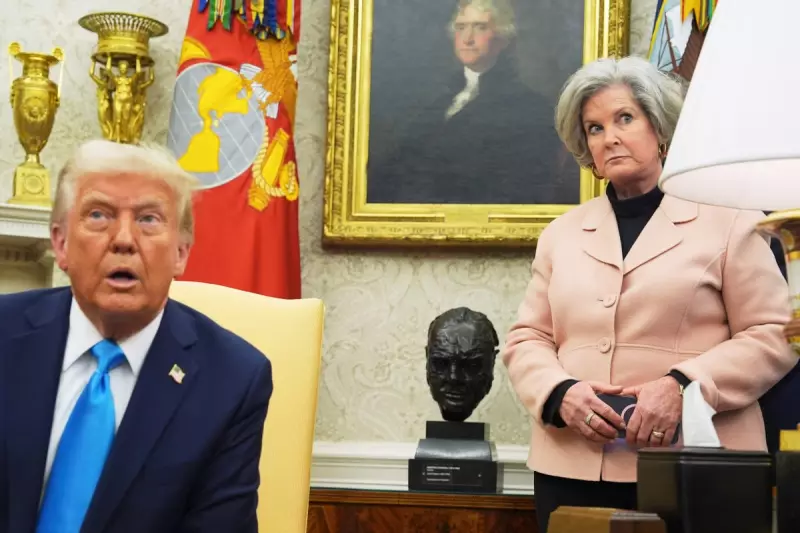
The journalist behind a blistering Vanity Fair profile of White House Chief of Staff Susie Wiles has forcefully rebutted accusations from Donald Trump's administration that the piece was a "disingenuously framed hit piece." Chris Whipple, who conducted eleven interviews with Wiles over eleven months, insists his reporting is unassailable, telling CNN: "Everything is on tape."
A Recorded Revelation: Whipple's Defence
In a remarkable television appearance, Whipple detailed the extraordinary access he was granted to one of the most powerful and private figures in modern American politics. He described the experience as a career moment "when lightning strikes," astonished by how "unguarded and freewheeling" Wiles was during their extensive conversations. Every statement published was on the record and recorded, he asserted, leaving no room for misinterpretation.
Whipple drew a direct parallel to the Watergate scandal, accusing the White House of issuing "the ultimate non-denial denial." He pointed out that despite the fury from Trump's circle, not a single factual claim in the article has been successfully challenged. The interview, featuring the notoriously press-shy Wiles—whom Whipple dubbed the "Greta Garbo" of Trump's second term—offered a rare, unfiltered glimpse into the workings of the administration.

The Explosive Claims Within the Interview
The Vanity Fair piece, published amidst considerable anticipation, contained several incendiary remarks attributed to Wiles. She reportedly characterised former President Trump as possessing "an alcoholic's personality," a comment she later claimed was taken out of context, though Whipple disputes this. Trump, who does not drink, responded by saying he'd often joked about having such a personality.
Further, Wiles labelled Vice President JD Vance a "conspiracy theorist," a claim Vance downplayed, saying they had joked about it for years. Most notably, she suggested tech billionaire Elon Musk was an "avowed" user of ketamine, alleging he was "microdosing" when he shared a controversial post comparing public sector workers to figures from totalitarian regimes. She also expressed being "aghast" at Musk's cuts to USAID.
Fallout and the White House Response
The publication ignited a immediate firestorm, prompting a fierce backlash from the Trump camp. Wiles took to X to denounce the article, arguing significant context was disregarded to paint an "overwhelmingly chaotic and negative narrative." President Trump swiftly defended his chief of staff, telling The New York Post he hadn't read the piece but believed the "facts were wrong" and criticising the interviewer as "purposely misguided." He reiterated his confidence in Wiles, calling her "fantastic."
This clash underscores the deep tensions between the Trump administration and segments of the media, highlighting a fundamental dispute over narrative and fact. With Whipple standing firmly by his recorded evidence, the controversy sets the stage for an ongoing battle over transparency and portrayal in one of the world's most scrutinised political offices.