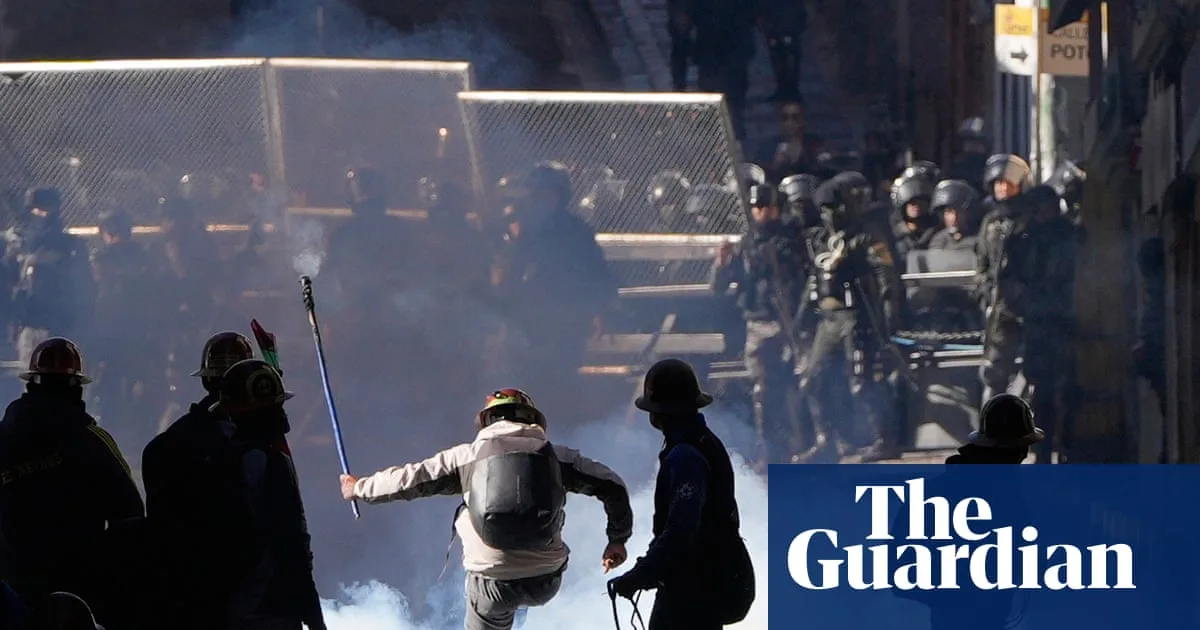
Clashes between demonstrators and police in La Paz have entered a second week, marking the most turbulent period since centre-right President Rodrigo Paz Pereira took office six months ago. The protests have left four dead, dozens injured, and over 40 roadblocks across the country, paralysing the capital.
The US has described the uprisings as an “ongoing coup d’état” against Paz Pereira. Deputy Secretary of State Christopher Landau claimed the protests were “financed by this perverse alliance between politics and organised crime across the region”. Secretary of State Marco Rubio echoed this, stating the US “will not allow criminals and drug traffickers to overthrow democratically elected leaders”.
In response, Paz Pereira announced a cabinet reshuffle and the creation of an “economic and social council” to include Indigenous groups, farmers, miners and other workers in decision-making. However, he refused to “dialogue with vandals” involved in violence. The president also ordered the expulsion of Colombia’s ambassador after Colombian President Gustavo Petro called him a “puppet of the US” and claimed Bolivia was experiencing a “popular insurrection”.

Bolivia is facing its worst economic crisis in four decades, with shortages of dollars and fuel and rising inflation. Paz Pereira’s decision to end a two-decade-long fuel subsidy has proved deeply unpopular, leading to a “dirty fuel” scandal. The foreign minister accused demonstrators of trying to “disrupt the democratic order”, while striking transport workers warned of “bloodshed” if the government did not step aside.