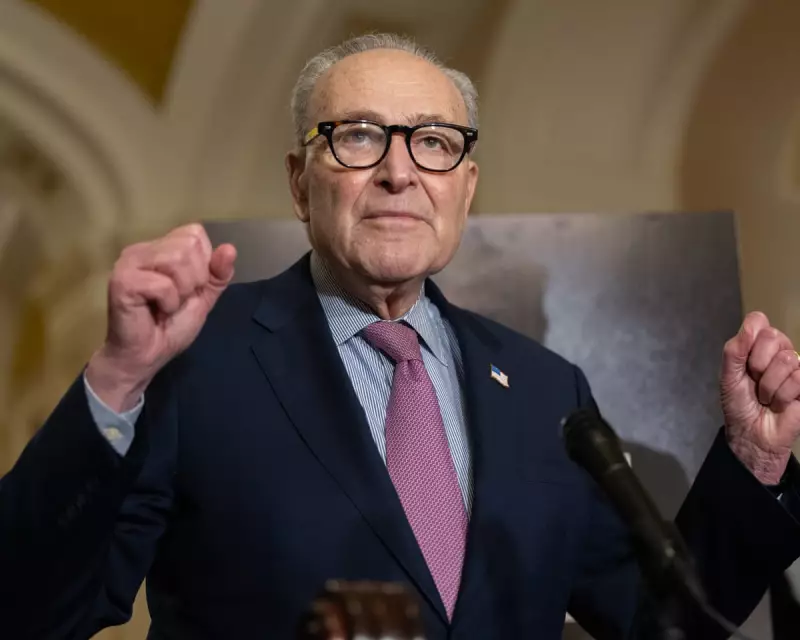
The top Democrat in the US Senate has launched a dramatic bid to take the Department of Justice to court, accusing it of breaking the law by withholding a full cache of documents related to the convicted sex offender Jeffrey Epstein.
Senate Resolution Seeks Court Order for Full Disclosure
Senate Minority Leader Chuck Schumer announced on Monday that he will introduce a resolution authorising the Senate to initiate legal action against the DoJ. The move is a direct response to the department's failure to comply with the Epstein Files Transparency Act, a law passed by Congress and signed by former President Donald Trump last month.
That legislation mandated the complete release of all Epstein-related documents by 19 December. Instead, on the Friday before the deadline, officials published what they termed a "first phase," comprising over 7,700 links to photos and court papers. This partial disclosure has been widely condemned as unlawful and insufficient.

"I am introducing a resolution directing the Senate to initiate legal action against DoJ for its blatant disregard of the law," Schumer stated. "The American people deserve full transparency, and Senate Democrats will use every tool at our disposal to ensure they get it."
Political Backlash and Defence of Partial Release
The incomplete release has triggered a fierce bipartisan backlash. Representative Ro Khanna of California, who co-authored the transparency act, has called for impeachment proceedings against Attorney General Pam Bondi for non-compliance. His sentiment was echoed by New York Representative Alexandria Ocasio-Cortez.
On the other side, Deputy Attorney General Todd Blanche defended the cautious approach. Appearing on NBC's Meet the Press, he argued the ongoing review was necessary "to protect victims," suggesting critics "apparently don't want us to protect victims."
The situation was further muddied when the DoJ temporarily removed an image featuring Donald Trump from the released files over the weekend, only to restore it on Sunday.
Legal Avenues and Obstacles for Enforcement
Legal experts outline several paths Congress could take to force compliance, though each presents significant hurdles. Neama Rahmani, a former federal prosecutor, noted that while Congress could hold officials like Bondi in contempt, any prosecution referral would go to the DoJ itself, making action unlikely.
"Congress would be more likely to file a lawsuit seeking a court order to compel document production," Rahmani suggested. Another former prosecutor, Eric Faddis, pointed to more extreme measures: Congress could vote for contempt, potentially leading to detention by the sergeant at arms, or even pursue charges of obstruction of Congress.
Faddis also highlighted impeachment as a viable course. House Minority Leader Hakeem Jeffries labelled the release "inadequate," noting the DoJ now has 15 days to provide a written explanation to Congress for withholding documents.
If Schumer's resolution passes, it will authorise the Senate to file a lawsuit seeking a judicial order to force the DoJ's hand, setting the stage for a major constitutional clash over transparency and executive accountability.