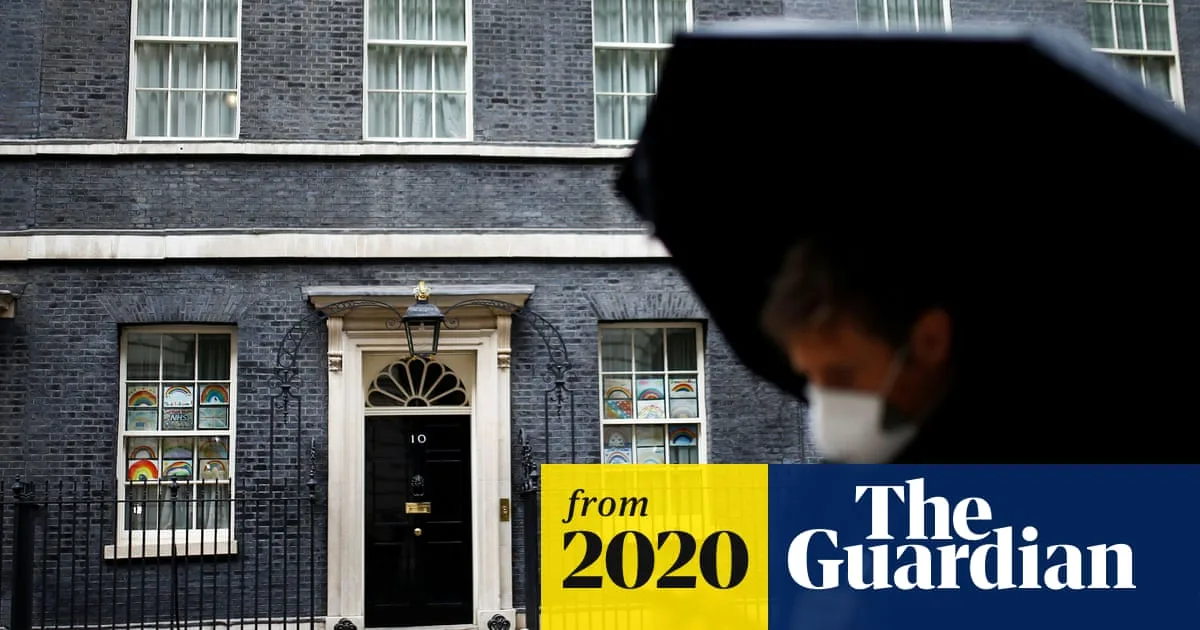
Downing Street is facing renewed demands for transparency after publishing an incomplete list of 50 experts on the Scientific Advisory Group for Emergencies (Sage), which advises the government on the coronavirus pandemic. The release followed criticism over the group's secrecy and revelations that Boris Johnson's chief political adviser, Dominic Cummings, had attended Sage meetings.
The list includes the majority of Sage members and experts from subgroups specialising in outbreak modelling, behavioural science, and infection spread. However, 24 instances of individuals requesting anonymity were recorded, with two Sage members opting not to be named. The government also excluded names of officials from Her Majesty's government who regularly attend meetings, without explanation.
Sir David King, former chief scientific adviser, described the publication as 'a good first step' but warned that political appointees like Cummings risked compromising the purity of scientific advice. He called for greater disclosure of Sage's discussions and advice, distinct from strategic input. King convened an 'independent Sage' meeting on Monday with a dozen publicly named experts.

The list reveals that about half of Sage members are scientific advisers from government departments, public health officials, and senior NHS staff, while the remainder are academics. Notable members include David Halpern, head of the Cabinet Office's 'nudge unit', Prof Venki Ramakrishnan of the Royal Society, and Prof David Spiegelhalter of Cambridge University.
Critics have raised concerns about the geographical concentration of experts, with many drawn from the 'golden triangle' of London, Oxford, and Cambridge. Prof Philip Bath of Nottingham University stressed the need for representation across the UK and for clear disclosure of each expert's speciality, including for those who chose anonymity.
James Wilsdon, professor of research policy at Sheffield University, welcomed the step but insisted that 'openness and transparency must now become the default operating mode across the Sage process'. He argued that in a crisis with uncertain facts and high stakes, the public should be treated as 'grown-ups' and engaged in wider debate.