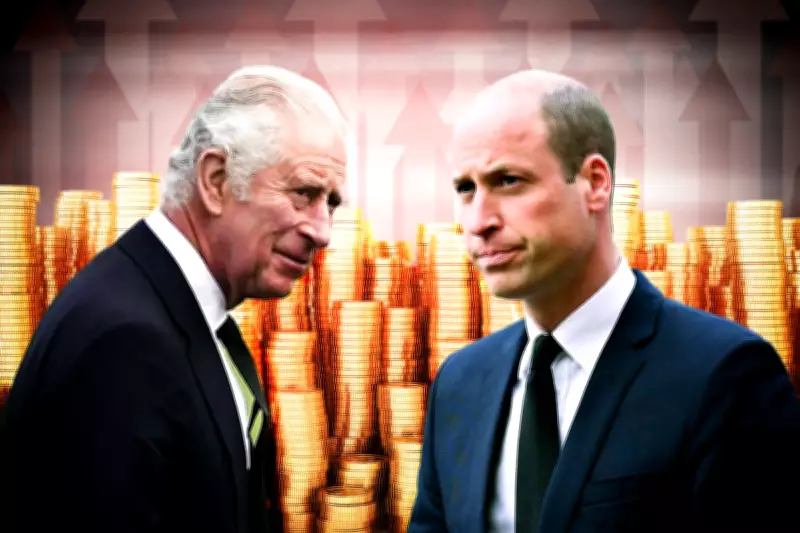
Royal Finances Face Intense Scrutiny After Andrew Scandal Demands Transparency
Following the seismic Andrew Mountbatten-Windsor scandal, Britain's royal family is confronting unprecedented demands for financial transparency. The institution, which enjoys the use of fifty residences across estates totalling two hundred and fifty thousand acres, has long maintained a life of wealth and privilege largely funded by the public purse. Yet, much of their financial affairs remain shrouded in secrecy. The time has unequivocally arrived to open the books, as the crisis prompts a fundamental reassessment of royal accountability.
A Crisis Deeper Than Diana's Passing
Life will never be the same for the British monarchy. The Andrew scandal has rocked the institution to its very core, with royal historians noting this represents more of a crisis than the passing of Princess Diana. Similar to the 2008 banking crisis, where authorities desperately sought to prevent contagion, the royal household is now keen to stop the scandal's spread. For a body that cherishes discretion and privacy, this represents a profoundly transforming and unnerving prospect.
Andrew's troubles have cast an unwelcome spotlight not only on his own living and financial arrangements but on those of the entire family. It is not necessarily that other royals have specific secrets to hide—though the public cannot know—but rather that so much has historically been off-limits. To suddenly transition from minimal disclosure to comprehensive transparency, as may now be required, is bound to provoke significant shock and public anger.
The End of Guarded Mystique
This is a family, often termed the firm, that meticulously controls its public presentation. While this was once justified by claiming that transparency would destroy the royal mystique, those days have irrevocably passed. The traditional guard rails are crumbling as public deference diminishes, with MPs and media outlets increasingly vocal. Notably, even respected broadcaster David Dimbleby has fronted a documentary pointedly questioning the monarchy's modern purpose.
The National Audit Office is currently investigating Andrew's use of his former home at Royal Lodge, with its report destined for the Commons public accounts committee. Public hearings will follow, but this is merely the beginning. The probe is unlikely to stop there, as the issue shows no sign of vanishing. A public grappling with a severe cost-of-living crisis, tax increases, and chronic housing shortages will demand answers not just about Andrew, but about the wider royal family's finances. Obfuscation will not be tolerated; the genie is out of the bottle.
The Staggering Financial Bill
A detailed report last year from the anti-monarchy group Republic estimated the annual cost of maintaining the royal family at over five hundred million pounds. A substantial portion derives from the sovereign grant, which comprises profits from the crown estate's fifteen-billion-pound property portfolio. This portfolio includes vast areas of London's St James's and numerous locations across Britain. Now, the public wants clarity on how these revenues are calculated. Are rents assessed fairly? Do some tenants receive preferential terms? These are among the many pressing questions requiring answers.
Significantly, Republic's study was not challenged by the royal household or its supporters, lending it considerable weight. It prompted former Liberal Democrat MP Norman Baker to highlight in his new book, Royal Mint, National Debt – The Shocking Truth About the Royal Family's Finances, that the UK monarchy's upkeep cost is undoubtedly much higher than that of any other European monarchy.
Contrast with European Normality
Baker contrasts the British situation with other European royal families. In the Netherlands, Princess Catharina-Amalia renounced her three-hundred-thousand-pound annual income while a student. In Sweden, the king removed royal titles from five grandchildren. In Denmark, the queen did similarly for four grandchildren, citing their own good, while Crown Prince Frederik and Princess Mary ferry their children to state school by cargo bike. Baker observes, You can never imagine this normality, that informality, with the British royal family.
Here, the royals utilise fifty residences across two hundred and fifty thousand acres, including iconic properties like Buckingham Palace, Windsor Castle, Balmoral, and Sandringham, alongside numerous Palladian houses and farms. The royal collection also encompasses grace-and-favour apartments for servants, former staff, and others, with the last public estimate numbering two hundred and seventy-two such dwellings. However, this figure is cautionary, as the full extent remains unknown.
Prince William's Precarious Position
Leading the monarchy forward is Prince William, who is public relations-savvy and attuned to the zeitgeist. He and Catherine are not afraid to use media to voice concerns and share personal information. Yet, thanks to Andrew, they too face a bind. While William desires a slimmed-down monarchy, presumably akin to Scandinavian models, he risks splitting his family and casting relatives into the wilderness. Ejection carries the threat of a royal turning rogue, as witnessed with Harry and Meghan, potentially heaping further damage on the institution.
Prior to the Andrew scandal's escalation, William kept his tax affairs secret, unlike King Charles, who voluntarily disclosed his tax payments as heir. For the past two years, William has refused to reveal his tax figure. The Duchies of Cornwall and Lancaster, now his personal property, will not disclose what tax he pays on surplus profits from sprawling estates across England. While the latest Duchy of Cornwall accounts showed a twenty-two-point-nine-million-pound profit, William cannot be compelled to disclose his tax payments, as the royal household is exempt from Freedom of Information Act regulations. His private secretary has only stated that the Prince of Wales pays the highest rate of income tax, but specifics remain unknown.
Market Rent and Insufficient Explanations
Similarly, the crown estate emphasises that William and Kate pay market rent for Forest Lodge, their new forever home. Independent valuers from Hamptons and Savills were appointed, with both parties receiving independent legal and property advice. However, these bland explanations may satisfy some but will not suffice for vocal critics, whose numbers have swelled due to Andrew's troubles. Their concerns can no longer be dismissed, heralding a period of painful disclosure ahead for the monarchy.