Meloni Angel Lookalike Triggers Ecclesiastical and State Investigations
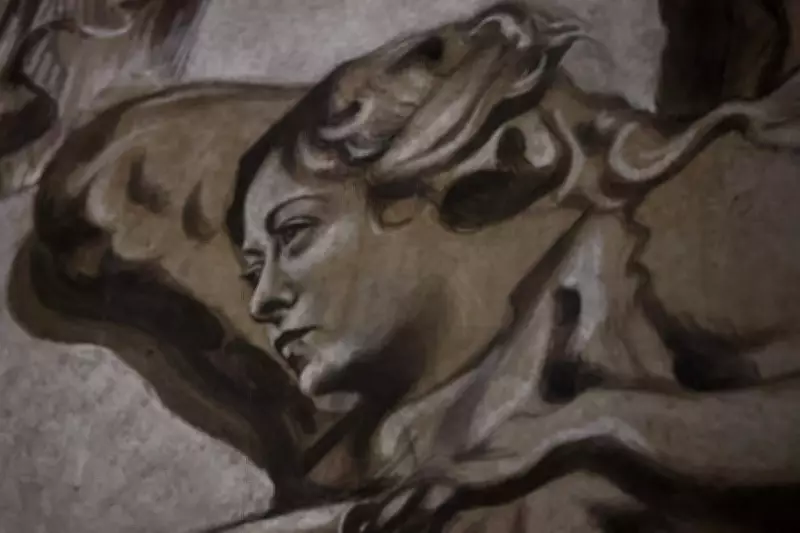
The serene atmosphere of a historic Roman basilica has been disrupted by an unexpected artistic controversy, as a restored cherub bearing a striking resemblance to Italy's Prime Minister Giorgia Meloni has ignited a minor scandal that intertwines church and state. The depiction, part of recent renovations at the Basilica of San Lorenzo in Lucina, has prompted immediate and stern investigations from both the diocese of Rome and the Italian Culture Ministry, highlighting a clear intolerance for perceived profanity within sacred spaces.
Swift Official Responses to Perceived Profanity
Following the publication of photographs of the 'Meloni-esque' cherub in national newspapers, authorities moved quickly to address the situation. The diocese of Rome and the Culture Ministry launched parallel investigations, underscoring their commitment to preserving the sanctity of religious art. This unexpected furore has propelled the ancient basilica, already a renowned Roman landmark, into newfound celebrity status, with the church reportedly packed with curious visitors eager to photograph the angel in a side chapel near the main altar.
The influx of sightseers has occasionally disrupted ongoing Mass services, creating practical challenges for parish administrators alongside the theological and political questions raised by the artwork's appearance.

Political and Historical Sensitivities Amplify Controversy
The controversy carries particular weight due to the cherub's placement and historical context. The figure appears in a chapel renovated in 2000 to include a bust of Umberto II, the last king of Italy, with the cherub originally depicted holding a map of Italy and seemingly kneeling before the monarch. The recent restoration has drawn scrutiny because the cherub's face now appears modelled on Meloni's features, creating a problematic visual of the prime minister in a position of deference to the monarchy.
This symbolism resonates deeply in Italian political memory, as the nation rejected the monarchy after World War II due to its support for Fascist dictator Benito Mussolini. Meloni's right-wing Brothers of Italy party has its roots in the neo-fascist party that succeeded Mussolini, adding layers of historical sensitivity to what might otherwise be dismissed as artistic coincidence.
Diverging Perspectives from Church Figures
Parish priest Reverend Daniele Micheletti acknowledged the resemblance to Meloni but dismissed its significance, noting that artists throughout history have depicted real-life people in religious works. "The priest is not responsible for the decorations in the sense that the owner is someone else," Micheletti told The Associated Press, adding "So, what do they want from me? I did not do the painting."
He referenced artistic precedents including Caravaggio modelling the Virgin Mary on a prostitute and Michelangelo painting himself as St. Bartholomew in the Sistine Chapel's "The Last Judgement." However, Rome's vicar Cardinal Baldassare Reina adopted a far less forgiving stance, announcing an investigation and criticising Micheletti's blasé attitude toward what he considered inappropriate political representation in sacred art.
Restoration Background and Denials
The cherub was restored following water infiltration damage to the basilica starting in 2023. Restorer Bruno Valentinetti has firmly denied any wrongdoing, insisting in interviews with Italian media that he merely restored his original 2000 painting and that any resemblance to Meloni exists "in the eye of the beholder." The investigations now seek to determine what the original 2000 cherub actually looked like, examining whether the restoration altered the figure's appearance beyond acceptable conservation parameters.
Over the weekend, the Culture Ministry dispatched special delegate Daniela Porro alongside ministry officials to survey the angel firsthand. According to an official ministry statement, their aim was to "ascertain the nature of the work" and "decide what to do" regarding the controversial restoration.

Meloni's Lighthearted Response Contrasts with Official Gravity
Amid the growing controversy, Prime Minister Meloni attempted to tamp down the outcry with a characteristically lighthearted response. "No, I definitely don't look like an angel," she wrote on social media alongside a photo of the artwork, though her humorous intervention has done little to calm the institutional concerns raised by the depiction.
The basilica itself occupies a prestigious location on one of Rome's fanciest piazzas just down the block from the Spanish Steps. Consecrated in 440 by Pope Sixtus III and subsequently enlarged and rebuilt, it is now property of the Interior Ministry, which bears responsibility for its upkeep—adding another governmental dimension to an already complex church-state interaction.
As investigations continue, the diocese of Rome has issued a firm statement reiterating its commitment to artistic and spiritual heritage preservation: "In renewing the diocese of Rome's commitment to the preservation of its artistic and spiritual heritage, it is firmly reiterated that images of sacred art and Christian tradition cannot be misused or exploited, as they are intended exclusively to support liturgical life and personal and communal prayer."