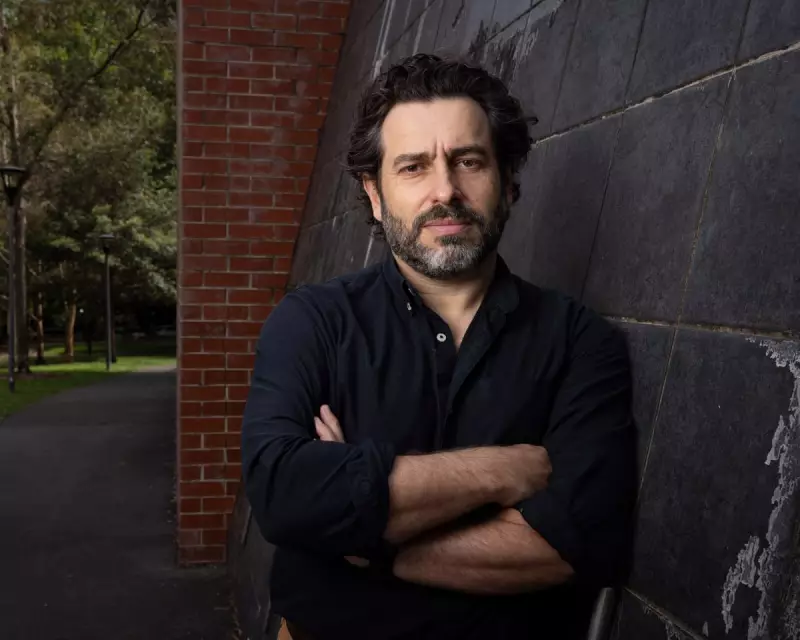
Taking the helm of the ABC's storied media critique programme, Media Watch, was a daunting prospect for veteran journalist Linton Besser. With a loyal audience and a 36-year legacy, his primary concern was simple: "I didn't want to break it." A year into the role, Besser and his team have not only preserved the show's identity but have fortified it with a string of investigative scoops, culminating in a prestigious Walkley Award.
A New Era and a Formidable Partnership
Besser, a former foreign correspondent and investigative reporter, assumed the presenter's chair in 2024 alongside new executive producer Mario Christodoulou. They succeeded the show's longest-serving host, Paul Barry, and producer Tim Latham, who stepped down after more than a decade and 500 episodes. The new duo approached the task as they would any major investigation, conducting extensive outreach to media executives and editors across the commercial and public spectrum.
Besser describes Christodoulou, a fellow Gold Walkley-winning journalist, as a "formidable journalist" and a "super brain walking around on legs." Their dynamic is crucial. "Mario is a great foil to me," Besser says. "We're very yin and yang. He's got a wonderful devil's advocate in him and he will hold me back and I will push him." This partnership underpins their editorial philosophy of striving for fairness, driven by the reality that "the person who's tipping you into a story this week might be the subject of your story next week."

Fearless Reporting and Award-Winning Investigations
The programme's rigorous approach quickly bore fruit in 2025. Its blend of sharp analysis and Besser's engaging presentation delivered significant revelations, earning praise from peers like former host David Marr and even a back-handed compliment from News Corp critic Chris Kenny.
The pinnacle of their work was a Walkley Award for commentary and critique, secured for three stories. Two exposed serious internal issues at the ABC itself. The first, and most sensitive, revealed that ABC chairman Kim Williams had repeatedly intervened in radio programming on behalf of comedian Austen Tayshus (Sandy Gutman). The judges commended the team for acting "quite remarkably – and fearlessly." Besser admitted the story was "really tough," causing him sleepless nights, but praised Williams's subsequent cooperation as "pretty extraordinary."
The second award-winning investigation led to the resignation of ABC defence correspondent Andrew Greene. Media Watch exposed that Greene had filed a story about a German shipbuilder without disclosing he had travelled to Germany as a guest of the company, which was seeking Australian defence contracts. Greene's editors were unaware of the trip until contacted by the programme.
The Awkward Art of Holding Power to Account
Besser openly acknowledges the "lots of awkwardness" involved in scrutinising other journalists, especially ABC colleagues. He mitigates this by being transparent, often prefacing calls by stating, "This is a work call." He approaches subjects with an awareness of his own past errors and a willingness to hear alternative explanations. "A couple of times this year I felt really badly for people who I think are good people that made errors, unfortunate errors," he reflects.
The programme relies heavily on tips from media insiders and a sharp-eyed public, whom Besser credits as "amazing." The production week is intense, starting on Wednesday and involving script finalisation by Friday for graphics, weekend work, and a rigorous Monday fact-check. A key question in the final read-through is always: "Are we threading the needle the right way?"
For Besser, credibility lies in the centre. "There are members of the press who go to either extreme... but I fear they lose credibility in the middle," he says. "I think that would be deadly." His former editor, Sean Nicholls, is unsurprised by his success, noting Besser has simply applied his "forensic investigative journalist" skills to the unique arena of Media Watch, navigating its dilemmas with principle and producing journalism that holds even the most powerful media figures to account.