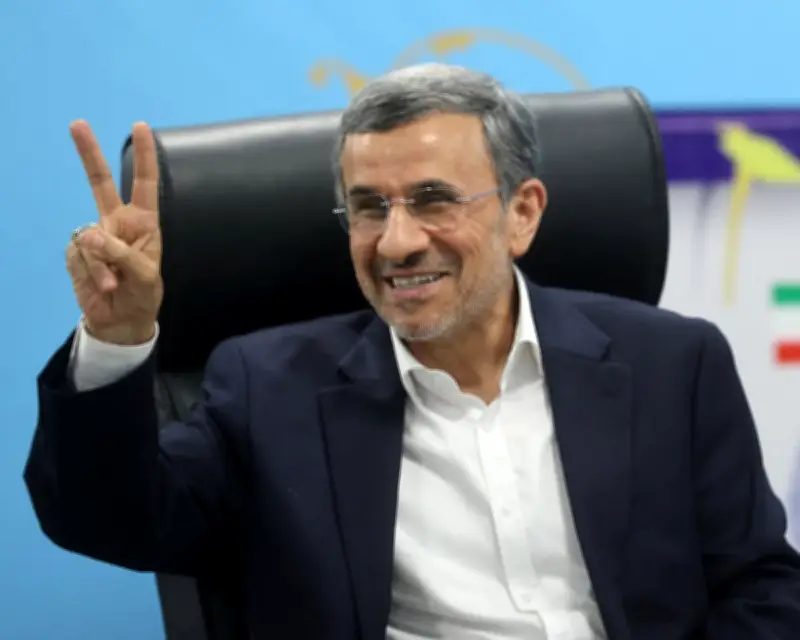
Israel reportedly sought to engage former Iranian president Mahmoud Ahmadinejad as a potential figurehead for a post-regime Iran, according to claims emerging from recent reports. The overtures, which allegedly took place through backchannel communications, aimed to leverage Ahmadinejad's influence within Iran's political establishment to facilitate a transition of power.
Details of the Alleged Outreach
The reports, which cite unnamed diplomatic sources, suggest that Israeli officials approached intermediaries close to Ahmadinejad in an attempt to sound out his willingness to assume a leadership role in a post-Islamic Republic Iran. Ahmadinejad, who served as president from 2005 to 2013, is known for his hardline stance against the West and his controversial remarks about Israel.
According to the claims, the discussions were exploratory in nature and did not result in any concrete agreement. The Israeli government has not officially commented on the reports, and Ahmadinejad's representatives have denied any such contacts.

Context and Implications
The alleged outreach comes amid heightened tensions between Israel and Iran, with Israel viewing Iran's nuclear program as an existential threat. The idea of supporting a post-regime figure aligns with Israel's long-standing policy of opposing the current Iranian government. However, the choice of Ahmadinejad, a figure deeply associated with anti-Israel rhetoric, has raised eyebrows among analysts.
"The notion that Israel would court Ahmadinejad seems contradictory given his history of denying the Holocaust and calling for Israel's destruction," said Dr. Emily Landau, a senior research fellow at the Institute for National Security Studies. "But it may reflect a pragmatic assessment that any post-regime leader would need to have domestic credibility."
Reactions and Denials
Iranian officials have dismissed the reports as propaganda aimed at undermining the current government. A spokesperson for Iran's Foreign Ministry called the claims "baseless and absurd." Meanwhile, experts caution that the reports may be part of a disinformation campaign. "Without concrete evidence, it's hard to take these claims at face value," noted Dr. Raz Zimmt, an Iran expert at the Alliance Center for Iranian Studies at Tel Aviv University.
The reports have sparked debate about Israel's long-term strategy toward Iran and the feasibility of regime change. While some argue that engaging with former officials could open diplomatic channels, others warn that it could backfire and strengthen hardline elements within Iran.