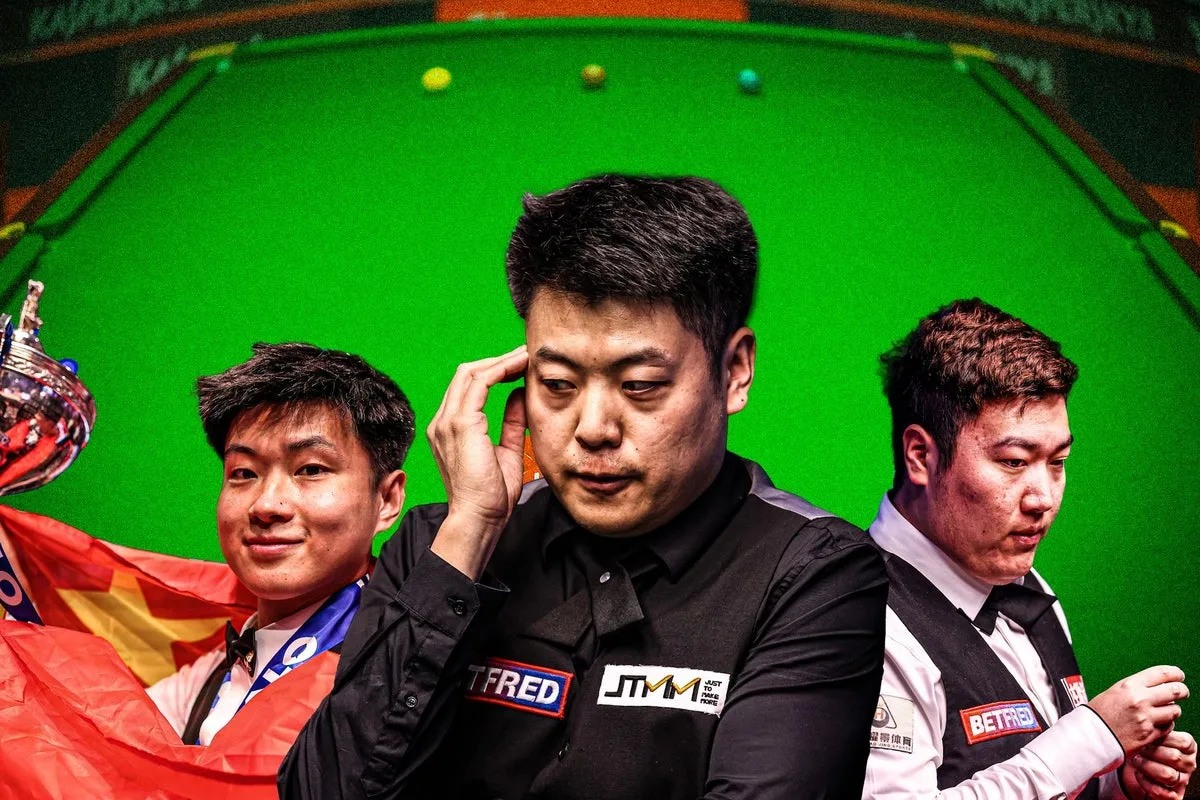
At around 8am on 28 September 2022, a few hours before his second-round match at the British Open, the talented 20-year-old Chang Bingyu received a phone call. It was experienced fellow player Liang Wenbo, warning bad people had good money on Chang to lose the game 4-1. Liang promised Chang £6,000 for the exact result and threatened consequences if he didn’t play ball.
Chang knew Liang well enough to be petrified. He went along with the plot, although he never received any money. Welshman Jamie Jones had no idea that his 4-1 victory that night was orchestrated by his opponent.
A few months later, as Liang’s web of deceit began to unravel, a man knocked on Chang’s door. It was the day before Chang was due to be interviewed by investigators. The man said he was a friend of Liang and led Chang to a car to talk, where he warned not to utter a word about match-fixing to snooker’s authorities. Chang was unnerved by Liang’s cue lying on the back seat.

This was Liang’s modus operandi, to intimidate his young targets into throwing frames and manipulating results. He had a reputation for violence, having been convicted of attacking a woman on the streets of Sheffield in 2021. On the surface, the Chinese match-fixing scandal might have seemed like a parable of greed. In reality, it was a story of fear.
Sheffield’s Chinese snooker community was the perfect breeding ground for sin. They were a group of men mostly in their early 20s who spoke little English, who felt lonely and isolated when the Covid pandemic stopped them returning to China to see friends and family for two years.
Several trained at the renowned Ding Junhui and Victoria snooker academies, near the Crucible Theatre they dreamed of conquering. They would sit around sharing meals, playing cards and gambling online. Most of the players caught in the scandal endured financial difficulties: during his interview with investigators, Chang revealed he had less than £100 in his bank account.