Google Executives Testify in $125 Million Indonesia Chromebook Corruption Case
Former Google executives have firmly denied the technology giant's involvement in a major corruption case connected to Indonesia's Education Ministry, where prosecutors allege state losses of $125 million from a massive Chromebook laptop procurement project. The testimony came during a high-profile hearing at Jakarta's Corruption Court on Monday, conducted via video conference.
Key Figures Testify in Jakarta Court
Three former Google executives provided testimony in the case: Scott Beaumont, who served as President of Google Asia Pacific from 2014 to 2019; Caesar Sengupta, former General Manager and Vice President from 2018 to 2021; and William Florence, another former executive. All three denied any connection between Google's business activities and the alleged corruption scheme.
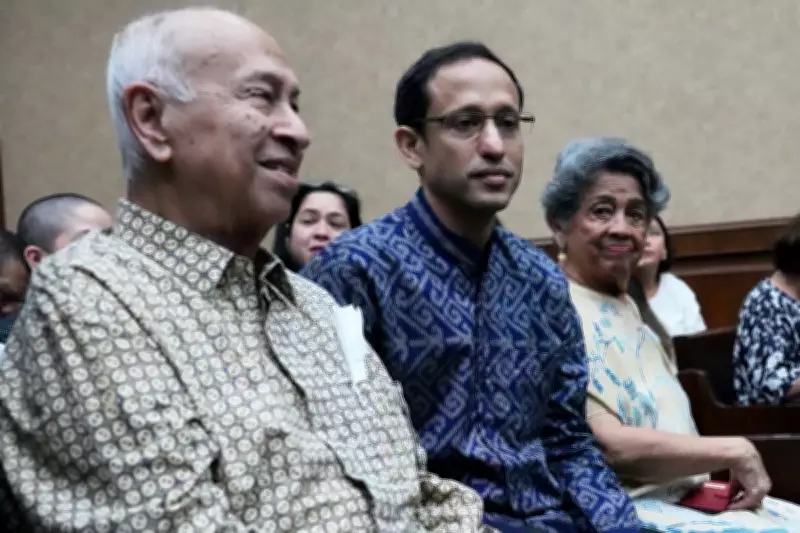
At the center of the case is Nadiem Anwar Makarim, the 41-year-old former Education Minister who was arrested in September following an extensive investigation. Makarim, a Harvard University graduate who co-founded Indonesia's ride-hailing and payment company Gojek in 2009, served as education minister between 2019 and 2024.

Allegations of Abuse of Power and Conflict of Interest
Prosecutors allege that Makarim abused his authority by steering the nationwide Chromebook procurement program in 2020-2021 "entirely for personal business interests." According to lead prosecutor Muhammad Fadli Paramajeng, Makarim allegedly favored Google's Chromebook despite a ministry research team refusing to recommend the laptop model due to concerns about its effectiveness in regions lacking reliable internet access.
The corruption allegations extend to Makarim's business connections. Prosecutors claim he pressured Google to invest approximately $787 million in PT Aplikasi Karya Anak Bangsa (PT AKAB), the parent company of Gojek. Makarim allegedly received about 809 billion rupiah ($48.2 million) in connection with the Chromebook program.
Google's Defense and Educational Justification
During his testimony, Scott Beaumont explicitly denied any connection between Google's investment activities and discussions with the Education Ministry. "There was no connection at all between Google's investment in GoTo and any of the conversations with the Ministry of Education," he told the panel of three judges.
Google has previously defended its Chromebook products, stating they are specifically designed for classroom realities, including use in remote areas. The company emphasizes that while optimized for cloud computing, Chromebooks remain functional offline without internet connectivity. Google also clarified that it licenses software and does not control Chromebook pricing decisions made by manufacturers.
Broader Implications and Legal Proceedings
The Chromebook procurement involved the purchase of more than 1.2 million devices as part of the Indonesian government's school digitalization initiative. Prosecutors argue this program was designed to strengthen Google's dominance in Indonesia's educational technology sector.
Makarim faces severe consequences if convicted, including the possibility of life imprisonment. His defense team has argued that he divested from PT AKAB upon taking office, that his personal wealth decreased by more than 50% during his ministerial term, and that procurement decisions were made by technical teams rather than the minister personally.
The case involves additional defendants beyond Makarim, including two former Education Ministry officials and a former technology consultant, while another staff member remains at large. A verdict in this high-stakes corruption trial could be delivered as soon as this month, potentially setting significant precedents for technology procurement and anti-corruption enforcement in Indonesia's public sector.