The pre-Sabbath ritual of shopping at my local kosher stores has always been a weekly highlight. Preparing for the lavish Friday night dinner or the post-synagogue Saturday lunch, I stock up on freshly baked challah bread, its yeasty aroma intoxicating, along with chopped liver and salt beef. I inevitably bump into familiar faces, pausing for a chat about work, family, or the price of fish—or more likely, the Jewish delicacy of chopped herring. It is as much a social event as a practical necessity.
Safe Havens Under Threat
While high wire fences, CCTV cameras, and the crackle of walkie-talkies serve as reminders of being a potential target in Jewish schools, community centres, and synagogues, kosher retail hubs have become safe havens for the community amid spiralling anti-Semitism in Britain today. Occasionally, a police officer or a volunteer from the Community Security Trust strolls along the high street, a reassuring rather than intrusive presence.
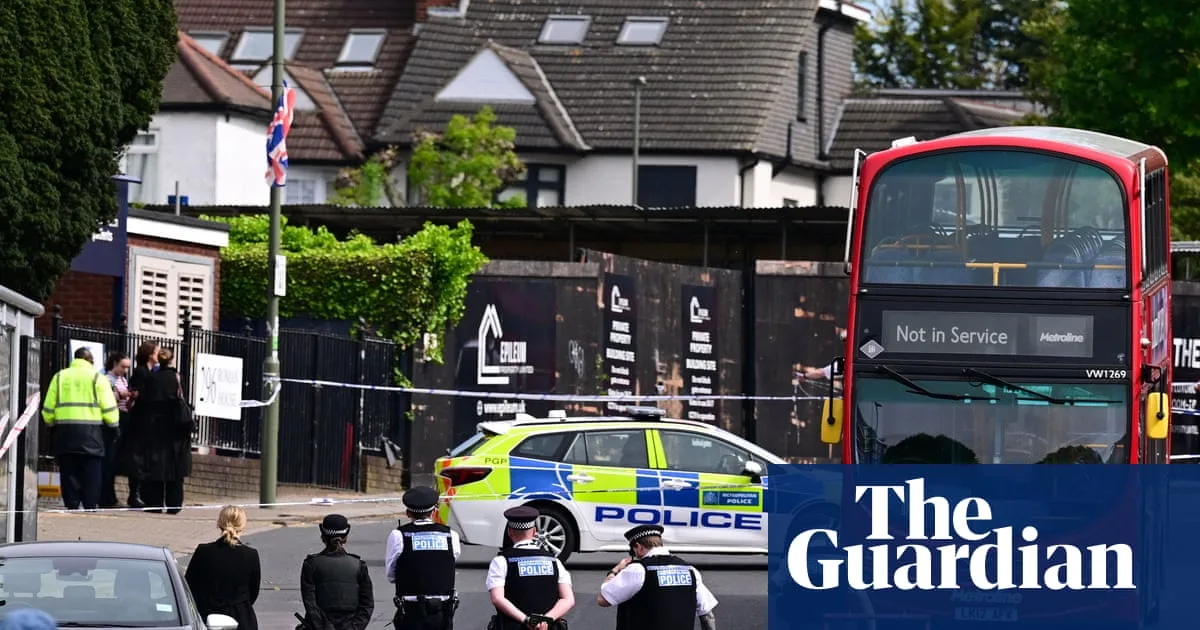
But that sense of security was shattered yesterday following a horrific terrorist attack on a similar stretch of Jewish commercial life in Golders Green. If two Jewish men can be stabbed on a bright April day for no apparent reason beyond their visible faith, then even the simple act of picking up half a roast chicken from the butcher is no longer danger-free.
Indignation and Fear
Like many Jews, I am burning with white-hot indignation that our every move must be calculated against the possibility of a terrorist attack. One friend told me this week that she walks the side roads home from synagogue on Saturdays, feeling they offer a slightly safer route from a potential car ramming. But what compounds the fear and resentment is the despair and fury that nothing—nothing—is being done by our political leaders to staunch the spread of a toxic ideology dedicated to our destruction.
The usual limp-wristed suspects of our political class line up to issue performative messages about anti-Semitism. Every time an outrage occurs, I tick off their names like numbers on a bingo card. On the Golders Green atrocity, we have Keir Starmer describing the terrorist attack as 'utterly appalling'. David Lammy declared that 'we stand with the Jewish community'. And London Mayor Sadiq Khan, not one to miss an opportunity for self-righteous hand-wringing, stated that 'there must be absolutely no place for anti-Semitism in society'. All reassuring—said no one ever, since their words are never matched by action.
Calls for Action Ignored
If they truly believed in what they were saying, they would advocate for better policing of anti-Semitic hate crimes, faster investigations, and more consistent approaches to prosecutions—whether the incidents occur at so-called 'peaceful protests' or online. They would take an unflinching stance on tackling extremism: Iran's Islamic Revolutionary Guard Corps, which seeds much of the anti-Semitism on Britain's streets, would already be banned, as would the hate marches and the Islamists of the Muslim Brotherhood. And sadly, they would now be calling for a stronger police presence in all Jewish communities.
Yet they don't. Compare their non-committal words to the roar of Israel's foreign minister, who said Starmer's statements are 'no substitute for confronting the roots of anti-Semitism', and that the 'UK can no longer claim this is under control'. Indeed, ex-pat friends in Israel, despite dodging missile attacks, claim they feel safer in the Jewish homeland. Listen also to our esteemed Chief Rabbi Ephraim Mirvis, who stated that 'words of condemnation are no longer sufficient' and called for meaningful action. The Campaign Against Antisemitism stormed across social media: 'Prime Minister, what is the plan?'
A Recurring Question
This isn't a new question. Six months ago, after the horrific and deadly attack on the Heaton Park synagogue in Manchester, where two people died—including 66-year-old Melvin Cravitz, who worked in a local kosher supermarket—the same questions were asked of our spineless, weathervane leader and the flaccid rabble who comprise his Cabinet. The Heaton Park attack was especially painful to me because this was the synagogue where I had married, which had been in my family for decades and where my late grandfather was the choir master.
Back then, Starmer and senior windbag David Lammy trotted up north to offer support and were rightfully booed. But nothing changed. They do the bare minimum to acknowledge the hostility facing British Jews, while remaining carefully attuned to the wider political calculus for electoral survival. With Jews making up less than 0.5 per cent of the population, our concerns—our safety—simply do not carry the same political weight as that of others.
Political Opportunism
But the most mercenary of the party leaders has to be Zack Polanski, who is pivoting the Greens from environmentalism to Palestinianism to court Muslim voters. When asked last week about the spate of anti-Semitic violence in the UK, the shape-shifting politician sought to belittle the Jewish community, suggesting the threat had been overblown. 'There's a conversation to be had about whether it's a perception of unsafety or whether it's actual unsafety, but neither are acceptable,' he said. Perhaps he thinks the two victims of yesterday's outrage are 'perceiving' their injuries, as must the doctors and nurses who are treating their stab wounds. Yesterday, his language was less equivocal, as he described the atrocity as 'horrendous' and pledged that he was 'thinking of the victims, the families and everyone who will once again be shaken by this attack'. Polanski and I were brought up in the same Jewish community of north Manchester and attended the same Jewish primary school. But it seems he has eschewed the balanced lessons we were taught about our faith to turbo-charge his party's electoral chances next week.
Exodus of British Jews
For many Jews, the reflex response to the Golders Green attack will be to leave the UK. Many of my friends already have done; others are packing up. New figures have shown the number of Jews leaving the UK in 2025 is the highest since the mid-1980s—and that was before this year's string of arson attacks, including the firebombing of four Jewish community-run ambulances, which were on the scene yesterday. Why wouldn't they, or even I, bail out of this once great country when our timorous politicians have yet to give Jewish people a convincing reason to stay?
But so it goes on. Each outrage met with words as flimsy as the thin wind of fear now blowing down Golders Green Road, and through every other place where shopping in a Jewish hub is no longer a leisurely experience but a deeply uncertain choice. This is your Britain. It may no longer soon be mine.