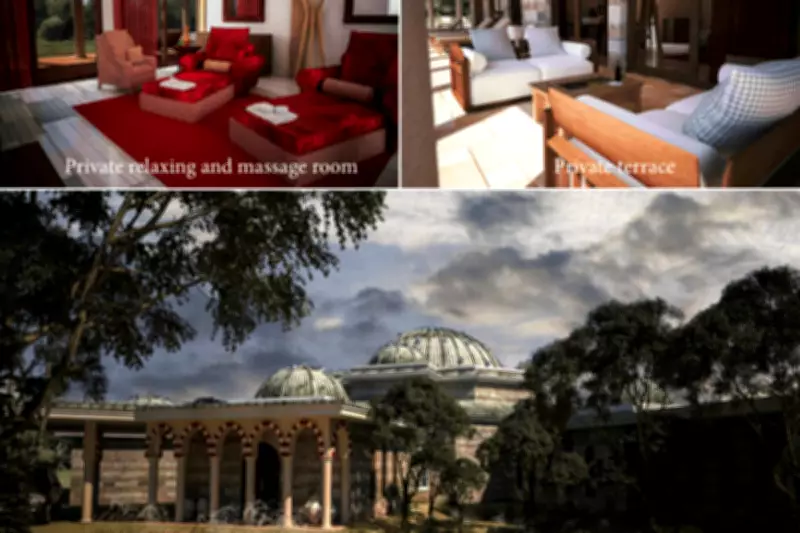
New correspondence has revealed that Jeffrey Epstein referred to a mysterious blue-and-white-striped building on his Caribbean island, Little Saint James, as a 'mosque' on multiple occasions. Despite changing the structure's plans, Epstein consistently sought Middle Eastern and Islamic design elements, including specific tiles and a golden dome.
Epstein's Obsession with Islamic Art
Epstein's long-standing obsession with Arabic and Muslim art and culture was evidenced by his interactions with powerful figures and his acquisition of elaborate artifacts. He acquired highly significant Islamic items for the building, including pieces reportedly from the Kaaba and a Kiswa, the sacred covering of the Kaaba. The Kiswa, a costly and religiously important artifact, was described in correspondence as having been touched by millions of Muslims, highlighting its profound spiritual value.
Epstein survivors have spoken out about the abuse they suffered, and these latest findings add another layer to the disturbing legacy of the convicted sex offender. The island, often referred to as 'Pedophile Island' in the media, was used for illicit activities, and the construction of the so-called mosque raises further questions about Epstein's connections and intentions.

Sacred Items from Mecca
The acquisition of items from the Kaaba, the holiest site in Islam, is particularly shocking. The Kiswa, which is replaced annually during the Hajj pilgrimage, is considered a sacred relic. Epstein's possession of such items underscores his ability to leverage his wealth and connections to obtain rare and culturally significant objects.
Authorities continue to investigate Epstein's network and assets, including the fate of the artifacts and the building on Little Saint James. The revelations have sparked outrage among religious communities and human rights advocates, who call for a thorough examination of how Epstein managed to acquire such items.