Newly unsealed court documents have provided long-awaited vindication for a survivor of Jeffrey Epstein, confirming she alerted the Federal Bureau of Investigation (FBI) to his crimes nearly a decade before the agency formally opened its probe.
Three Decades of Waiting for Acknowledgement
The files, released by the Department of Justice on Friday, corroborate the account of Maria Farmer. She first reported the financier's activities to the FBI in 1996. For almost thirty years, Farmer endured being labelled a liar before this official confirmation emerged.
"They can't call me a liar anymore," Farmer stated, reflecting on the profound personal impact of the documents' release. She described facing sustained threats and widespread disbelief about her allegations for years.

The Chilling Details of the 1996 Report
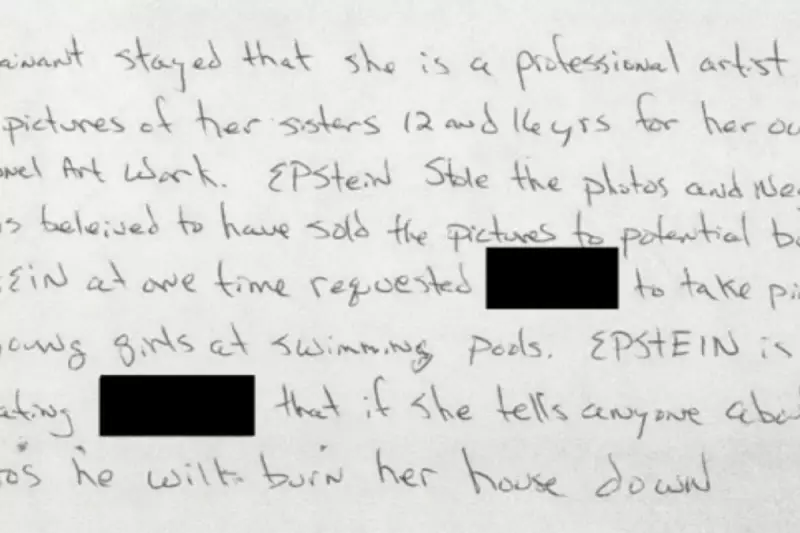
Farmer's original report to the FBI contained alarming allegations. She accused Jeffrey Epstein and his associate Ghislaine Maxwell of sexual assault. Crucially, she also warned agents that Epstein was seeking child pornography.
Her complaint detailed how Epstein had stolen photographs of her two younger sisters, who were aged 12 and 16 at the time. The stolen collection reportedly included nude images of the teenagers. Farmer alleged that Epstein threatened to burn down her house if she disclosed his actions to anyone.
A Lawsuit and Systemic Failure
The documents' release forms part of the ongoing legal fallout from the Epstein case. In May, Maria Farmer initiated a lawsuit against the FBI itself. Her claim asserts that the bureau "did absolutely nothing" to act upon her explicit warnings until it was far too late.
This inaction, according to the lawsuit, allowed Epstein to continue his predatory behaviour for over a decade after Farmer's initial report. The FBI did not commence its formal investigation into the financier until 2006.
The newly public files finally illuminate what happened to that early complaint, offering a stark example of institutional failure. For Farmer, they represent a painful but necessary validation of a truth she has held for three decades.