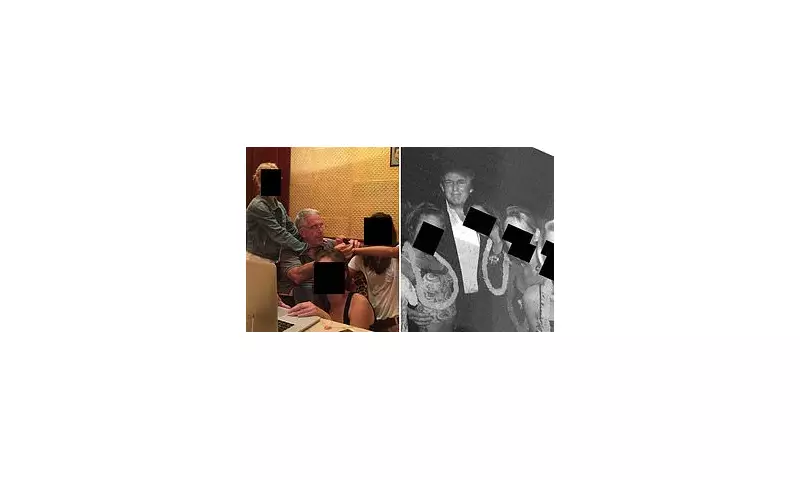
Women who survived the sex trafficking crimes of the late financier Jeffrey Epstein have expressed significant distress to Democratic lawmakers over the manner in which documents and images from his estate are being made public. According to sources familiar with a video call, multiple survivors told the Democratic Women's Caucus they were upset by the intermittent, selective leaking of materials by members of their own party on the House Oversight Committee, often with little to no advance notice.
Survivors Voice Concerns on Capitol Hill
During the call, survivors detailed their anxiety about the unpredictable document release strategy, which they feel re-traumatises victims and fails to respect their privacy. Democratic Congresswoman Melanie Stansbury, who sits on the Oversight panel, told those on the call she would relay their concerns to Ranking Member Robert Garcia, the party's designated strategist on the Epstein files. Progressive Congresswoman Ayanna Pressley of Massachusetts, also an Oversight Committee member, reportedly agreed, stating it was concerning how the panel was 'picking-and-choosing' which photos to release.
In response, a spokesperson for Garcia insisted, 'Oversight Committee Democrats have always informed the legal teams and representatives of the survivors before any release, and we will continue to do so. The privacy of all survivors is a priority for the committee and all of its members.' One source indicated that lawyers were, in fact, given a heads-up about a release scheduled for a Thursday after members advocated for notice.

A Trickle of Harrowing Images
The latest batch of documents was released just one day before the December 19, 2025 deadline for the Justice Department to publish the full Epstein files. This drop included:
- Redacted passports.
- Text messages containing demographic details of women.
- Photographs with words written on women's bodies.
This follows several prior releases by Oversight Committee Democrats, who are reviewing a trove of 95,000 images from Epstein's estate. Previous disclosures have featured:
- Eerie images from Epstein's private island, Little St. James, showing an empty dentist office with masks on the walls and a dried-up steam room.
- Photos of prominent figures like former Presidents Donald Trump and Bill Clinton, and Microsoft founder Bill Gates, alongside women whose faces were concealed.
- Redacted emails mentioning Trump and Epstein's connections.
Political Tensions and the Path Forward
The deliberate, piecemeal approach has sparked criticism from Republicans, who accuse Democrats of politically cherry-picking information. While Democrats have opted for smaller, staggered releases, Republicans have favoured compiling thousands of documents for a single public disclosure.
Meanwhile, the Justice Department has acknowledged the complexity of the task. Deputy Attorney General Todd Blanche stated that the initial tranche due on the deadline would not be exhaustive, as officials need more time to ensure victim protection. 'We are looking at every single piece of paper that we are going to produce making sure that every victim, their name, their identity, their story to the extent it needs to be protected, is completely protected,' Blanche explained. He confirmed that hundreds of thousands of pages would be published on the deadline, with hundreds of thousands more to follow in subsequent weeks.
The ongoing controversy highlights the difficult balance between public transparency and the profound duty to protect the privacy and well-being of the survivors at the heart of this case.