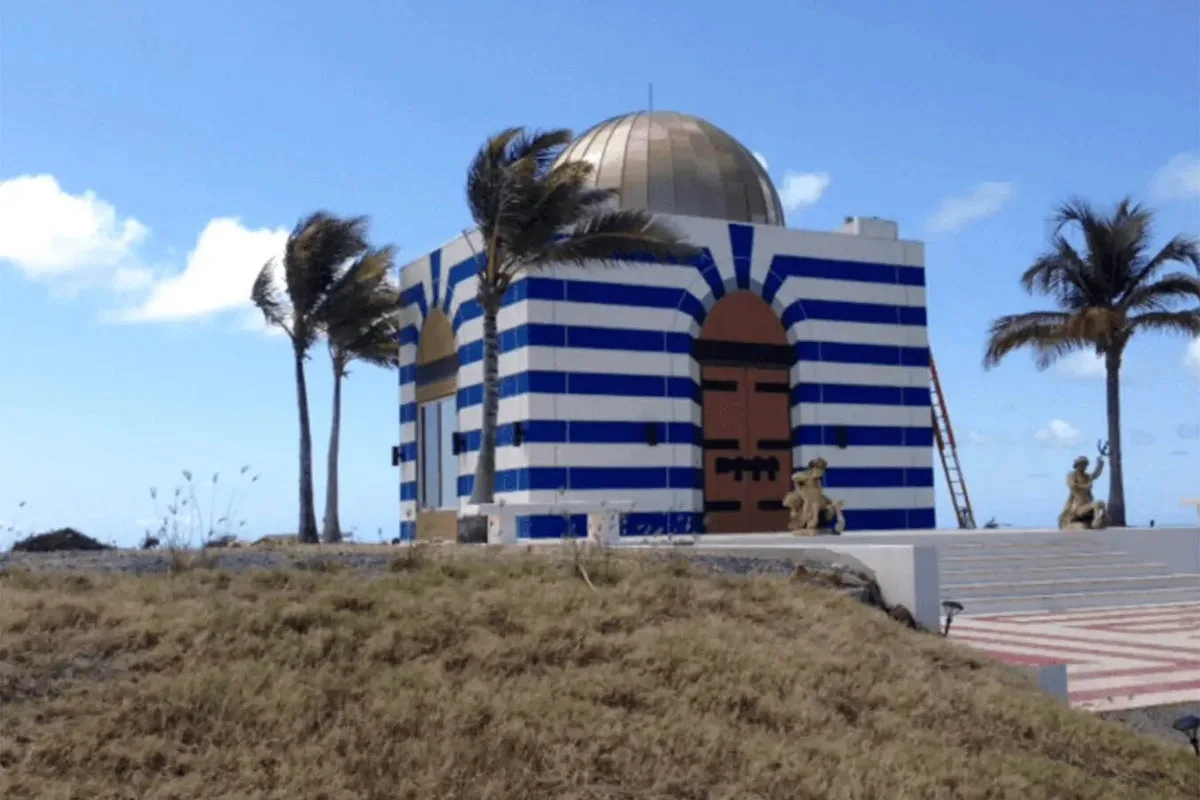
Newly released documents reveal that convicted sex offender Jeffrey Epstein acquired sacred items from the Kaaba in Mecca for a building on his private island, Little Saint James, which he referred to as a “mosque.” The files, part of the Epstein case, show correspondence detailing his efforts to obtain religious artefacts, including pieces from the Kaaba, the holiest site in Islam.
Epstein’s assistant informed a customs broker in 2017 that they were “receiving 3 pieces from the Kaaba,” including the Kiswa, the outer covering of the structure, which is replaced annually and holds immense religious significance. The covering, made of silk and gold thread, costs around $5 million and is typically distributed to organisations or benefactors after use. An aide to the Royal Court of Saudi Arabia, Aziza Al Ahmadi, emphasised the item’s importance, noting it had been touched by millions of Muslim pilgrims.
The building, topped with a golden dome, was initially planned as a music room, chapel, or pavilion before Epstein settled on calling it a mosque. He sought advice on tiles from a contact in Uzbekistan, requesting examples to make it “look old.” Despite his secular Jewish identity, Epstein demonstrated a long-standing interest in Islamic art and culture, previously claiming to own a Persian rug from a mosque and hiring architects for a Turkish bathhouse.

It remains unclear whether the structure was ever used for worship. Epstein died in 2019 while awaiting trial on sex trafficking charges.