President Donald Trump concluded his 2025 with underwhelming polling figures, marking the end of what had begun as a "genuinely strong year and a long honeymoon," according to James Johnson of JL Partners, the Daily Mail's pollster.
The Honeymoon and the Sudden Plunge
In the initial weeks of his second term, Trump enjoyed robust support. Daily Mail polling showed the President with a 53 percent approval rating in mid-February, which edged up to 54 percent later that month. His numbers held steady at 49 percent throughout March before climbing back into the low-50s for most of April.
However, in a dramatic shift late in April, Trump's approval rating collapsed by nine points, plummeting from 54 percent to just 45 percent. The catalyst, intriguingly, was not the initial announcement of sweeping tariffs but his subsequent retreat from them.

The 'Liberation Day' Tariffs and the 'TACO' Effect
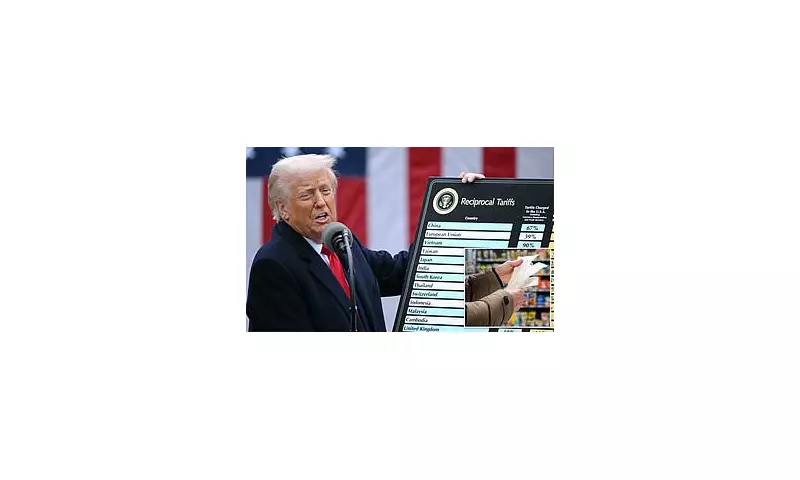
On April 2, a date Trump dubbed 'Liberation Day,' he unveiled a policy of reciprocal tariffs on imports from nations worldwide. The rollout even included a 10 percent tariff on goods from the uninhabited Heard and McDonald Islands in Australia, a move noted for its peculiarity.
While the policy's bumpy introduction did not immediately damage his numbers, the decline came when Trump reversed course, delaying the implementation of the tariffs he had just announced. Pollster James Johnson explained that voters saw the U-turn as undermining Trump's image as a decisive strongman. This perception was crystallised when the President earned the mocking nickname 'TACO'—'Trump Always Chickens Out.' At this low point, 55 percent disapproved of his job performance.
Recovery and Subsequent Economic Anxiety
By September, Trump's fortunes had reversed again, reaching a year-high approval rating of 55 percent. Johnson credited a tough-on-crime stance, including deploying the National Guard to Washington D.C., for the rebound. A month later, following a foreign policy trip to Israel and Egypt where he attempted to broker a Gaza peace deal, his approval held at a positive 51 percent, with 38 percent of voters citing a more positive view due to his Middle East efforts.
Yet, underlying concerns about his tone, mental stability, and particularly the economy persisted. The November survey, conducted after Democratic victories in off-year elections, saw Trump's disapproval hit 55 percent again, with approval sinking to 45 percent. The primary reason cited was the rising cost of living and inflation, followed by discontent over immigration enforcement actions.
The year ended with Trump's "honeymoon" decidedly over. A late December poll showed only a tiny uptick to 48 percent approval against 52 percent disapproval. Johnson suggested one potential game-changer remained: the distribution of stimulus checks funded by tariff income, a policy promised by the White House and supported by 52 percent of voters, including 44 percent of Democrats. White House Press Secretary Karoline Leavitt confirmed the administration was "committed to making that happen," though no timeline was provided.