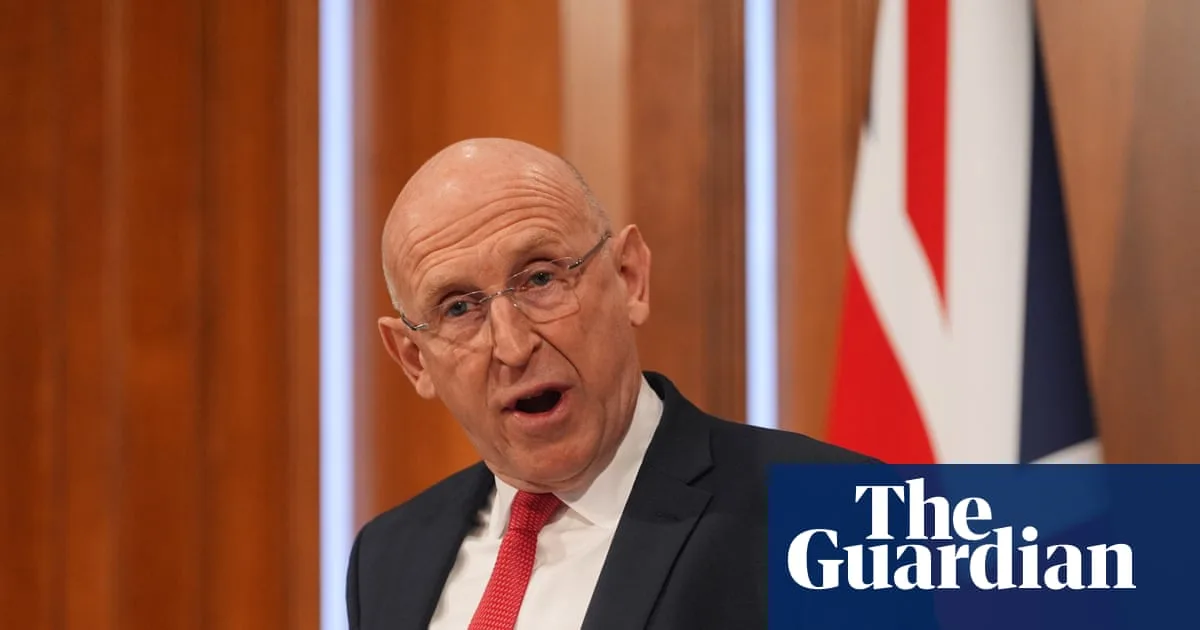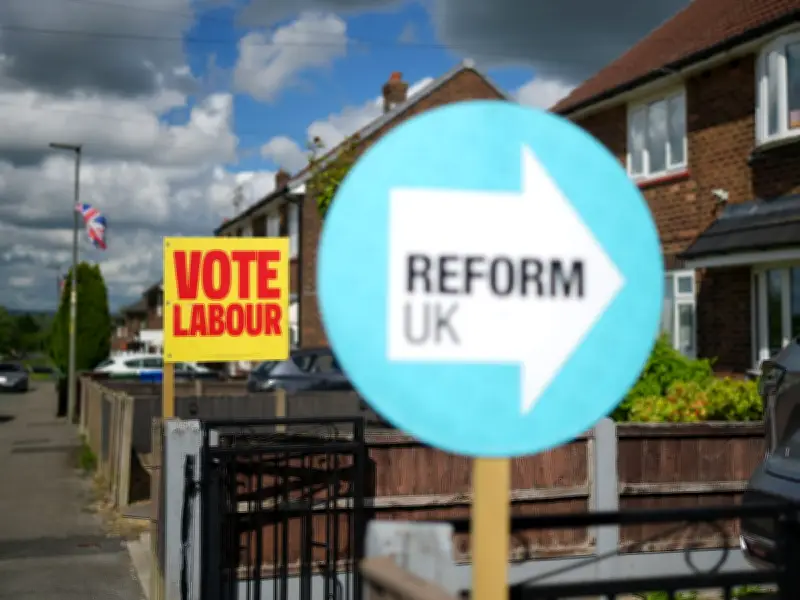
As the results of the Makerfield by-election become clear, all eyes turn towards the wider political landscape to see what knock-on effect the outcome of the hotly-contested Greater Manchester constituency battle will bring about. There is no doubt that if a general election were called today, the UK political landscape would face an unprecedented shakeup.
Polling Data Points to a Hung Parliament
According to the latest data from leading pollsters, Britain is steering toward a hung parliament, with a surging Reform UK positioned to become the largest party in Westminster, though likely falling short of an outright majority. Data from the prominent polling aggregator Electoral Calculus and tracker data from YouGov point to a dramatic realignment of voter intentions, characterised by a sharp decline in support for the Labour government.
The latest YouGov voting intention tracker highlights how heavily the traditional main parties are losing support. Reform UK has surged to the front of national support at 24 per cent, establishing a visible lead in public preference. Meanwhile, support for the established parties has collapsed into a tight, fragmented pack. Labour trails behind Reform at 19 per cent, closely pursued by the Conservatives at 13 per cent. The Liberal Democrats have maintained a steady presence, drawing six per cent of the national vote share.

Seat Projections: Reform UK Dominates
Because of the UK’s first-past-the-post voting system, national vote share does not perfectly translate to parliamentary seats. However, advanced seat-modelling by Electoral Calculus indicates that Reform UK’s national momentum is deep enough to shatter traditional strongholds. Electoral Calculus projects that Reform UK would secure roughly 245 seats — a meteoric rise from the five seats they captured in 2024. This surge makes them the heavy favourites to dominate Westminster, with a 70 per cent probability of emerging as the largest single party.
Conversely, the current Labour government faces a catastrophic collapse, projected to drop from its 2024 landslide of 412 seats down to just 83 seats. The Conservatives are expected to weather the storm slightly better than Labour in terms of seat retention, projected to land at 116 seats, making them the official Opposition. The Lib Dems and the Green Party are both expected to expand their parliamentary footprints significantly, projected to win 61 seats each.
Coalition Scenarios Likely
Despite Reform UK's historic gains, the magic number required for an outright majority in the House of Commons is 326 seats. Current projections suggest Reform would remain roughly 81 seats short of that threshold. Electoral Calculus places the likelihood of a Reform minority government at 38 per cent, making it the single most probable outcome. A Labour minority government sits at a 22 per cent probability, while a straight Reform outright majority rests at 15 per cent.
Political analysts suggest that if an election were held today, the keys to Downing Street would ultimately come down to post-election coalition building or informal voting pacts. With a minority government heavily on the cards, Reform UK would likely need to look to a diminished Conservative Party for parliamentary support, while a highly fragmented centre-left bloc of Labour, the Lib Dems, Greens, and regional parties would scramble to form a competing alliance.