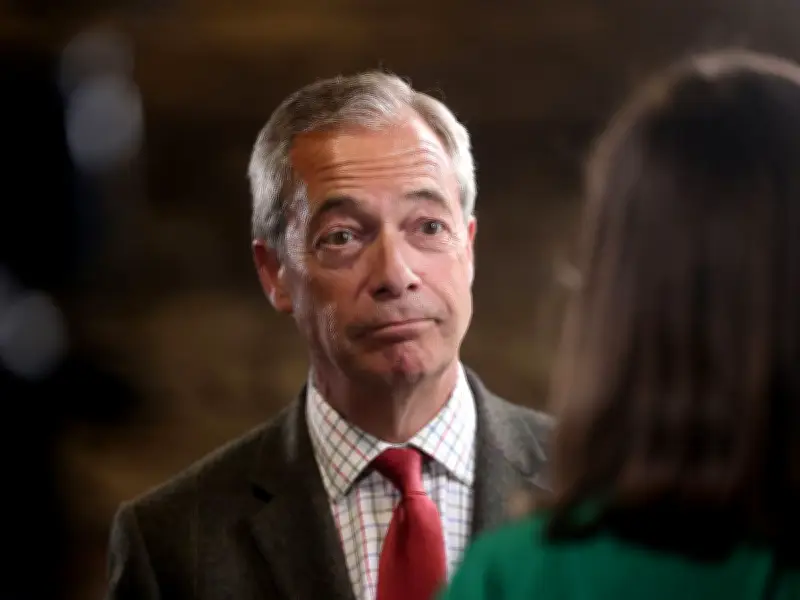
The Home Office has strongly rejected claims made by Reform's Robert Jenrick that the government deliberately withheld adequate security for Nigel Farage, labeling the assertions as 'categorically untrue'. In a heated radio interview, the former Conservative minister accused the government of 'playing politics' with the safety of politicians, specifically alleging that Farage was denied necessary protection due to his political views.
Home Office Response and Security Protocol
A Home Office spokesperson told The Mirror: 'Robert Jenrick’s comments are categorically untrue. Neither the Home Secretary nor Ministers are involved in the provision of security for MPs.' The responsibility for protective security measures for Members of Parliament lies with the Parliamentary Security Department, an independent body that assesses risk and allocates resources without political interference.
The controversy erupted after reports that Farage turned down a taxpayer-funded security package last year, which included a bodyguard, car, and trained driver. Reform claimed the offer was 'inadequate' and that the party took control of Farage's protection, describing the state package as a 'downgraded' version that represented a 75% cut compared to previous arrangements.

Security Under Scrutiny After Killing of Ann Widdecombe
The issue of politician security has come under intense scrutiny following the killing of Reform spokeswoman Ann Widdecombe last Thursday. Counter-terror police are leading the investigation into her death, which has heightened concerns about the safety of public figures, particularly those with controversial views.
According to reports by the i newspaper, Farage was offered security on par with that provided to Conservative leader Kemi Badenoch. However, Reform rejected this, stating in a statement: 'Nigel Farage is the most targeted politician in Britain and the only party leader who actually goes out to meet the public in huge numbers on the campaign trail. Within days of the assassination of Charlie Kirk, at a moment when the threat to public figures on the right was escalating, the security package Mr Farage was offered represented a 75% cut without clear reason.'
Jenrick's Accusations and Political Reactions
In his interview with the BBC's Today Programme, Jenrick said: 'The government chose not to give Nigel the security that he needed. That, I’m afraid, is playing politics with the safety of politicians, and I suspect that’s because they don’t like the views the Reform politicians take forward.' He added that Reform politicians are 'fighting the establishment every single day' and will not back down.
Commons Speaker Sir Lindsay Hoyle addressed the matter in Parliament, reassuring MPs: 'Every Member of Parliament is equal in their security to me – there is no difference between any member. When things are brought to my attention – because we don’t discuss security – I pass it on to the security people to deal with.' Home Secretary Shabana Mahmood offered Farage a meeting with the chairman of the Royal and VIP Executive Committee (Ravec), the independent body that decides security for high-profile figures.
Reform's Stance and Farage's Security Funding
Reform's home affairs spokesman Zia Yusuf, who is not an MP, claimed on X: 'The state is providing no protection whatsoever.' The House of Commons rejected this assertion, and Prime Minister Keir Starmer's official spokesman stated: 'It’s absolutely paramount that MPs can go out there in the wider world safely and freely. There is a rigorous and proportionate security system in place to ensure the safety of MPs and ministers.'
Farage has repeatedly highlighted the threats he faces, remarking last week: 'For daring to be outside the consensual view on many issues, I've been attacked again and again. And I am the most physically and verbally attacked public figure or politician of modern times.' In April, it emerged that Farage received a £5 million gift from crypto tycoon Christopher Harborne, initially described as funding for his security for life, though Farage has since declined to confirm how the money was used.