New analysis produced exclusively for the Guardian reveals how different voting systems would return wildly different seat totals in the UK parliament based on current polling.
While the current first past the post (FPTP) system could leave Reform UK just 30 seats short of a majority based on recent polls, the modelling shows how proportional systems would be likely to give the UK a more finely balanced parliament that better represents the votes people cast.
Progressive alliance under PR
New research conducted by More in Common suggests that, under proportional systems such as single transferable vote or regional party list, the UK could end up being governed by a progressive alliance of parties.

The new prime minister, Andy Burnham, has recently signalled support for proportional representation, adding his voice to other Labour figures as well as parties such as the Liberal Democrats, the Greens, the SNP and Plaid Cymru. Electoral reform has also enjoyed increased public support in recent years.
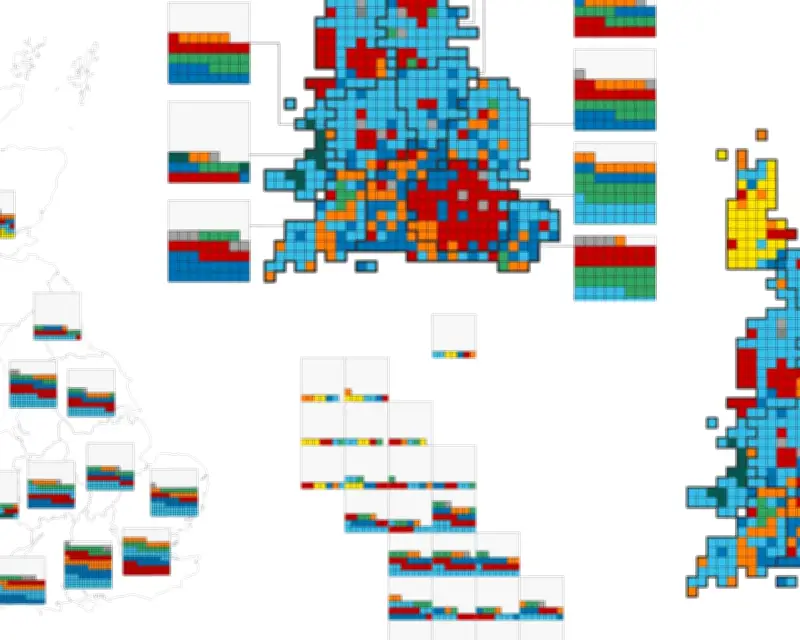
How proportional systems could change the map
Proportional representation (PR) aims to produce a parliament that more closely reflects how people voted, allowing voters to back their preferred party without worrying as much about tactical voting. It often makes it harder for a single party to win a majority and can result in more coalition governments.
Alongside the current first past the post system, More in Common modelled three different PR systems for the Guardian: regional party list, single transferable vote (STV) and additional member system (AMS).
The More in Common research shows that no single party would achieve a majority according to their projected polling, regardless of which system is used.
The current FPTP would give Reform 46% of the seats off just 28% of the vote, in touching distance of a strong coalition if the Conservatives lent their support.
Meanwhile, the proportional systems would not give Reform such a boost: regional party list is estimated to give them 28% of seats off 28% of the vote; AMS would give them 33% of the seats off 28% of the vote; and STV would give them 27% of the seats off 26% of the vote.
Under each of these systems, either a progressive coalition of parties – consisting of a combination of Labour, the Lib Dems, the Greens, the SNP or Plaid Cymru – or a Reform-Conservative coalition would be the only paths to forming a government.
Regional disparities
In the north-east of England, Reform is estimated to win 85% of seats under FPTP. However, this number would drop dramatically under proportional systems – to 51% under AMS, 33% under party list and 30% under STV. Each of Labour, the Greens and the Conservatives would be the main beneficiaries – with the Greens going from no seats under FPTP to at least four under the different proportional systems.
The same disparity can be seen in London, with Labour dominating the city under FPTP, with 64% of the seats. They wouldn’t get more than 40% of the seats under any of the other three proportional systems, with Reform and the Greens able to increase their representation in the capital.
Anouschka Rajah, Research Manager at More in Common, said: “Proportional representation would redraw the electoral map – Reform faring far worse in the North-East and East Midlands, the Greens establishing themselves in London, and Labour avoiding a wipeout in Wales.”
What is wrong with first past the post?
The most recent polling in Britain, as well as recent elections, show an unprecedented fragmentation of the political system. Reform currently leads on an average of 26%, with the Conservatives and Labour tying on 20%. The Greens and the Lib Dems are close behind on 14% and 12% respectively.
This is based on an average of the last 10 polls, and it is unclear how the polls may shift in the coming weeks with the Labour party choosing Andy Burnham as their new leader and prime minister.
With five parties clustered closely together in the polls, the FPTP system means that small shifts in vote share could produce highly volatile and sometimes counterintuitive seat projections, as marginal changes in local contests are amplified into large swings in parliamentary representation.

Calls for change
Incoming prime minister Andy Burnham told the Observer in May 2026: “I am committed to proportional representation. I think it would change the political culture. I don’t see how first past the post and the point-scoring inherent within it lifts Britain out of the doom loop it is in.”
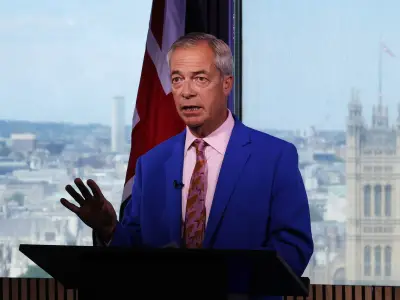
Farage has previously called for electoral reform, calling the current system “outdated” and “not fit for purpose”, but has gone quiet on the subject since Reform’s rise to lead the polls.
Could the voting system change?
Experts say any attempt to introduce proportional representation for Westminster elections would likely face strong pressure for a referendum, given its significance as a constitutional change and the precedent set by the 2011 referendum on the alternative vote system (AV).
More in Common’s Anouschka Rajah added: “Under proportional voting systems, which might replace [first past the post], the same votes could leave the country with dramatically different parliaments.
“Multi-party politics can lead to disproportional results – in our latest MRP model, a Green seat costs 280,000 votes, while a Reform seat costs 26,000. But proportionality isn’t all that voters want from their electoral system, and addressing this could have major implications for our politics.
“Under a party list system – the most proportional – smaller parties would become serious players, with knock-on effects on the kinds of coalitions which could form a government, and the likelihood of a government having a stable majority. Strikingly, on current polling a party list system puts the left and right blocs neck and neck, whereas first past the post hands the right a 157-seat lead.
“It is hard to predict how voters might adjust their own behaviour under a new system, but what is clear is that whether Burnham decides to change the voting system, and in what way, will shift the arithmetic of power for years to come.”
Darren Hughes, the Chief Executive of the Electoral Reform Society, told the Guardian: “The last general election produced the most unrepresentative Parliament on record in terms of the votes cast matching the seats parties won.
“That is in part because Westminster’s two-party first past the post system cannot cope with the multiparty politics we now have and is throwing up more volatile and distorted election results.
“Simply put, proportional representation is about ensuring Parliament more accurately reflects what voters express at the ballot box by ensuring seats match votes. That is the strongest foundation for our democracy and a vital step to rebuilding trust in our politics.”