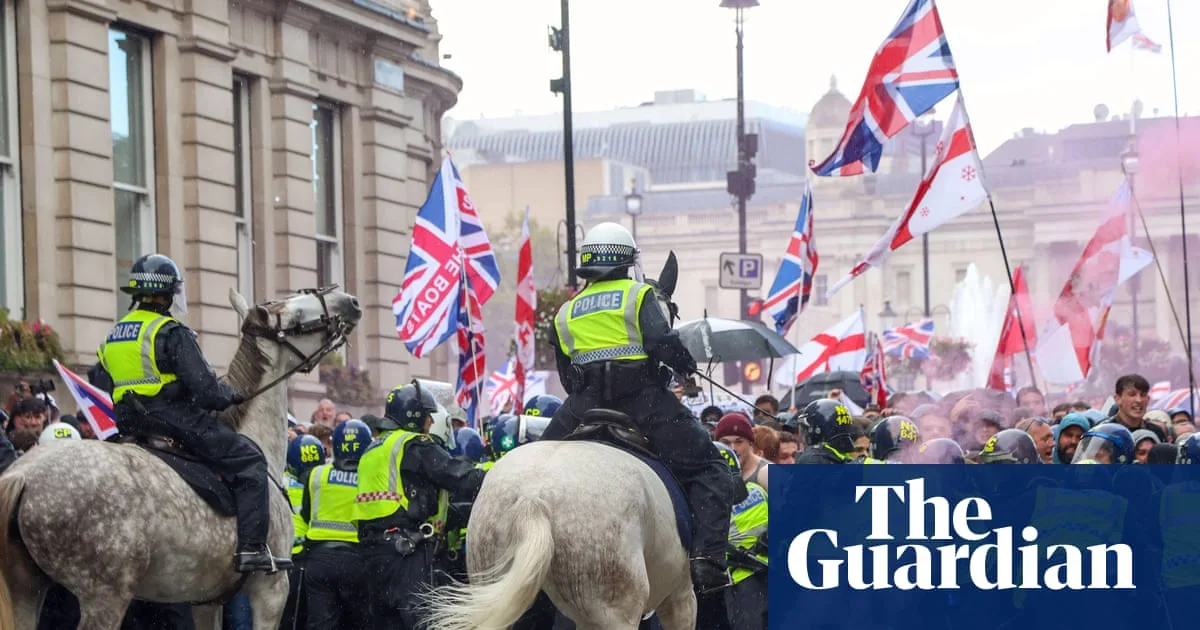
The number of people who believe being British is something you are born with has almost doubled in two years, according to research that warns of a rising tide of ethno-nationalism in Britain. The Institute for Public Policy Research (IPPR) analysis, based on a YouGov poll, found that 36% of people thought a person must be born British to be truly British, up from 19% in 2023.
Supporters of Nigel Farage's Reform UK held the most extreme views, with 71% saying British ancestry was a prerequisite for being truly British, and 59% saying they believed the nation was an ethnic, not a civic, community. More than a third (37%) of Reform UK voters said they would be prouder of Britain if there were fewer people from minority ethnic backgrounds in a decade's time, and 10% said it was important to have white skin to be a good British citizen.
Despite these findings, a majority of the public still believe Britishness is rooted in shared values. When asked what made a good British citizen, the most popular answers were obeying the law (64%), raising children to be kind (62%) and working hard (48%). Just 3% said it involved having white skin. When asked what would make them proud of the country in a decade's time, people prioritised good public services and quality of life, with 69% citing a well-functioning NHS, 53% affordability and 36% housing.

Parth Patel, an associate director at IPPR, said: 'Politicians and activists on the right are trying to change how we think about ourselves and one another. They believe belonging to this nation is defined by ancient rights and historical claims, and want the rest of us to believe that too. Worryingly, they are starting to change the hearts and minds of some people in Britain.'
The IPPR called on Keir Starmer to build on his Labour party conference speech, where he countered ethno-nationalist views, and develop a programme of national renewal founded on a clear vision of what kind of country Britain should be. In his speech, Starmer said he was engaged in a 'fight for the soul of our country' with the hard right, vowing to fight those who say people cannot be English or British because of the colour of their skin.