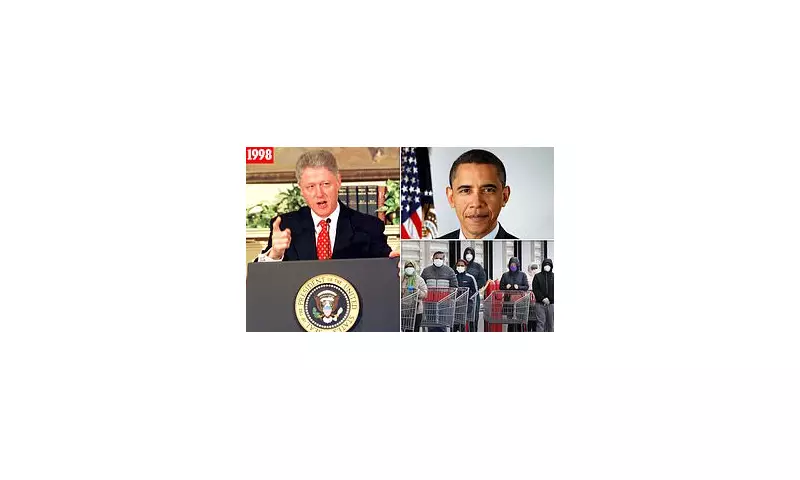
A remarkable public opinion survey from 1998 has resurfaced, revealing that Americans made a series of strikingly accurate forecasts about life in 2025. The poll, conducted by Gallup and USA Today, asked over a thousand adults to gaze into a crystal ball from an era defined by President Bill Clinton's impeachment, Titanic's Oscar dominance, and Michael Jordan's sporting triumphs.
Prescient Predictions That Came True
The 1998 respondents demonstrated remarkable foresight on several major social and political shifts. A significant 75% of those surveyed correctly anticipated the emergence of a deadly new disease, a prediction fulfilled by the Covid-19 pandemic. In the realm of politics and civil rights, their vision was equally sharp.
Nearly three-quarters of Americans predicted that gay marriage would become commonplace, a reality cemented by nationwide legalisation in 2015. Furthermore, 69% believed the country would elect its first black president, a forecast that materialised with Barack Obama's victory in 2008.

Trends Foreseen But Not Fully Realised
The poll also captured the direction of travel for several trends, even if the ultimate destination wasn't perfectly predicted. Most Americans expected online shopping to decimate physical stores and remote work to become the norm. While e-commerce giants like Amazon have soared and the percentage of US workers usually working from home more than doubled from 5.7% in 2019 to 13.8% in 2023, brick-and-mortar retail and office work remain prevalent.
Other partial hits included predictions about drug use and conflict. A majority foresaw illicit drug use becoming more common, with marijuana use rates indeed soaring. Just over half expected a full-scale war involving the US, which occurred with the invasions of Afghanistan and Iraq in the early 2000s.
Misses, Pessimism, and Changing National Mood
Not all forecasts hit the mark. Respondents were overly optimistic in healthcare, expecting routine lifespans of 100 years and cures for AIDS and cancer. They also anticipated electing a female president by now. In a more pessimistic vein, many predicted a decline in privacy, personal freedom, environmental quality, and moral standards.
Perhaps the most poignant shift captured is in the national mood. In 1998, 60% of Americans were satisfied with the country's direction. Today, that figure has plummeted to less than a quarter, highlighting a profound change in public sentiment over the past 27 years.