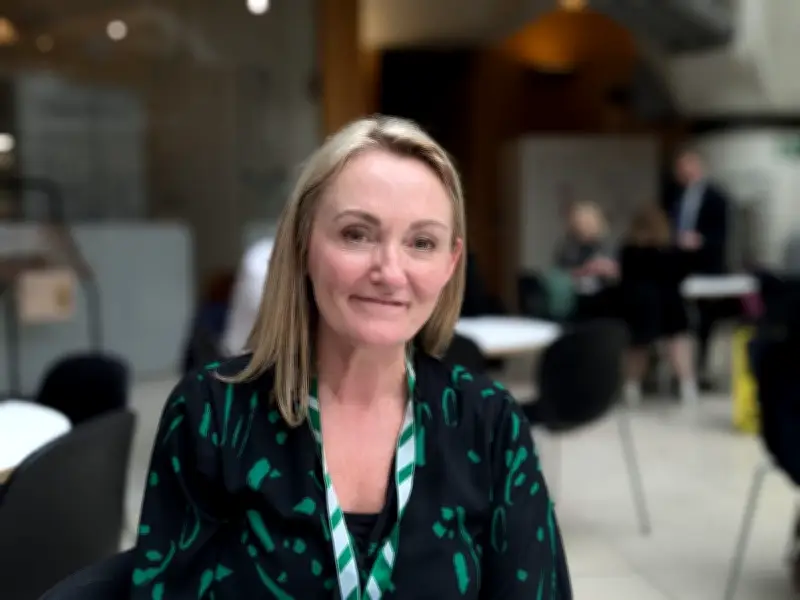
Leigh and Atherton MP Jo Platt is leading a Westminster Hall debate on regional accents and social mobility, arguing that people from working-class backgrounds should not have to soften their accents to get on in life.
The Debate on Accent and Opportunity
The debate, scheduled for Wednesday July 15, will examine how regional accents shape perceptions of competence, authority and credibility in politics, the workplace and public life. Platt, who grew up in Salford and has lived in Leigh for over two decades, says her accent is a mix of Salford and Lancashire, and she should not have to change it to get on in politics.
In a newsletter, Platt stated: "Regional accents continue to shape perceptions of competence, authority and credibility in ways that are often subtle but deeply consequential, influencing opportunities in politics, the workplace and public life."

Personal Experience and Broader Implications
Platt shared her own experience: "As someone who grew up in Salford and has lived in Leigh for more than two decades, like many people from working-class backgrounds, I have questioned whether sounding different would make me appear more professional or more credible."
She noted that this experience is "far from unique" and that many people feel pressure to modify the way they speak in interviews, boardrooms and workplaces. "They soften vowels, flatten regionalisms, or consciously adopt what they perceive to be a more 'neutral' voice," she said.
Government Blueprint on Socio-Economic Diversity
The debate comes after a new government blueprint aimed at improving social mobility in the Civil Service. The document acknowledges that working-class people should not have to alter their regional accents to succeed. It highlights that people from higher socio-economic backgrounds make up 54% of Civil Service staff, compared with 37% of the wider workforce, and that routes to success are heavily influenced by class norms, geography and biases about regional accents.
Accent and Identity in Parliament
Platt recalled her first entry into Parliament in 2017: "Westminster felt worlds away from both Salford and Leigh. I remember listening carefully in committee rooms and corridors, wondering whether there was anyone who sounded remotely like me." She added that she later discovered colleagues across both Houses who were proud of their regional identities.
She said: "Beneath the public image of Parliament lies an increasingly diverse collection of accents, backgrounds and life experiences. That diversity is not something to smooth away; it strengthens our democracy."
Research on Accent in Politics
Platt hosted a Parliamentary drop-in session to support new research by Professors Rob Drummond of Manchester Metropolitan University and Amanda Cole of the University of Cambridge, examining accent, authenticity and representation in British politics. The research aims to understand how politicians experience judgement based on the way they speak.
According to Platt, the conversations demonstrated that "accent is never simply about pronunciation. It often serves as a proxy for class, geography and belonging, shaping perceptions of intelligence, competence and leadership in ways that frequently escape conscious recognition."
She concluded: "Our accents are not imperfections to be polished away. They are evidence of the communities that shaped us, the journeys that brought us here and the diversity that enriches our democracy. In politics - as in every profession - we should be judged by the strength of our ideas, not the sound of our voices."