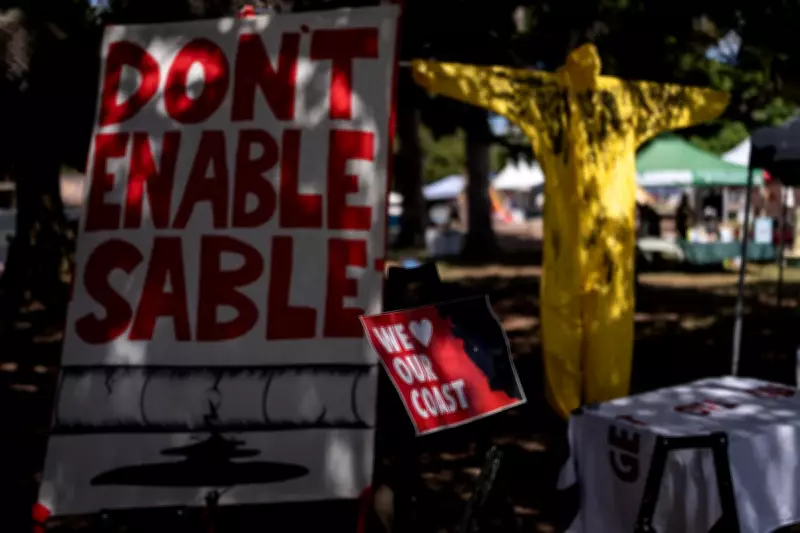
California's ongoing legal battle with the Trump administration over an oil pipeline through a state park is testing the limits of state authority against federal demands during wartime. The administration invoked a Cold War-era provision to restart drilling off Santa Barbara, citing national security amid the Iran conflict.
Pipeline Restart Sparks Trespassing Lawsuit
Crude oil from the Pacific Ocean is flowing again through a pipeline crossing Gaviota State Park, marking the first such operation in over a decade. The Trump administration overrode state objections, deeming the restart essential for national security. State officials, however, call it trespassing and are seeking a court order to halt operations and remove the pipeline.
The pipeline system, owned by Texas-based Sable Offshore Corp., had been idle since a 2015 rupture caused one of California's worst oil spills, fouling beaches from Santa Barbara to Los Angeles. The spill devastated marine life, including endangered whales and sea turtles, and crippled the fishing industry.

Cold War Law Invoked for Energy Security
Energy Secretary Chris Wright used the Defense Production Act on March 13 to direct Sable to restart production, arguing that boosting domestic oil supplies is crucial to lowering gas prices during the Iran war. He noted that over 60% of California's refined oil comes from overseas, much of it through the Strait of Hormuz, posing serious security threats.
This litigation is part of a broader conflict over states' rights to challenge federal actions, even in wartime. The Trump administration has rolled back regulations to expand coastal drilling, drawing fierce opposition in Santa Barbara, where the 1969 oil spill sparked the modern environmental movement.
Legal and Environmental Opposition
A state judge previously ordered the operation halted until Sable complied with state regulations. The Santa Barbara District Attorney filed felony charges against Sable for polluting waterways and harming wildlife during repairs. Sable maintains it has proper permits.
The U.S. Energy Department claims the project will boost California's in-state oil production by 15%, replacing nearly 1.5 million barrels of foreign crude monthly. However, experts like Paasha Mahdavi of UC Santa Barbara argue the crude is heavy and costly to refine, and the 50,000 barrels per day output is negligible globally, with no impact on domestic gas prices.
California Attorney General Rob Bonta, who has filed two lawsuits, dismissed the national security rationale as fabricated. The Energy Department and Sable did not respond to requests for comment.
Precedent and Concerns
The Defense Production Act, signed by President Truman during the Korean War, has been used before—by Presidents Clinton and Bush for energy crises, and by Biden for solar manufacturing. But legal experts say it has never been applied so aggressively against state regulations. Deborah Sivas of Stanford Law School called the expansion anxiety-producing, as it preempts state law and could usher in new offshore drilling.
California's trespassing case hinges on property rights and federal overreach. State officials argue that permission to use the pipeline on state land expired in 2016, a claim Sable disputes. Sivas noted that courts are reluctant to second-guess federal emergency orders, especially during war.
The Trump administration has also exempted Gulf of Mexico drilling from the Endangered Species Act and approved a deep-water project there, citing national security. Defense Secretary Pete Hegseth warned that environmental lawsuits could hobble domestic energy supplies amid the Iran war.
Ongoing Legal Battle
Santa Barbara County Superior Court Judge Donna Geck recently upheld an injunction against Sable, despite the company's argument that Wright's order overrides state law. The U.S. Department of Justice is seeking to modify a post-2015 spill decree that gave California final say over the restart. Sable is pursuing hundreds of millions in damages for alleged regulatory overreach.
Geck ruled that the Defense Production Act order does not permit violations of state regulatory law. As the legal fight continues, oil continues to flow through the contested pipeline.