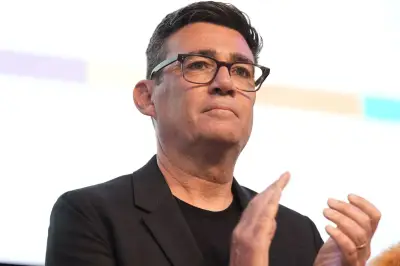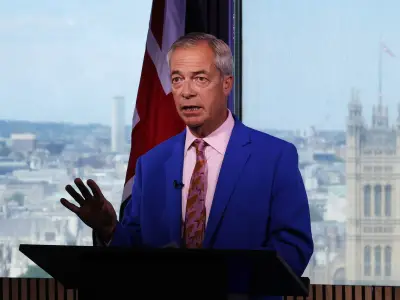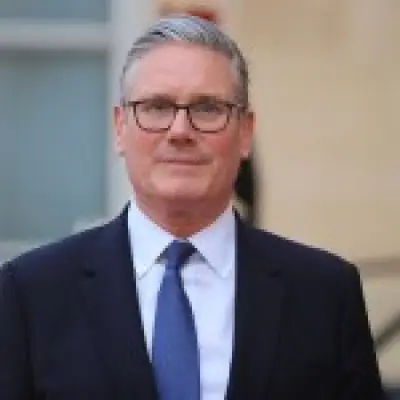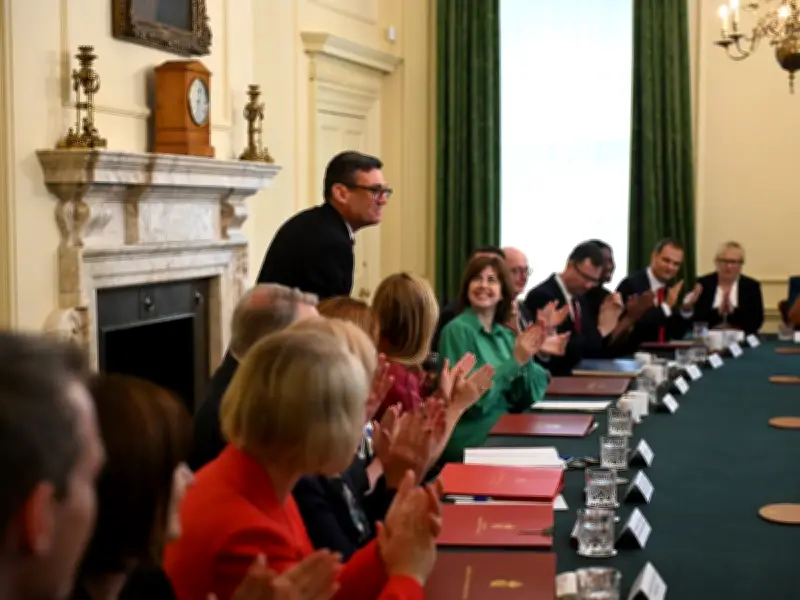
Andy Burnham has constructed the most northern cabinet in modern British political history. Of the 23 full members, including the Prime Minister, 11 represent constituencies in northern England. When the wider group of ministers eligible to attend Cabinet is included, that rises to 13 out of 27 MPs. Almost half of the people around the Cabinet table therefore represent seats in the North.
Northern representation increases significantly
That is a significant change from the previous Labour administration. Under Sir Keir Starmer's final Cabinet, 10 of 25 Cabinet attendees represented northern constituencies.
The increase is particularly pronounced in the North West. The number of Cabinet attendees representing North West seats has risen from two under Starmer, Lisa Nandy and Jonathan Reynolds, to seven under Burnham. They are the Prime Minister himself, Manchester Central MP Lucy Powell, Ashton-under-Lyne MP Angela Rayner, Wallasey MP Angela Eagle and Knowsley MP Anneliese Midgley.

The Yorkshire presence is also substantial. John Healey, the new Chancellor, represents Rawmarsh and Conisbrough. Ed Miliband, appointed Foreign Secretary, represents Doncaster North. Louise Haigh represents Sheffield Heeley. Yvette Cooper represents Normanton and Hemsworth. The North East is represented by Bridget Phillipson in Houghton and Sunderland South and Alan Campbell in Tynemouth.
Senior positions held by northern MPs
The significance is not simply that more northern MPs are present. Labour has always had a strong northern parliamentary base. The difference is the seniority of the positions they occupy. This is not a Cabinet where northern MPs provide regional representation while the major levers of power remain elsewhere.
The Prime Minister, Chancellor, Foreign Secretary, First Secretary of State, Health Secretary, Education Secretary, Housing Secretary and Culture Secretary all have northern constituencies.
The 'northernisation' of Burnham's Cabinet goes beyond numbers. For the first time in modern politics, all four of the great offices of state are held by MPs representing constituencies outside London and the south east, with the Prime Minister, Chancellor and Foreign Secretary all coming from northern England and Shabana Mahmood from Birmingham.
Symbolic and actual shift in power geography
It is both a symbolic and actual shift in the geography of power. The offices traditionally associated with the centre of the British state are now held by politicians whose political responsibilities remain primarily to constituencies outside the north circular.
The people the new PM has chosen also reveal something about the political relationships that have shaped his rise. Several of the figures around the table are politicians with whom Burnham has developed close working relationships over recent years.
Louise Haigh's appointment as First Secretary of State and Chancellor of the Duchy of Lancaster is particularly significant. The Sheffield MP was among the northern Labour figures who played an important role in Burnham's Makerfield campaign and is now positioned at the centre of government.
Her role places a politician closely associated with the argument for regional empowerment at the heart of Whitehall. Angela Rayner's return to government is another important part of the picture. The Ashton-under-Lyne MP's political journey has taken her from Labour's grassroots movement to one of the most senior figures in government. Her appointment as Housing Secretary aligns closely with Burnham's focus on housing supply, regeneration and giving communities greater influence over development.
Greater Manchester and Yorkshire threads
There is also a strong Greater Manchester thread running through the Cabinet. Lucy Powell, representing Manchester Central becomes Education Secretary. Lisa Nandy retains responsibility for Culture. Jonathan Reynolds, the Sunderland-born MP representing Stalybridge and Hyde, returns as Business Secretary. Together with Burnham and Rayner, they represent a concentration of political figures whose careers have been shaped by the North West.

The Yorkshire presence provides another important dimension. John Healey's promotion to Chancellor gives Burnham a senior figure with deep northern roots and extensive government experience. Ed Miliband brings the authority of a former Labour leader and is a long time friend and supporter of Mr Burnham on the so-called 'soft left'. Yvette Cooper provides further northern representation, although her appointment also demonstrates that this is not simply a Cabinet of personal loyalists.
The common thread is not factional allegiance but a shared connection to places outside Westminster. That distinction is important because the Cabinet also has to answer an obvious question: does a government with such a strong northern identity risk becoming too regionally focused?
Jonathan Reynolds, the Business Secretary, rejected that argument when challenged on Radio Four on Tuesday morning. The Sunderland-born MP said: "I don't want to get touchy about it, but I can't remember previous occasions where people have objected to too many people from a different part of the country being in there."
He argued that the Cabinet reflected a Prime Minister determined to make the economy work for every part of the country. Burnham's argument has never been that the North should replace London as the only centre of power. It is that power should be distributed more evenly. The test of the Cabinet will therefore be whether northern representation translates into a different approach to governing the whole country.
Gender and ethnic diversity in Cabinet
The composition of the Cabinet also tells another story about representation. Burnham has appointed the first Cabinet in British history where women outnumber men. Of the 23 full Cabinet members, 12 are women and 11 are men. That surpasses the previous record set by Starmer's first Cabinet in 2024. However, the picture is more complicated when looking at the most senior offices. Only one of the four traditional great offices of state is held by a woman: Shabana Mahmood as Home Secretary. This compares with Starmer's final Cabinet, where three of the four roles of Prime Minister, Chancellor, Foreign Secretary and Home Secretary were held by women. The Cabinet has therefore broken a significant barrier on overall representation while also revealing that the highest levels of political power remain less balanced.
The same complexity applies to ethnic diversity. Three of the 28 ministers eligible to attend Cabinet are from ethnic minority backgrounds: Miatta Fahnbulleh, Shabana Mahmood and Kanishka Narayan. That is an increase on Starmer's final Cabinet, but below levels reached by some recent Conservative administrations.
A new era: Mancminster
The broader picture is therefore one of a Cabinet that has changed the geography of power more dramatically than any previous modern government, while making progress on some measures of representation but not others. The immediate symbolism is clear. For decades, Labour's relationship with the North has often been described as one in which northern communities provided the votes while political power remained concentrated elsewhere. Burnham's first Cabinet represents an attempt to alter that relationship. The North is no longer simply around the Cabinet table for representation, it is becoming part of the machinery through which Labour and Mr Burnham intend to govern. It is the clearest indication yet of the direction Burnham wants to take: a government that does not simply speak about transferring power away from Westminster, but one that places politicians shaped by different parts of the country at the centre of national decision-making. Welcome to Mancminster.