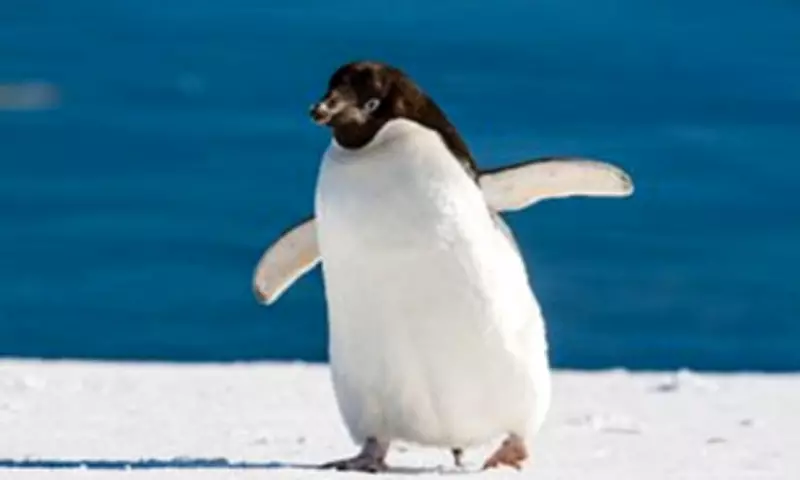
Picture the scene – you are cross-country skiing across an icy snowscape: just you, the frozen sea and a group of tobogganing Adelie penguins. As you pass, they waddle over, curious to see what you are doing. Deciding that you are probably all right, they continue tobogganing on their bellies alongside you as you ski back to your camp.
A Magical Encounter
Happily for conservation biologist, writer and seabird ecology researcher Louise Blight, this is but one of the magical penguin encounters she experiences while on a research trip to Antarctica. This beautifully written memoir of her three months stationed at Cape Royds carves out a fantastical image of the frozen world.
Blight is there in part to flee the grief of losing her sister to cancer, but mainly to study the Adelie penguin colonies native to the continent. To do that, Blight and the project’s leader, ecologist and Adelie penguin expert David Ainley, head from the warm, civilised main base of McMurdo Sound to the wilder climes of Cape Royds.

The Harsh Antarctic Environment
Everything in Antarctica is hard – every few kilometres there are remnants of previous expeditions. Reminders of Scott and Shackleton are omnipresent. Scott’s Discovery Hut, which was built as a storehouse for his 1901-04 expedition, is still fully intact – a windblown microcosm still stocked with ancient tins of Bovril and baking soda, plus two air-dried, desiccated sheep carcasses.
The cold is one thing – temperatures get down to -20C and the wind blows at 80 knots (on land that means ‘violence and destruction’ will ensue). But there are funnier inconveniences to Antarctic life. Urine is flown by helicopter from smaller camps to McMurdo and then, for disposal, to whichever country those who produced the urine are from. Nightly sit-ups are necessary if you want to be warm enough to get to sleep. And suncream belongs on every tiny exposed crevice of skin, not just the top of your nose or forehead.
Observations of Penguins and People
Blight’s accounts of the activity of the penguins are so quietly observant that you read almost holding your breath so as not to disturb the little birds. Yet it is the human connection, or lack thereof, that underpins Blight’s story – from Brien, who edits the local Antarctic newspaper, and Erik from Nasa studying the ozone hole, to Paul, a relative of the Kray brothers, and Murray, the friendly Kiwi who leaves Blight piles of his high-calorie Bumper Bars.
The Kiwis come off awfully well in this – with their high-sugar treats and merino long johns, they provide a jolly and laid back approach to sub-zero life. It is funny that despite the fact that all these people are living in Antarctica and surely working on fascinating things, nothing excites them more than the prospect of visiting the penguins. The hold these flightless birds have on us is vice-like.
The Enigmatic Companion
The most enigmatic character in Blight’s frozen life is her Royds companion, David. For the three months they are together he barely speaks – his voice going ‘hoarse’ from lack of use – and it is only towards the end of their time together that Blight discovers he is married and has a dog. She gleans this from a colleague – God forbid David should reveal something about himself. Blight is more forgiving than most would be, chalking up his silence to introversion rather than rudeness. However, you are left wondering if it really would have pained him to utter a few more words a day.
Healing in the Frozen Kingdom
Blight set off on this journey after the death of her sister. She arrives almost paralysed by grief, having put her PhD and life on hold. Yet, in the cold quiet of this frozen kingdom among the Adelies, she leaves with a new-found peace on which she can begin to build a new life.