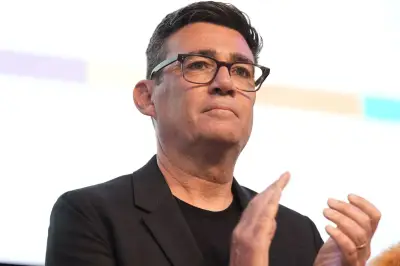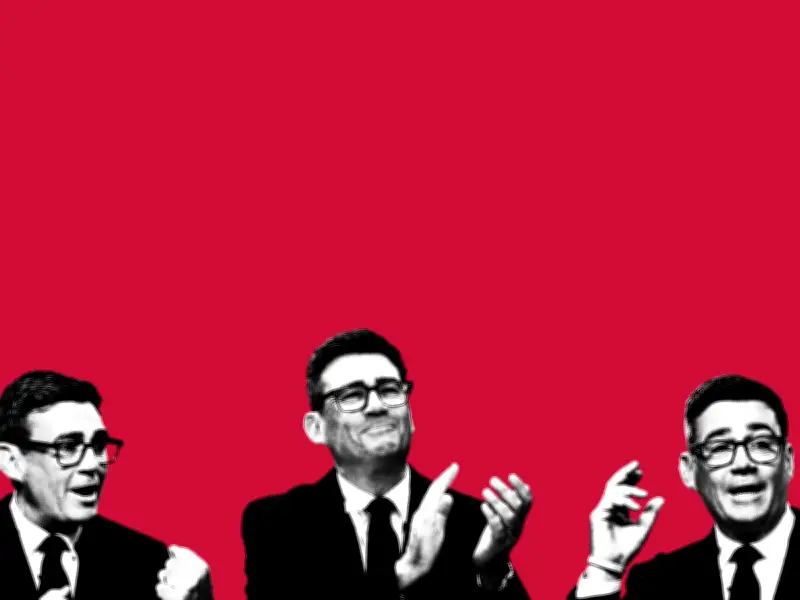
Andy Burnham officially became the leader of the Labour Party on Monday, receiving the metaphorical nuclear codes after a leadership contest with only one candidate. The announcement, made at Congress House in London, marked a significant moment for a politician who has spent the last eight years as Mayor of Greater Manchester, focusing on bus fares and regional issues.
Speaking to the press, Burnham declared he was “good and ready” for the challenge ahead. The venue, steeped in trade union history, was chosen deliberately to signal a return to Labour's roots. Shabana Mahmood, tipped as a future Chancellor, announced the result with a smirk, noting it was “hardly a nail-biter.”
Overwhelming Support and Unity
Burnham received 379 parliamentary nominations and backing from all 11 affiliated trade unions, making him a rare unity candidate in modern Labour politics. He paid tribute to predecessor Keir Starmer, promising to build on his foundations. In a nod to his broad support, he thanked Catherine West, the only other potential candidate who never formally challenged.

His victory speech focused heavily on his political home turf, referencing the people of Makerfield and forgotten places across the UK. He pledged to restore the Labour Party that voters once knew, emphasizing a need to move beyond factionalism and briefing culture.
A New Political Philosophy: Burnhamism
The speech was less a list of policies and more an attempt to define a new political philosophy, which some have dubbed Burnhamism. Burnham directly attacked four decades of neoliberal economics, arguing that Britain’s problems stem from concentrated power in Westminster and privatization. He called for aggressive devolution, giving local communities more control over housing, buses, railways, and economic development.
Drawing on his experience as Mayor of Greater Manchester, Burnham framed inequality in geographic terms, highlighting former industrial centers that have been neglected since the 1980s. This structural critique was unusual for a Labour leader on the cusp of Downing Street and signaled a desire to fundamentally rewrite Britain’s governance model.
Hillsborough as Political Origin
Burnham repeatedly referenced the Hillsborough disaster as his political origin story, specifically the moment he stood in front of the Kop in April 2009. He argued that this experience forced him to confront how British institutions fail working-class people, shaping his obsession with accountability and justice.
The speech was notably light on immigration, identity politics, and culture-war issues. Instead, Burnham focused on material concerns like buses, trains, housing, apprenticeships, and high streets. He argued that Labour succeeds when it speaks confidently in its own language, rather than trying to outflank other parties.
Challenges Ahead
Burnham promised a “one Labour team” approach, vowing to end briefing culture and reject factionalism. He stated he would not suspend or marginalize members for holding differing views. However, the first test of this commitment will come when he announces his cabinet on Monday afternoon. He claimed no decisions have been made yet, a statement few believed.
As the famous philosopher Mike Tyson once said, “Everyone has a plan until they’re punched in the face.” The real work begins now, as Burnham must translate his metro-mayoral ideas to the national stage. The water fights are over; the nuclear codes are in the case.