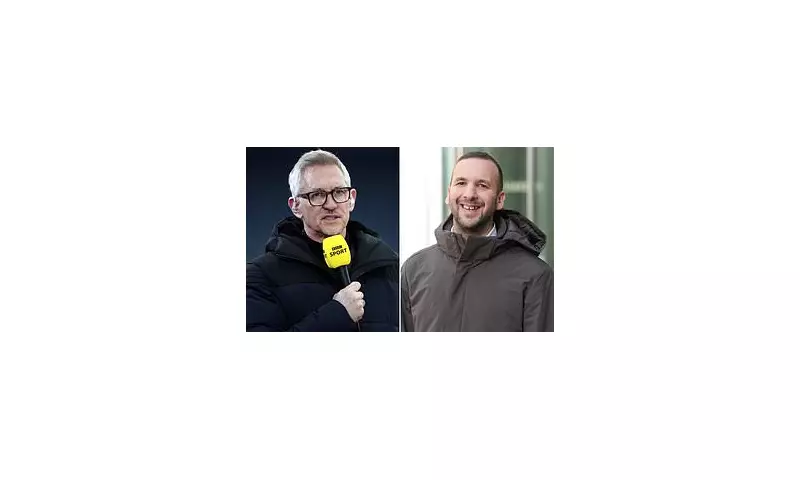
Former Match of the Day host Gary Lineker has declared that it is "impossible" for the BBC to be impartial on every issue, while suggesting there is "a bit too much influence from previous governments" at the top of the corporation.
Lineker's Candid Podcast Interview
The 65-year-old broadcaster made the remarks during an interview with Green Party deputy leader Zack Polanski for the Bold Politics With Zack Polanski podcast, set to air from 3pm on New Year's Eve. Lineker, who stepped away from his BBC role in May following a series of rows over his social media activity, reflected on his three-decade relationship with the broadcaster.
"I had lots and lots of great times at the BBC. I loved the people that work there," Lineker stated. However, he was forthright in his criticism of its leadership structure. "I think at the top at the moment there's probably a bit too much influence from previous governments etc." He argued that the corporation needs to examine "the way that at the top of the BBC that ultimately make the big decisions, and the influence that they have on certain things."

A History of Controversy and 'Moving Goalposts'
Lineker's departure from the BBC culminated after he shared a post about Zionism on Instagram that featured a depiction of a rat, an image historically used as an antisemitic insult. The ex-England footballer, who earns £1.35 million a year from the BBC, issued an unreserved apology, stating he had simply "missed an emoji" and "would never associate any group of people, any person, with a rodent".
He believed the apology "should have been enough - but it wasn't". Despite this, Lineker told The Standard earlier this month that his exit was "beautiful because everyone supported me", and people "recognised I did nothing untoward".
This was not his first impartiality clash. He was temporarily suspended in March 2023 after criticising the government's asylum policy on social media. Lineker explained that when he joined social media in 2012, BBC impartiality guidelines "didn't apply at all" to those outside news and current affairs. He claimed the rules changed in 2019: "so they just moved the goalposts and expected us just to go along with it". His response was to "carry on as normal".
Backing for Departing Director-General and Panorama Row
Lineker also commented on the recent resignation of BBC Director-General Tim Davie, who left last month amid impartiality concerns, including over the editing of a Donald Trump speech in a Panorama documentary. Lineker revealed he texted Davie to ask if he was okay, receiving a nice message back, and added, "I always liked Tim."
"The only place the BBC is probably a bit partial is the board. There is massive influence and Tim Davie has paid the price," Lineker asserted. Regarding the Panorama editing, he suggested it was likely an error, saying, "I can't imagine anyone thinking, 'If we put that there it makes him look worse.'"
Despite his criticisms, Lineker maintained his belief that the BBC remains "the most trusted news source" in the UK. His interview underscores the ongoing tension between high-profile BBC presenters, their personal expression on social media, and the corporation's stringent impartiality rules.