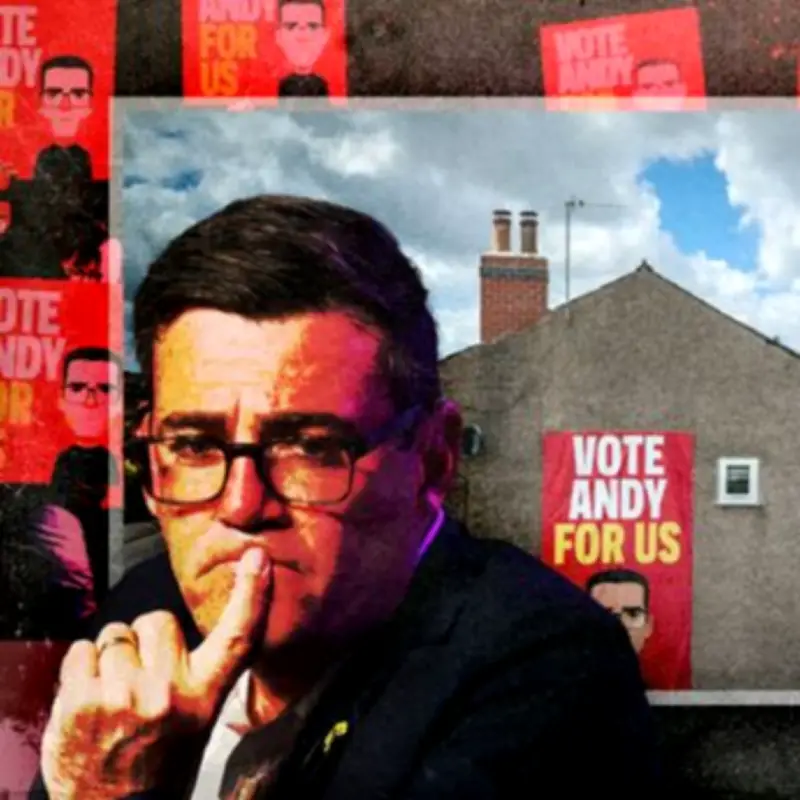
Labour are nervous. Andy Burnham is ahead in all of the reputable polls taken since the campaign began proper. Internal Labour data points in the same direction. Campaign organisers say they have knocked every door in the constituency. But no one is relaxing.
The Manchester Evening News has spoken to a string of Labour sources about the Makerfield by-election as it enters its final week. Through our conversations we have learned what is likely to happen next if Andy Burnham wins. While Labour remains unsettled about the outcome of the by-election, insiders say discussions are taking place about Keir Starmer's exit, which they say could be either a 'bloody mess' or a 'dignified route'.
Positive Signs but Persistent Worries
The signs and signals for the Labour campaign are at this point overwhelmingly positive. They claim more than 50,000 conversations have taken place with voters. Yet despite this, the feeling among senior figures associated with the campaign is that the race remains perilously close. 'We're worried about Reform getting out their voters,' one senior Labour source told us. 'They are good at that. We need to get our vote out more.' Another put it more bluntly: 'It's very tight.'
The narrative that the contest is close is one that's useful for Labour at this point. The party is typically strong on the ground and will have a massive get-the-vote-out operation on the day. It's also worth noting that lots of people will have already voted, postal votes are an area where Labour are also typically strong.
A Test Case for Labour's Future
Makerfield, a Labour heartland nestled in the old industrial belt of Greater Manchester, should not be a by-election that causes sleepless nights. Yet Labour insiders believe it has become a test case for a deeper question confronting the party: how do you win back voters who have not simply drifted away from Labour but have lost faith in politics altogether?
The answer, they believe, is not to talk about Labour; it is to talk about change. 'People haven't left Labour, Labour has left the people,' said one campaign figure echoing Burnham's earlier statements. 'The reason people are voting for Reform and Green is that they are crying out for change. They are looking for a party that is offering change and that is what we need to do.'
Reform's Strong Showing in Local Elections
In the May 2026 local elections, Reform performed exceptionally strongly across the wards that make up the parliamentary constituency of Makerfield. Aggregated ward results show Reform won around 50.4% of the vote compared with 22.7% for Labour and 10.9% for the Greens. There were a series of council gains as a result: Ashton-in-Makerfield South, Abram, Bryn with Ashton-in-Makerfield North, Golborne and Lowton West.
The results pointed to a clear conclusion - the cracks were beginning to appear in the walls of a Labour citadel. Pollsters are largely in agreement that if any candidate except Burnham was standing for Labour they would not have a chance. During the mayoral elections in 2024, Wigan was one of Burnham's best boroughs. He picked up 68% of the vote.
The Burnham Effect
The Labour campaign has operated with near-military intensity over the past few weeks. In the early stages around one in six voters identified as undecided, according to Labour insiders. Rather than that being a warning sign, campaign strategists viewed them as an opportunity. 'This was encouraging because it said to us that people who had voted Reform just weeks earlier were not sure,' one source said. Since then the number of undecided voters has fallen sharply, and crucially the campaign believes that those moving into Burnham's column tend to stay there.
The much-touted Burnham effect has been a key component of the campaign. The candidate himself, multiple sources told us, has proved to be Labour's greatest asset. 'It's the best use of a candidate I have seen,' one senior figure said. The Mayor of Greater Manchester can still do something many national politicians struggle to achieve: persuade people who are sceptical about politics that he understands their frustrations and, crucially, that he can change things.
That desire for change has been recognised as a clear frustration that voters have. Burnham's team seem to have successfully positioned him as the change candidate despite the fact he is one of the most visible members of the party of government and has been for thirty years. The Burnham campaign, headed up by Lou Haigh, has been mostly error free, positive and authentic. One observer describes Haigh as helping Andy Burnham be 'the best version of himself'.
Voter Sentiment and Immigration
Meanwhile, the message in the constituency is often remarkably consistent. Voters tell campaigners and journalists broadly the same things: they feel ignored, left behind and completely disconnected from the decision-makers in Westminster. There has been a huge emphasis on immigration in this campaign, but some Labour figures think this misses the point. The rise of anti-immigrant sentiment and the impact of Restore Britain cannot be explained away easily, some argue. 'You can't tell me Wigan became racist overnight,' one senior Labour figure said. 'People are angry about us. This is not about Reform.'
Andy Burnham has maintained a healthy distance from the party in Westminster in recent years, and that seems to have insulated him to a large extent from the dramatic fall from grace of the party in Westminster and Keir Starmer's now toxic unpopularity. That firewall has been crucial. 'The way you win in these towns,' said one figure close to the campaign, 'is economically left, respect for the social contract, insurgent versus incumbent.'
Burnham's distance from Labour, and the clear framing of the contest as the beginning of his tilt at the job of Prime Minister, has helped the Mayor of Greater Manchester position himself as the insurgent. 'People believe the system is against them,' one source told us. 'Keir Starmer embodies the system and Andy is the opposite.'
Question Time Impact
There have been many interventions from outside the campaign seeking to influence the outcome, from Carol Vorderman to Steve Coogan and a range of MPs in between. But some party insiders believe there was a significant moment in the campaign: Question Time. When the flagship politics show rolled into Greater Manchester, Rob Kenyon's performance demonstrated he struggled with intense media scrutiny. He was visibly uncomfortable under pressure when pressed on his controversial social media history including past derogatory comments about women and a series of conspiratorial Covid-19 posts.
The fact that high-profile critics like Vorderman had spent weeks highlighting these exact posts only magnified his discomfort when forced to defend them live on air. Some in Labour believe the local impact of that broadcast was significant. 'Wiganers are proud,' one told us. 'They are embarrassed at the thought of someone representing them who would show them up on national television. They want someone they can be proud of, not someone they have to defend.'
Despite this, and a series of fairly disastrous subsequent Kenyon interviews, along with the polls and the message on the doorstep, many in Labour remain anxious about the existence of hidden Reform support. Several campaign veterans point to previous elections where Reform voters appeared absent during canvassing, only to turn out in large numbers on polling day. 'There was a trickle, then a flood,' one organiser recalled of an earlier contest. 'They came from the pub and the gym.' The memory still haunts the campaign.
Wider Implications for Labour
That nervousness extends way beyond the boundary limits of Makerfield. The wider implications of the result can't be ignored. Inside Labour, three questions dominate private conversations. Can Burnham win? How convincingly can he win? What would victory mean for the future of the party? In short, Makerfield is the real world test of whether Burnham's pitch to lead the Labour Party and the country is on solid ground. If he can't win in Makerfield, he can't win the country.
Despite a huge amount of speculation, senior figures connected to the campaign insist that no formal decisions have been made about what comes next if Burnham wins. Much depends on the result in the early hours of Friday morning and the Westminster machinations that follow it. 'What happens next is not in our hands,' one source said. Crucially, Burnham's supporters insist they do not want to be seen as the people forcing a leadership crisis. 'We would prefer not to be the first to start a leadership contest,' one ally said. 'We want to continue to be the good guys.'
There has been some suggestion that Andy Burnham would hold back on any leadership challenge until the question of the next Mayor of Greater Manchester was settled on July 30th. It is widely believed the candidate for Labour will be the current leader of Manchester City Council Bev Craig - whose chances would inevitably be boosted by Burnham's media profile. Some argue that events may quickly move beyond their control. 'There is no way the parliamentary party will wait until after a mayoral election,' one senior figure predicted. It is understood that were he to win, whatever happens next Burnham will be present to support Bev Craig's campaign if she is selected.
Transition Talks
The feeling within the Burnham camp, unsurprisingly, is that an orderly transition from a Starmer leadership to a Burnham one would be best for their man, the country and crucially for Starmer himself. Insiders tell us that the Prime Minister is 'extremely angry' about what has happened - it therefore might not be an easy conversation. 'Starmer can go out in a bloody mess and get battered, which is embarrassing, or he can take the dignified route through legacy,' one person told us.
Burnham is believed to be keen to work with Starmer on the transition and should he win in Makerfield a conversation is expected between the two within days of the result. Such discussions, of course, remain highly speculative. As it stands Burnham's team are focusing on Makerfield and are largely disregarding the polls - the majority of which are within the margin of error. A poll for the Sunday Times over the weekend that put Labour 12 points ahead has been largely dismissed. The fear of the hidden Reform voters remains significant.
The implications for Burnham, the country and the Labour Party could not be bigger - and for now no one is taking anything for granted.