Inside the Labour Party they had three questions about Andy Burnham. Overnight in Ashton-in-Makerfield voters answered two of them conclusively. The third is still to be decided. Could Burnham win and how convincingly was asked and answered in the early hours of Friday morning. The third question, what victory would mean for the future of the party, remains pending.
There was much talk ahead of the Makerfield by-election of how close it could be between the insurgent Reform Party and Labour's King of the North. In the end it was nowhere near. Burnham romped home with 54.82% of the votes cast, some 24,937. Reform managed 34.51% of the vote, some 15,696. The much-anticipated intervention from Restore, considered by some to be a decisive factor ahead of the election, proved an anti-climax as Rupert Lowe's party picked up just 6.84% of the vote.
Victory Speech: A Call for Change
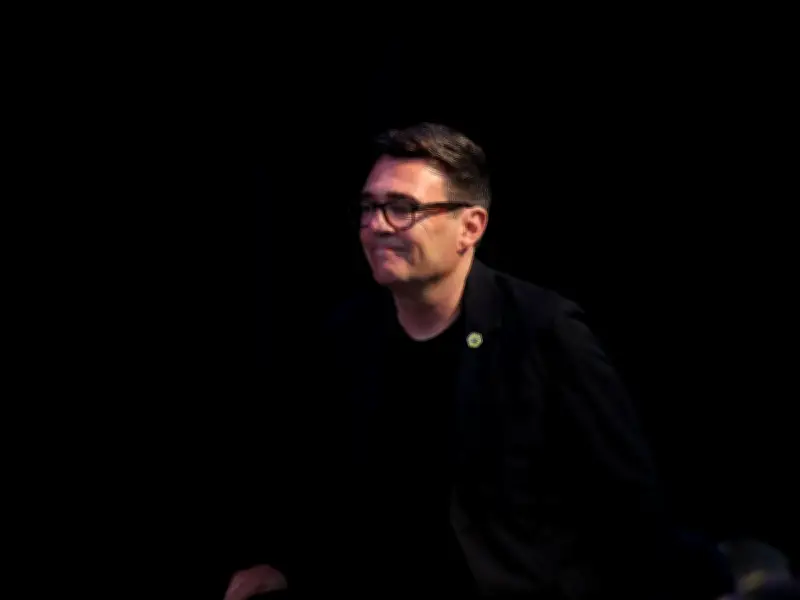
In his victory speech, Andy Burnham said: "Everyone knows that politics isn't working. Everyone can feel that the country isn't where it should be. Tonight could, just could, be the turning point. From here on I will give everything I have got to make it so. To ensure the name Makerfield is forever synonymous with bringing about the change this country needs, bringing back something we've lost – hope – hope for the future."

"I am proud that this place has shone in the world's spotlight for the last few weeks, and the warmth, humour and hospitality of its people has been on show for all to see. It will never be a stepping stone to me, but instead will be my touchstone. A Makerfield test at the heart of British politics will make sure that the places Westminster has neglected will now get fairness."
Burnham's Campaign Triumphs Over Reform
If Makerfield was the real world test of Andy Burnham's pitch to lead the Labour Party and the fightback against Reform, it was a test that Burnham ultimately passed with flying colours. An early poll had the gap between Labour and Reform as close as three points. But as the campaign progressed, the polling and the bookies became increasingly convinced by Burnham's campaign. Voters, meanwhile, became less convinced by Reform's plucky plumber Robert Kenyon after a series of disappointing media performances.
The first hint that it could be a good night for Burnham was the turnout. At nearly 59% of people voting, that's 45k people out of an eligible population of 77k, it was the second largest number of voters to come out in a by-election since 2000. This was also a significant rise on the General Election of 2024 which had 52%.
All the indications were that Labour's get out the vote operation and the much-vaunted 'Burnham Effect' had worked spectacularly well. A high energy, positive campaign clearly reconnected with Labour voters who, dissatisfied with Labour in Westminster, had drifted away. There were thousands of Labour activists in the constituency along with celebrities and a revolving selection of high-profile MPs - many of whom had previously wanted nothing to do with Burnham or his ambitions.
Burnham's achievement in winning a nearly 10,000 majority and over half the vote is all the more singular given the local election results earlier this year which saw Reform claim 46.3% of the electorate. It was those results that appeared to make the seat a close thing. As it happens, Burnham's positioning as an opponent to his own government appeared to convince voters.
Lessons from the By-Election
What was clear in this election, as in Gorton and Denton, was that tactical voting on the centre-left was more effective than expected. Green and Liberal Democrat support collapsed as voters rallied behind the candidate best placed to stop Reform. Secondly, Labour's formidable ground operation mattered. The party's activist network and sophisticated get-out-the-vote machine helped drive turnout to 58.75%, higher than the 52.4% recorded at the 2024 general election - an extraordinary figure for a by-election.
Thirdly, Reform failed to broaden its appeal beyond its core support. Despite favourable national polling and strong recent local election performances, the party increased its vote share only modestly on the general election result - suggesting the party may have hit its ceiling.

The result also raises questions for Reform's strategy. Throughout the campaign, the party argued that Restore Britain risked splitting the right-wing vote. Yet even if every Restore voter had switched to Reform, Burnham would still have won comfortably. Makerfield therefore suggests that Reform's challenge runs deeper than simple vote fragmentation. It is the third by-election that Reform should have been competitive in but wasn't.
Questions around the quality of the candidates offered up by Reform will once again be asked. For Labour, the result is both encouraging and cautionary. Encouraging because one of the party's most electorally potent figures has shown that Reform can be beaten, even in highly favourable terrain. Cautionary because the victory belonged primarily to Burnham, not necessarily to Labour itself. Indeed, the central lesson of Makerfield may be that Burnham's success derived precisely from his ability to position himself as distinct from the national party.
What It Means for Labour and Starmer
Now the first two of the three questions asked within Labour about Burnham's prospects have been answered, thoughts will turn to the third. What does it mean for the party? It would be difficult to argue that Burnham has not demonstrated that he can take the fight to Reform. The crucial concern of those within Labour is the threat Nigel Farage's party could have in the next General Election. This result will squeeze the already under pressure Prime Minister.
In his speech after winning Burnham said the result "made a loud cry for change". Addressing his own party, he said: "This is a final chance to change. There will be no second chance," he said, adding there is an opportunity now to build a "new politics based on unity and hope". Burnham now has secured a mandate to take to Keir Starmer. Or as some put it earlier this week: "Starmer can go out in a bloody mess and get battered, which is embarrassing, or he can take the dignified route through legacy."
According to insiders, spoken to by the Manchester Evening News, Burnham is expected to speak with Starmer within days of this result, but depending on the Prime Minister's response Burnham could launch a leadership challenge as early as next week. Any attempt to delay further is unlikely to be accepted by the wider party. "There is no way the parliamentary party will wait until after a mayoral election". In the immediate future Burnham is expected to remain quiet on the challenge. One insider told us, "we would prefer not to be the first to start a leadership contest. We want to continue to be the good guys."
The Manchester Evening News understands Burnham's preferred route is an orderly transition rather than a frontal assault. So far that approach appears to have been rebuffed by Starmer who offered Burnham a 'big job' in his government this week, prompting many to point out that the job Burnham wants is as Prime Minister. Regardless, Keir Starmer's time seems to be up following the Makerfield result. The people of Wigan were aware of the responsibility they had for shaping the future of Britain. Makerfield has today answered two questions about Andy Burnham. The third - whether his formula can reshape Labour itself - will now dominate British politics.
Burnham's Farewell to Greater Manchester
Burnham's win also now raises another question - about the future of Greater Manchester. In his speech Burnham said: "It is with some sadness that this result brings an end to my wonderful nine years as mayor of Greater Manchester. This city region has given so much to me. And it is a wrench to leave the job I love. But I am not leaving the service of Greater Manchester. I've always been clear that it can't achieve everything it should be and we can't close the north-south divide and we can't make all the great English cities be what they should be without big change at the national level."
"I always knew one day I would seek to go back to Westminster to complete that unfinished business so that Makerfield and Greater Manchester and the north of England can fulfil their potential. This result will bring about a country that works fairly for everywhere and for everybody. People here have voted for change. They have voted for more power for the north and everywhere forgotten by Westminster. They have voted for hope. Now let's give that back to them."
And thus the 'King of the North' has effectively abdicated his regional throne. But in doing so, Burnham has made his ultimate intentions undeniably clear. He is no longer content with simply shielding the North from Westminster's neglect - he is heading back to London to shake up Westminster itself.