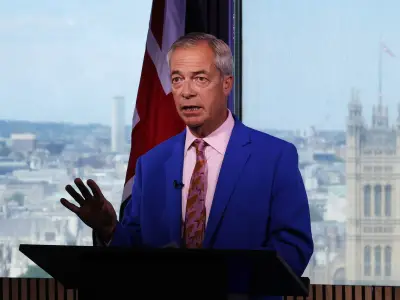
Andy Burnham has become Prime Minister with several distinctions: the first in British democratic history who has not been Leader of the Opposition or held a Great Office of State, the first practising Roman Catholic premier, an English Literature graduate, a Co-Operative Party member, and the first English northerner in No 10 since Harold Wilson in 1964. The parallels between Burnham and Wilson are significant, particularly in their political philosophies.
Wilson's legacy as a warning
Leo McKinstry argues that Wilson's ultimate failure proves socialism leads to decline, disillusion, and debt, and without a radical change in direction, Burnham will face the same fate. Burnham has been in charge for less than a week, and expensive commitments are already rising.
In his 2024 book Head North, Burnham wrote: “I’m more of a spender than a saver.” When he was Chief Secretary to the Treasury in 2007, Chancellor Alastair Darling nicknamed him “the lorry on ice” due to his inability to maintain spending controls. Burnham's Chancellor John Healey, whose resignation as Defence Secretary precipitated Starmer's downfall, has complained about “the dead hand of Treasury Orthodoxy,” which McKinstry calls the laudable goal of ensuring the nation lives within its means.

Similar backgrounds and political paths
When Wilson became Prime Minister for a second time in 1974, his Chancellor Denis Healey shared the same surname and had also been Defence Secretary. Both Burnham and Wilson are devout Christians from respectable provincial backgrounds: Burnham the son of a telecoms engineer, Wilson the son of a chemist. Both are football fans—Burnham supports Everton, Wilson followed Huddersfield—and were high academic achievers at Oxbridge. They occasionally played the victim card: Burnham claimed he was treated as a “second-class citizen” denied jobs in the City, while Wilson gave the impression of severe poverty in Huddersfield. Tory grandee Harold Macmillan suggested: “If Wilson really was barefoot, it was because he was too big for his boots.”
Both became Cabinet Ministers in their thirties. Wilson was an “instinctive feminist,” according to Barbara Castle, and similar language has been used about Burnham, with one supporter calling him “Labour’s first female PM” for his empathy.
Risk of repeating mistakes
Wilson's rhetoric about “forging the new Britain in the white heat” of technology proved hollow, and his faith in state planning and nationalisation was misplaced, symbolised by the failure of British Leyland. McKinstry warns that Burnham seems doomed to repeat these mistakes, clinging to big government despite waste in the public sector. The talk of “power to the people” is a reheated version of Wilson's “devolution revolution,” which created unwanted tiers of regional bureaucracy. Wilson should be a warning from history, not an inspiration.