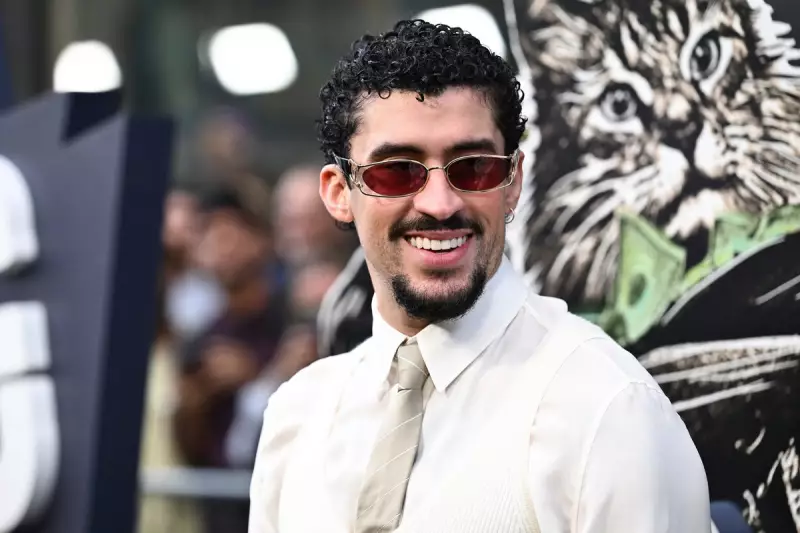
The National Football League's September 2025 announcement that Puerto Rican superstar Bad Bunny would headline the next Super Bowl halftime show triggered an immediate and fierce political backlash, demonstrating how pop culture has become a primary battleground for America's ongoing culture wars.
The Political Backlash Erupts
Within hours of the NFL's revelation, conservative influencers had recast the Latin performer, known for blending pop stardom with outspoken politics, as a symbol of America's perceived 'woke' decline. Homeland Security Secretary Kristi Noem joined the criticism on conservative commentator Benny Johnson's podcast, stating bluntly: 'Well, they suck, and we'll win. And they're so weak, we'll fix it.'
The condemnation reached the highest levels of American politics when former President Donald Trump called Bad Bunny's selection 'absolutely ridiculous' during an appearance on the right-wing media outlet Newsmax. Far-right radio host and prominent conspiracy theorist Alex Jones further fanned the flames of anti-NFL sentiment online.

Social media platform X became a hotbed for opposition, with hashtags like #BoycottBadBunny spreading rapidly across the platform. Right-wing influencers branded the performer a 'demonic Marxist,' illustrating how quickly cultural announcements transform into political flashpoints.
Bad Bunny Fires Back
The artist responded to his critics during his hosting appearance on 'Saturday Night Live,' where he embraced the controversy head-on. Defending his heritage and answering critics in Spanish, he delivered a pointed message: 'If you didn't understand what I just said, you have four months to learn.'
By the time NFL Commissioner Roger Goodell addressed the growing backlash, the outrage had already achieved its primary purpose. The story had firmly established itself as another front in America's persistent culture war between left and right, complete with nationalism, identity politics, media spectacle and performative anger.
The Manufactured Outrage Machine
According to Adam G. Klein, Associate Professor of Communication and Media Studies at Pace University, this pattern represents a significant shift in how culture wars operate. Whereas such battles once arose spontaneously from events that struck a cultural nerve, today they often begin in the political sector, where professional partisans introduce them into public discourse.
'One clear sign that outrage is being manufactured,' Klein notes, 'is when the backlash begins long before the designated controversial event even occurs.' This phenomenon appears across the political spectrum, from conservative campaigns against Pixar's 'Lightyear' in 2022 to liberal preemptive backlash against Donald Trump's military parade announcements.
Today, few things are marketed as aggressively as political anger. This firestorm against Bad Bunny demonstrates how fiery narratives increasingly originate not in politics but in popular culture, providing an enticing hook for stories about cultural control. In recent months alone, polarized political bases have flared over issues ranging from Cracker Barrel logo changes to 'woke Superman' and Sydney Sweeney's American Eagle advertisement.
Platforms like X and TikTok deliver the next diatribes, amplified by partisan influencers and spread by algorithms. From there, they become national stories, often marked by headlines promising the latest 'liberal meltdown' or 'MAGA tantrum.'
The Local Echo and National Division
This manufactured outrage doesn't stop at the national level. Through interviews with activists across the political spectrum, Klein found that while protesters echo the same narratives dominating national politics, they recognise something larger at play beneath the anger.
Both liberal and conservative activists expressed the sense that outrage itself is being engineered, with media 'constantly fanning the flames of division for more views.' As one protester observed, 'Politics is being pushed into previously nonpolitical areas.'
This brings us back to Bad Bunny and the ultimate consequence of these outrage cycles. Studies show that as a result, Americans on the left and right have developed an exaggerated sense of the other side's hostility, exactly as some political demagogues intend.

The division will become literally visible on Super Bowl night. While one screen shows Bad Bunny performing for approving viewers, the conservative nonprofit Turning Point USA will host its 'All-American Halftime Show' for those intent on tuning the main performance out. Two screens, two Americas – the inevitable outcome when cultural events become battlefields in manufactured political wars.