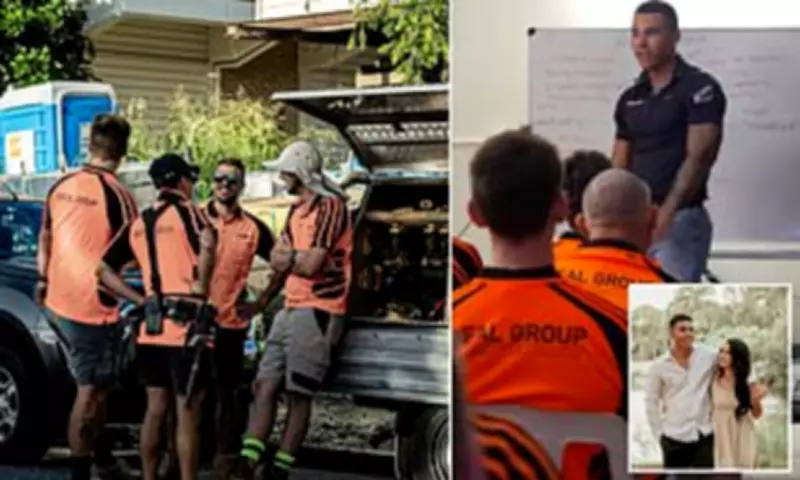
A construction company boss has issued a blunt warning about the one toxic trait he says is damaging Australia's building industry and ruining the reputation of hardworking tradies. Ideal Group Australia director Corey Tomkins says the biggest red flag he sees in tradies is a bad attitude, claiming it is often impossible to fix and can poison an entire team.
Growing lack of motivation and accountability
Mr Tomkins told Daily Mail he has seen a growing lack of motivation and accountability creeping into construction sites, particularly among younger apprentices. He described those who display the trait as 'D players' and said he had seen this issue spreading across workplaces nationwide.
Mr Tomkins said attitude was the most troublesome issue because it was usually unfixable, adding that workers with bad attitudes often turned up late and were inconsistent in the quality of their work. 'If you're underperforming, I can change that, I can work towards a solution and I can show you how to do a better job,' he said. 'That's easy, but I can't change your attitude - if you don't have a really good attitude towards your work, there's no helping that.'

Why bad attitudes persist
He said that tradies with the negative trait wouldn't thrive in the job. 'With a good attitude, I believe everything else will flow,' Mr Tomkins said. 'Your performance will get better, your money will get better, everything will get better.' When asked about why 'D players' existed, Mr Tomkins said it was because they had been working in companies that accepted it, but he didn't feel it would be the case for much longer.
'Without the right culture and the right company, it makes it very easy for them to survive in the current market,' he said. 'However, I think it will get harder for these guys to survive in the times to come. It doesn't mean there'll never be opportunities for them, but it's our jobs as business owners to raise the standard in our own companies.'
Easy money and social media influence
He also said having bad attitudes alone was common among tradies because it was 'very easy to earn really good money while doing low-performing tasks'. 'That's the reality,' he said. 'You could be 17 today, go out there tomorrow and earn $40 an hour pretty easily without performing that well.' Mr Tomkins said that many apprentices aren't prepared for long, strenuous days on the tools after finishing high school. 'Some struggle having to constantly do that back-to-back, five or six days a week and usually only getting one break a day.'
When a promising apprentice joins his business, Mr Tomkins said it was sometimes challenging to keep them focused with many dropping out early. Influencers peddle get-rich-quick schemes that get 'in the heads of these apprentices - and it almost creates a point of entitlement,' he said.
Training session and company culture
Mr Tomkins recently held a training session with his staff and told them not be 'D players'. During the meeting he told them he didn't expect them to work extra hours, but needed them to have a good work ethic. 'I do not want D players or they will get the boot,' he said. 'Don't take it to heart, don't think I'm coming for you and that I hate you, but it's only fair. I'm not after you guys to do 14 or 18 hour days or weekends, but I'm after you guys to show up on time, do a good day's work, have your lunch, go home and everyone's happy.'
Mr Tomkins said the purpose of the exercise was to paint the culture within the company, to get his team to reflect on their own performance and attitude and to help them realise what a D player looked like. 'We got our people to do a self-assessment on what they envisioned a paid worker to be like,' he said. 'They also concluded that D players had a bad attitude, lack of motivation, lack of accountability and low drive. Once we nutted that out, we agreed it was not a standard we or other people want to work with and that D players would have to be moved on, not only for the company, but for those who work with them as well.'

Future of trades
Another issue the industry is facing is young people not wanting to do a trade anymore and Mr Tomkins put it down to both a change in generation and social media. 'There was no such thing as AI or e-commerce 10 to 15 years ago but there are so many easier ways to make money these days,' he said. 'Back then, you were either getting a university degree or going down the trade route. Social media plays a massive part in that as well.' He explained that was why he tries to show his staff that it is possible to create a great business and life in trade. 'I tell my guys they will be paid so well in the future because there will be such dire needs for tradies,' he said.