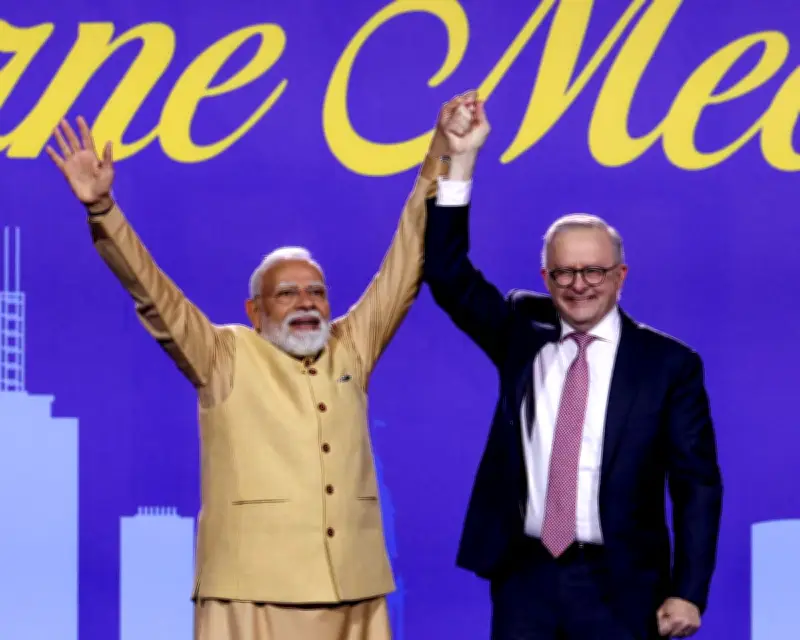
Indian Prime Minister Narendra Modi addressed a crowd of 25,000 Indian Australians at Marvel Stadium in Melbourne on Thursday night, alongside Australian Prime Minister Anthony Albanese. The event, part of Modi's first visit to Australia in three years, saw supporters chant his name and wave phone lights as the leaders entered.
Modi hailed the India-Australia relationship, stating, 'Whatever India and Australia do is always auspicious for both countries.' He credited the Indian diaspora for playing a major role in strengthening bilateral ties, drawing cheers from the audience.
Uranium Deal and Defence Ties
Earlier in the day, Albanese and Modi announced a major uranium export agreement, ending years of delays. Albanese said the deal would enable uranium exports for 'peaceful purposes' and boost India's nuclear energy sector. The leaders also signed a joint declaration on defence and security cooperation to deepen practical partnerships in the Indo-Pacific.

Albanese noted that the relationship between the two countries was 'underdone, under-explored and under-examined,' despite broad affection between their peoples.
Mixed Reactions: Support and Protest
While many in the crowd praised Modi, describing him as 'like a father to us' and a leader who elevated India's global standing, critics condemned his policies. Protesters outside the stadium, including members of Sikh and Muslim communities, accused Modi of undermining democracy and discriminating against minorities, particularly through a citizenship bill that excluded Muslim countries.
Sachin Sambhus, a protester, said the prime minister had turned minorities into 'second-class citizens' and urged the Albanese government to 'ask the right questions.'
Human Rights Concerns Raised
Amnesty International called on Australia to raise human rights issues during Modi's visit, urging the government to reaffirm commitment to democratic freedoms and the rule of law. The organisation highlighted concerns over the treatment of journalists, human rights advocates, and religious and ethnic minorities in India.
A Department of Foreign Affairs and Trade spokesperson said Australia maintains a relationship with India that allows it to 'speak directly and respectfully about important issues, including where we disagree,' and that human rights are raised regularly in engagements with foreign governments.