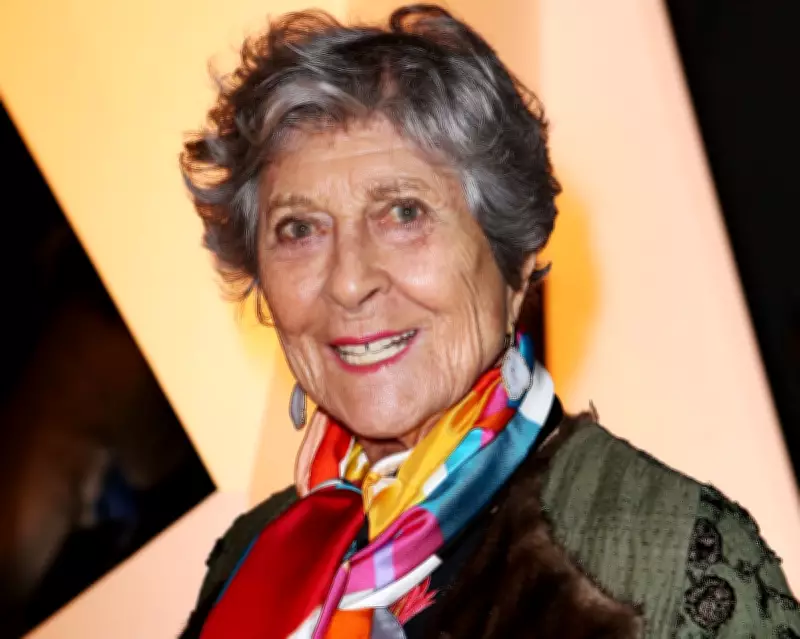
Joan Burstein, the co-founder of Browns, the celebrated London fashion store that nurtured young designers such as Alexander McQueen, has died at the age of 100. In 1970, South Molton Street was merely a shortcut through dull Mayfair between Selfridges and Fenwick. Then Burstein and her husband, Sidney, acquired No 27, an 18th-century row house, from Sir William Pigott-Brown, keeping his name for their clothes store. Over the next 50 years, much of South Molton Street became the empire of Browns.
A New Approach to Retail
The Bursteins pioneered what we now call 'curation'. Designers abroad were already producing prêt-à-porter, and gifted young British talents were making experimental collections. The problem was outlets. Sonia Rykiel, Karl Lagerfeld at Chloé, and other early ready-to-wear designers lacked their own shops in every capital and were not imported to London. While small, ephemeral boutiques featured their founders' products, visiting them all was a chore.
Burstein selected clothes and accessories for Browns as a modern stylist would for clients: her taste was creative, and she chose on gut instinct a wide range of imaginative creations for top-end spenders. Regular customers knew she would always have or could get what they did not yet know they wanted, from a T-shirt to a complete outfit. Poorer fashion fans made a South Molton Street detour to see Vogue-shot clothes in the windows and sometimes touch them inside—her staff were not snooty nor on commission. Browns served as a museum of current fashion where you could study details up close. Burstein once held a crazy sale where everything was £25, to give herself and buyers a pleasurable shock.

Sourcing the Best
Burstein went everywhere to source not by names or brands but in pursuit of interesting garments: to London fashion student degree shows (John Galliano, Alexander McQueen, Hussein Chalayan); Europe (Rykiel, Missoni, Armani, Jil Sander, Alber Elbaz, whom she regularly reminded to add sleeves to his dresses for older women like herself); Japan when its designers were considered eccentric novelties (Rei Kawakubo, Issey Miyake); and the US. She hunted Calvin Klein down on the dancefloor at Manhattan's Studio 54 to propose a deal, charmed Donna Karan, and set Ralph Lauren up in a former chemist's shop in Bond Street, giving him access to the London he admired.
Staff members, including Paul Smith, went on to fashion careers. The shop at 27 spread over the building and annexed adjacent premises, including a hair salon, Molton Brown, which developed its own product line.
Midlife Venture After Bankruptcy
Browns was Burstein's midlife venture, rebuilding a business that had crashed, leaving her family broke. Born in Camden, north London, she was the daughter of a chiropodist, Ashley Jotner, and tailor, Mary (nee Pleeth), and part of a network of East End clothing workers including two dressmaker aunts. She trained as a pharmacist and was working as such when she met Sidney Burstein, who had sold black market nylon stockings and worked on his family's street stall. They married in 1946. He sold underwear from a stall in Ridley Road, Hackney, and she joined him. Her aunts sewed her good copies of Dior New Look outfits.
They saved a deposit for a proper shop, the first in what became the smart mini-chain Neatawear, with 35 branches in the West End, Kensington, and other cities. They grew by borrowing until over-extended in the mid-1960s, bankrupting the couple, who lost their home and everything. Friends housed them and their children, Simon and Caroline. Sidney's brother invited him into a small shop off Edgware Road; Joan took it on, made a go of it, and in 1969 discovered an empty space in Kensington High Street, called it Feathers, and for lack of funds decorated it with bamboo and junk furniture. The atmosphere was like a club for Beautiful People doing the frug. Clever stock choices, like otherwise unobtainable Newman jeans with a young Manolo Blahnik as salesman, were made by Mrs B, as she became known in fashion.

At 40, she knew how to dress and make assured but not bossy suggestions. Feathers did an astonishing £5,000 of business on its first day. But when Simon reported that South Molton Street showed promise, his father determined to move there. Burstein followed reluctantly, but it proved the right place, with a higher income stratum than Kensington High.
Adapting to Change
This was not yet a world of well-advertised luxury brands promoting looks for red carpets. Burstein's customers prospected for distinctive clothes, often daywear for hard usage—Browns prices were steep, but they bought quality felt in the hand as well as seen by the lens. Burstein later adjusted to online shopping (Browns added e-retail early) but could never understand why anyone would deny themselves the thrill of shopping in person.
Technically, she retired at 90, after Farfetch bought Browns in 2015, though she kept the title of honorary chairman. Wearing a mix of new and vintage pieces and her Ferragamo Audrey shoes, she would pop into her old realm. A Browns mini-department store opened in Brook Street in 2021. Burstein was appointed CBE in 2006.
Sidney died in 2010. Simon, Caroline, and some of her seven grandchildren all worked for the Browns empire. Her children and grandchildren survive her. Joan Burstein, fashion retailer, born 21 February 1926; died 17 April 2026.