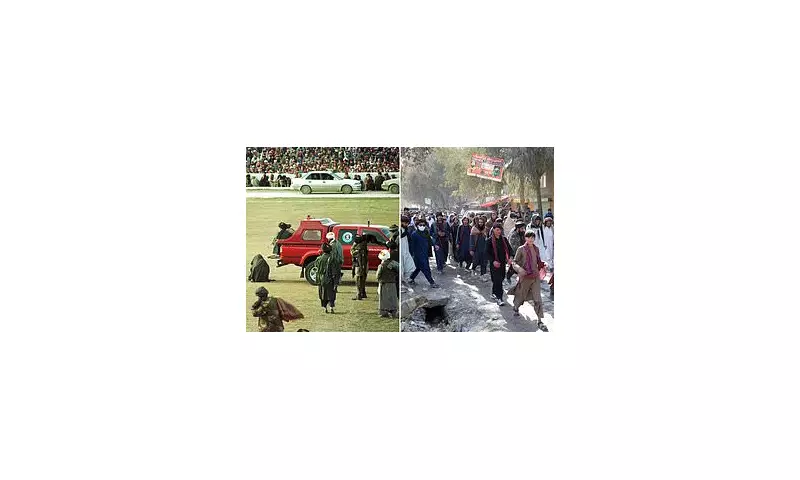
New data released by the Taliban's own Supreme Court has exposed a shocking escalation in state-sanctioned brutality across Afghanistan, with public floggings and extreme executions becoming routine.
A Sharp Rise in Corporal Punishment
The official figures reveal that in 2025 alone, the Taliban regime publicly flogged 1,030 people for offences ranging from theft to acts deemed contrary to their interpretation of Islamic law. This number represents a near-doubling of previous annual totals, signalling a grim normalisation of such punishments since the group's return to power in August 2021.
All provinces reported cases, with the capital, Kabul, recording the highest number. The cumulative data shows that since 2021, at least 1,848 individuals have been publicly whipped nationwide, including approximately 250 women.

Extreme Executions and Death Sentences
Beyond floggings, the regime has resumed horrific forms of capital punishment. The Supreme Court data confirms the Taliban have ordered dozens of people to be killed by stoning and sentenced four convicts to be executed by having walls collapsed onto them.
In 2025, the group staged at least three public executions in the provinces of Khost, Badghis, and Paktia. The most recent case in Khost on December 2 saw a man convicted of murder, named Mangal, executed by shooting in a sports stadium before a crowd of tens of thousands. Disturbingly, reports indicate the sentence was carried out by a 13-year-old relative of the victim, prompting widespread international condemnation.
Overall, the Taliban have handed down at least 178 death sentences under the retribution principle of *qisas*, alongside 37 stoning sentences and the four wall-collapse punishments. To date, at least 12 of these death sentences have been carried out publicly.
International Condemnation and Climate of Fear
Human rights organisations have universally condemned these practices. Sima Noori, a human rights activist, stated, 'The Taliban use extremist interpretations of religion to justify repression and cruelty.' Groups including the United Nations, Human Rights Watch, and Amnesty International argue that these punishments, often administered without fair trials, constitute clear violations of international law and basic human rights standards.
The severity of the crackdown has fostered a pervasive atmosphere of terror within Afghan society. One Kabul resident described the situation, saying, 'The Taliban have turned Afghanistan into a prison. Men and women are flogged in front of crowds, stripping them of dignity.'
In a significant legal move earlier this year, the International Criminal Court issued arrest warrants for the Taliban's leader and the head of its Supreme Court on charges including crimes against humanity and gender-based persecution. The Taliban leadership has dismissed all external criticism, insisting they are merely enforcing their version of Islamic law.