Medical professionals have issued a stark warning that activists from the proscribed group Palestine Action, who are on a prolonged hunger strike in UK prisons, are now at serious risk of dying. The eight individuals are awaiting trial for alleged offences committed before the group was banned under terrorism legislation in July 2025.
The Critical Health Situation
Dr James Smith, an emergency physician and lecturer at University College London, stated that the protesters still refusing food have entered a "critical" phase where their health could decline rapidly and irreversibly. The hunger strike began in early November 2025, and seven of the activists have already required hospitalisation due to severe health complications.
The activists are charged with various offences. Four are accused of involvement in a break-in at a site linked to Israeli defence firm Elbit Systems in Filton, Bristol, in 2024. The other four face charges related to an alleged break-in at RAF Brize Norton in June 2025, where military jets were reportedly damaged. All eight deny the charges and have been denied bail.

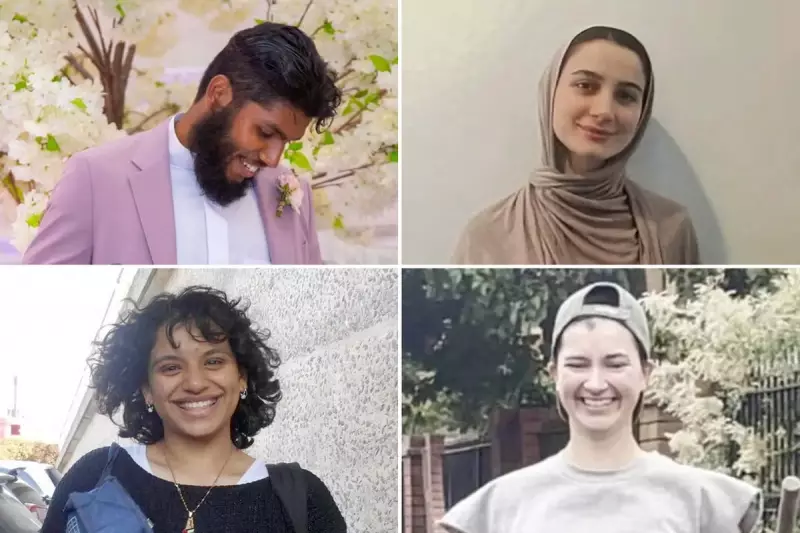
Profiles of the Hunger Strikers
Heba Al-Muraisi, a former florist and lifeguard from London, has been on hunger strike for over 70 days. She reports lightheadedness, migraines, and difficulty breathing. Transferred from HMP Bronzefield to HMP New Hall in Wakefield, she demands to be moved back to be closer to her disabled mother. Her next of kin, Francesca Nadin, said she remains mentally strong but her physical state is deeply concerning.
Kamran Ahmed, 28, held at HMP Pentonville, has been on strike for more than 60 days. He has been hospitalised six times, most recently for a heart complication. His sister, Shahmina Alam, stated he is losing half a kilogram daily and that his pulse is slowing down.
Lewie Chiaramello, 22, a type one diabetic, is on an alternating-day hunger strike in solidarity with others. He was arrested in connection with the alleged action at RAF Brize Norton.
Those Who Have Ended Their Strikes
Several activists have suspended their protests due to severe health deterioration. Qesser Zuhrah, 20, ended her 48-day strike after being hospitalised with excruciating abdominal pain. Amu Gib (Amy Gardiner-Gibson) stopped on day 49 due to weakness and brain fog. Former Labour leader Jeremy Corbyn visited Gib in prison and called for bail.
Teuta Hoxha ended her two-month strike on 5 January 2026 and, according to the support group Prisoners for Palestine, now needs urgent hospital care to prevent refeeding syndrome. Jon Cink and Muhammad Umer Khalid also ended their strikes after 41 and 13 days respectively.
Political and Legal Context
The situation unfolds against the backdrop of the government's proscription of Palestine Action in July 2025. Membership or support for the group is now a criminal offence carrying a sentence of up to 14 years in prison. Official data shows that terrorism arrests soared by 660% after the ban came into effect.
The hunger strikers' demands include immediate bail, the right to a fair trial, and the de-proscription of Palestine Action. In response to the crisis, prisons minister Lord Timpson stated that the system is "very experienced" at handling hunger strikes, averaging over 200 incidents annually, and that processes are robust. He emphasised the independence of the judiciary and stated the government would not meet with the prisoners or their representatives.
The next court hearing for some of the accused is scheduled for 16 January 2026, with trials not expected to begin until spring at the earliest.