In the wake of the Bondi Junction terror attack, the New South Wales government is moving swiftly to introduce contentious new legislation, aiming to restrict both gun ownership and the right to protest. While the Minns government argues the measures are a necessary response to tragedy, critics and civil liberties groups warn of rushed, kneejerk laws that could infringe on fundamental democratic rights.
Gun Law Overhaul: A Cap on Ownership
The proposed gun reforms seek to significantly limit the number of firearms an individual can own. Premier Chris Minns plans to cap ownership at four guns for recreational hunters and ten for professional shooters and farmers engaged in pest control. This marks a dramatic shift in a state where there are currently 1.1 million registered firearms and approximately 250,000 licensed owners, averaging four guns per person.
Accompanying the cap is a $300 million buy-back scheme and a ban on multi-shot firearms like lever-action rifles. The government also intends to tighten storage rules and require licence renewals every two years. However, the rationale behind the specific limit of four has been questioned, with Minns admitting it was loosely based on Western Australia's proposed limit of five and deemed to be "in the ballpark."

Gun control advocates point out that nearly 45% of licensed firearms are in urban and suburban areas, highlighting the issue of city-based gun ownership. The alleged Bondi attacker, a licensed recreational hunter, owned six firearms, underscoring these concerns.
Protest Powers: A 14-Day Ban After Terror Incidents
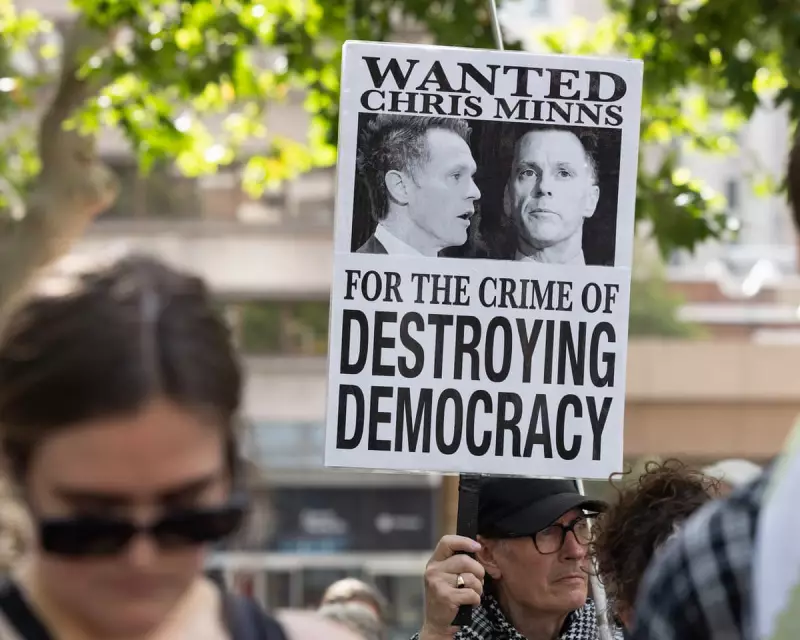
More controversially, the government seeks new powers to curb public protests in the aftermath of a terrorist act. The legislation would allow the NSW Police Commissioner, in consultation with the government, to ban protests for 14 days following a terror incident, with an option to extend the prohibition for up to three months.
The law does not specify how closely a protest must be linked to the terrorist event to be banned. This has raised alarm with groups like the NSW Council for Civil Liberties, which suggests the law is likely unconstitutional, infringing on the implied right to political communication. The move follows recent, unsuccessful attempts to limit protests near places of worship.
Premier Minns defended the measure, stating his responsibility to prevent a repeat of the Bondi violence and citing concerns about "ratchetting up the pressure" and rhetoric. However, the Greens and even figures within the Labor movement have expressed dismay. NSW South Coast Labor Council secretary Arthur Rorris warned that suspending democratic rights only benefits politicians seeking to avoid scrutiny and the terrorists aiming to attack freedoms.
Risks of Rushed Legislation and Political Fallout
The legislation passed the NSW lower house on Monday night and is set for debate in the upper house. The rapid pace has sparked warnings about the perils of law-making during a highly charged emotional period. Critics argue that permanently curtailing rights requires careful, forensic deliberation, not political urgency driven by polling.
Specific concerns about the gun reforms include the proposal to mandate membership in a shooting association for all owners. Advocates fear this could create a powerful, well-funded lobby group akin to the US National Rifle Association. Meanwhile, the protest ban's vague wording leaves it open to broad application, potentially affecting demonstrations unrelated to terrorism, such as Indigenous rights rallies on Australia Day.
While the government asserts the protest ban applies only to marches on public roads requiring a permit—not spontaneous gatherings in parks—the precedent of restricting assembly in response to violence has deeply divided political opinion. As the state grapples with the aftermath of Bondi, the debate now centres on whether security can be enhanced without sacrificing the core democratic principles of free speech and peaceful protest.