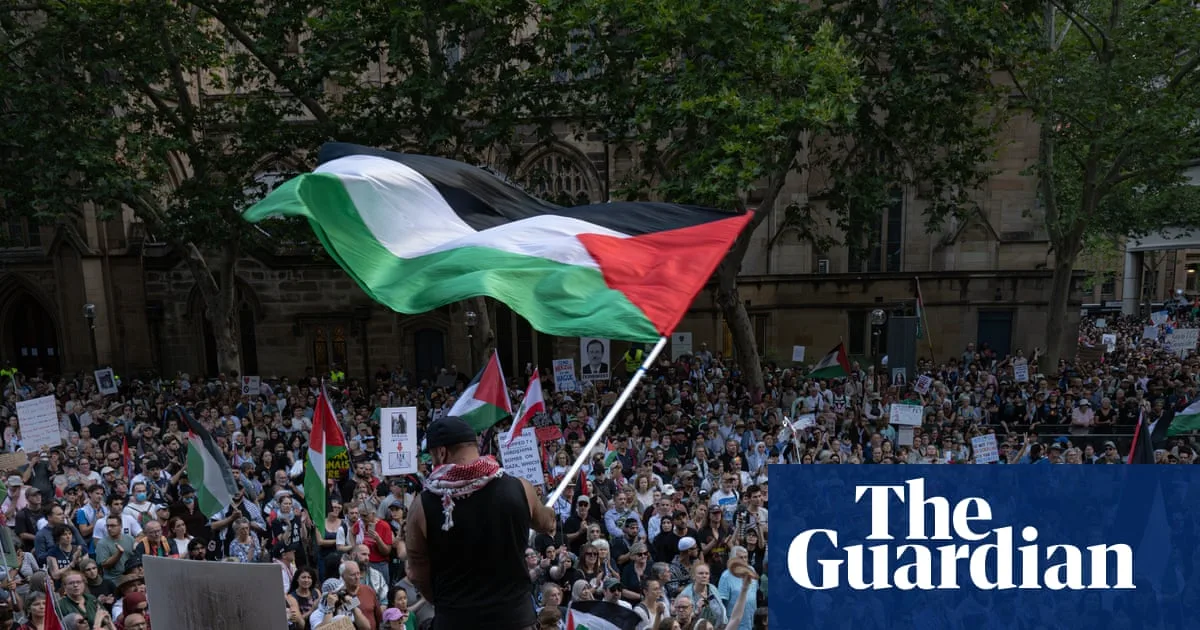
NSW Protest Restrictions Face Constitutional Challenge in Court of Appeal
Lawyers representing three protest groups have argued before the New South Wales Court of Appeal that sweeping protest restrictions introduced by the Minns government have undermined their own stated objective of enhancing social cohesion. The constitutional challenge, heard on Thursday, centers on laws passed following the Bondi terror attack that effectively banned marches in Sydney's central business district for up to three months.
Groups Challenge Restrictions on Constitutional Grounds
The Blak Caucus, the Palestine Action Group (PAG), and Jews Against the Occupation '48 filed their legal challenge in early January, contending that the restrictions "impermissibly burden the implied constitutional freedom of communication on government and political matters." David Hume SC, representing the groups, questioned whether specifically limiting protests to enhance social cohesion was constitutionally legitimate.
The court heard that the state needed to provide evidence demonstrating why it was "rational to prevent all protests" to achieve social cohesion objectives, and how the new laws improved upon the existing system. Hume argued that the restrictions actually made matters worse, telling the court: "We think that it's open to conclude that the new laws are worse. They undermine the objectives of protecting the community and enhancing social cohesion."
Form 1 System Restrictions Under Scrutiny
The controversial law restricts use of the Form 1 system - an optional permit arrangement that protects protest organizers from certain offences like obstructing traffic when they negotiate with police. Hume argued that preventing use of this system in designated areas was counterproductive because it eliminated a framework that served multiple important functions.
"It ensured that protesters have an opportunity to let off steam, to put it colloquially, contributed to peaceful resolution of disputes, and enhanced social cohesion," Hume told the court. He noted that the catalyst for creating the Form 1 system was the violent police response to the first Mardi Gras protest in 1978.
The court heard that the new legislation effectively gives police "a relatively broad and uncontrollable power to require protesters to cease protesting and disperse." Hume characterized this as creating a situation where "the executive gets to decide whether there can be a protest against the executive," describing it as "the fox guarding the henhouse."
Government Defends "Confined Rolling Back" of Protections
Brendan Lim SC, representing the state government, argued that the law represented a "confined rolling back" of legal protections ordinarily offered by the Form 1 system. He told the court: "The rational justification for that is because the community is experiencing the aftermath of a terrorist attack."
Lim maintained that the purpose of the legislation was not to discourage protests, though this assertion was questioned by Justice Stephen Free, who sat on the appeal bench alongside Chief Justice Andrew Bell and Justice Julie Ward. Free noted that Attorney General Michael Daley had stated the law was intended to "signal to the community that assembling in public spaces in the designated area is discouraged."
The government lawyer argued there was a connection between protecting the community and social cohesion, suggesting that "a public assembly might express support for or denounce a particular community or group, which can further inflame tensions and give rise to risks or safety." The court also heard that ASIO had expressed concerns about a "permissive climate for politically motivated violence" developing from the "normalisation of extremist views," including those associated with "mass public protests."
Police Restrictions and Political Divisions
NSW Police Commissioner Mal Lanyon extended the public assembly restriction declaration multiple times, limiting protesters' ability to march without arrest risk in designated areas. While citing ongoing community safety concerns, Lanyon acknowledged no specific intelligence concerns as reasons for the extensions. The restrictions were in place during a rally against Israeli President Isaac Herzog's visit in early February that turned violent and triggered a police watchdog investigation.
The legislation has exposed divisions within the Labor Party. While NSW Environment Minister Penny Sharpe confirmed no cabinet members had opposed the law, four Labor backbenchers - Sarah Kaine, Cameron Murphy, Stephen Lawrence, and Anthony D'Adam - attended the anti-Herzog rally. Multiple Labor backbenchers had warned that such legislation would create flashpoints rather than calm tensions, and numerous Labor branches have passed motions calling for the law's repeal.
At least a dozen party branches have also passed motions questioning police conduct at protests, indicating significant internal dissent over the government's approach to protest management and civil liberties in the wake of security concerns.




