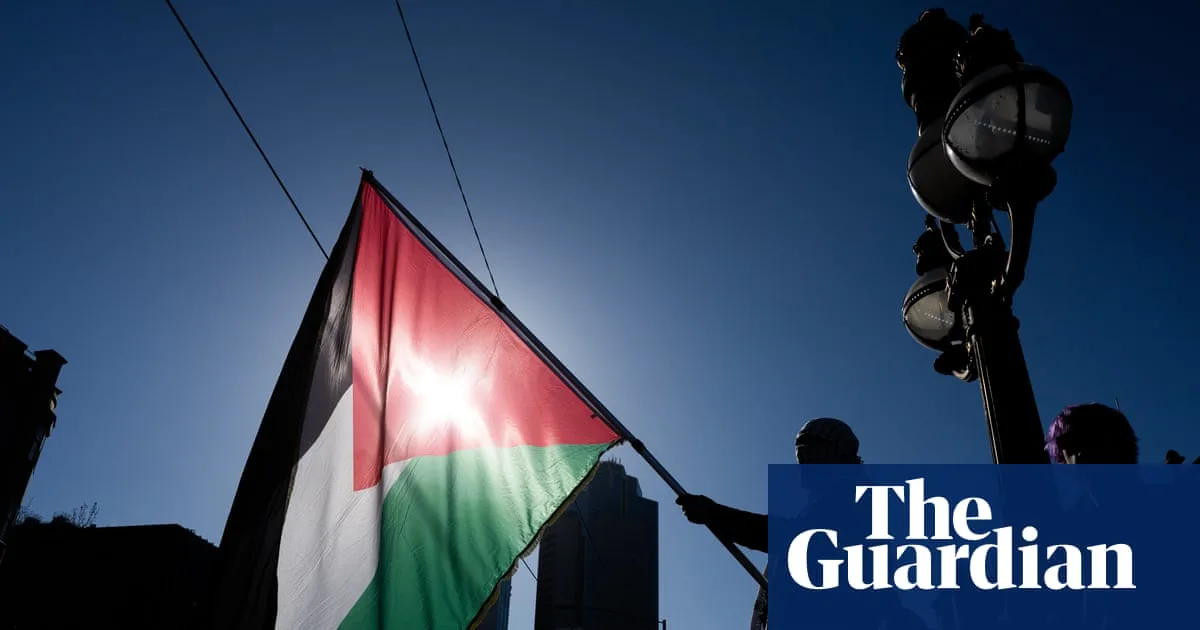
NSW Bans 'Globalise the Intifada' Chant: What It Means for UK Protests
NSW Bans 'Globalise the Intifada' Protest Chant

Authorities in the Australian state of New South Wales (NSW) have moved to outlaw a specific Palestinian solidarity chant at protests, a decision with potential international ramifications. The state's parliament passed legislation explicitly banning the use of the phrase 'Globalise the Intifada' in a public place, classifying it as a serious criminal offence.

The Legislation and Its Immediate Impact

The new law, which amends the state's Crimes Act, was passed on 23 December 2024. It makes it illegal to chant or utter the phrase 'Globalise the Intifada' in a public space or near a major Jewish facility. The penalty for breaching this ban is severe, carrying a maximum sentence of three years' imprisonment. The legislation was introduced by the NSW Labor government and received support from the opposition Liberal-National coalition, highlighting its cross-party backing.

The move follows a period of heightened tension and large-scale pro-Palestinian demonstrations in Sydney and other Australian cities since the outbreak of the Israel-Hamas war in October 2023. NSW Premier Chris Minns argued the chant constituted a call for violence and was being used to threaten and intimidate the local Jewish community. The government's position is that the phrase is not a legitimate political slogan but an incitement to violent uprising against Jewish people worldwide.

Debating the Meaning: Protest vs. Hate Speech

The ban has ignited a fierce debate about the line between political speech and hate speech. Pro-Palestinian activists and civil liberties groups vehemently oppose the law. They argue that 'intifada' is an Arabic term meaning 'shaking off' or 'uprising' and is a broad term of resistance against oppression, not inherently a call for violence against Jews. For many protesters, the chant is a political statement advocating for a global movement in support of Palestinian liberation.

However, the NSW government and Jewish community leaders maintain a starkly different interpretation. They assert that in the current context, the chant is understood as a direct call to replicate violent uprisings against Israelis on a global scale, thereby threatening Jewish communities internationally. This interpretation formed the core justification for the legislative ban, framing it as a necessary measure for public safety and community cohesion.

Broader Implications and International Context

This legislative action by NSW sets a significant precedent. It represents one of the most specific attempts by a Western democracy to criminalise a particular political slogan associated with the Israeli-Palestinian conflict. Legal experts are watching closely, as it could inspire similar moves in other jurisdictions, including the UK, where protest laws have been a subject of recent controversy and tightening.

The decision raises profound questions about the limits of free speech in a multicultural society. Can a government justifiably outlaw a phrase based on one community's interpretation of its meaning? Does this risk creating a 'slippery slope' where other contentious political slogans face similar bans? These are the complex questions now being debated by lawmakers, human rights organisations, and legal scholars far beyond Australia's shores.

For the UK, where pro-Palestinian demonstrations have also been frequent and large-scale, the NSW case provides a concrete example of how a government can choose to legislate on protest language. It adds a new dimension to ongoing discussions in Britain about protest policing, hate speech laws, and community safety. While no similar ban is currently proposed in the UK, the Australian law establishes a legal blueprint that could be referenced in future policy debates.

The final outcome of this legal shift in NSW remains to be seen. Challenges on constitutional grounds are considered likely, potentially testing the law's validity in higher courts. Nevertheless, the immediate effect is clear: a specific chant has been removed from the protest landscape in Australia's most populous state, setting a controversial and closely watched international precedent.




