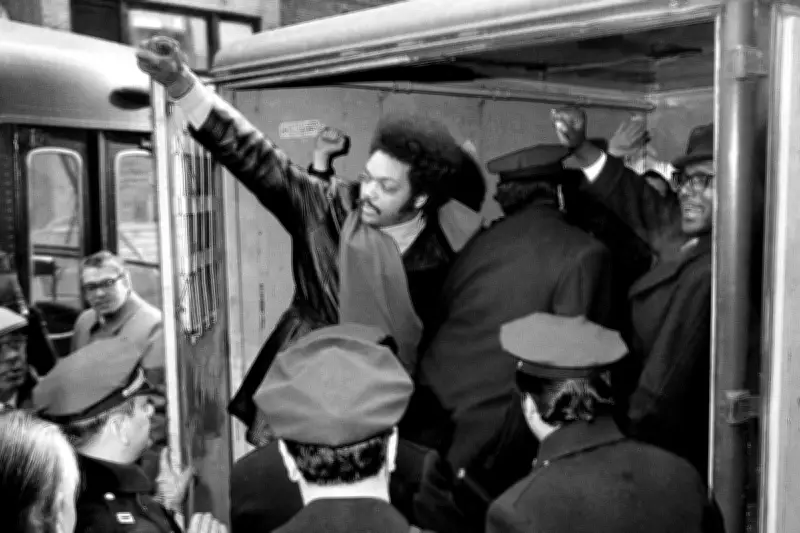
Jesse Jackson's Enduring Influence on Black American Identity
For Black Americans who matured during the tumultuous 1960s, civil rights leader Jesse Jackson served as a vital connection between our generation and our parents, embodying far more than a mere political figure, as articulated by Bonnie Greer.
A Bridge Between Generations and Ideals
Jesse Jackson, affectionately known simply as "Jesse" to many, personified a tangible version of the American Dream that felt attainable and livable for young Black individuals. We internalised this belief deeply during an era marked by darkness, violence, and disappearances from the mid-1960s onward.
As a prominent civil rights activist, Jackson stood on the Memphis balcony in 1968 during Martin Luther King Jr.'s assassination. He provided solace and leadership as cities burned in grief and draft cards were torn up in protest, particularly resonating with Southsiders like Greer, who hailed from Chicago's neighbourhoods.

Diverging Paths: Overcoming Versus Overrunning
Our parents found representation in Dr. King, who advocated non-violence, peaceful marches, and faith in a divine force to overcome oppression. In contrast, my generation sought not to overcome but to overrun, aiming to eradicate the tragic ironies of being born in a land that promised freedom and bravery yet delivered inequality.
Jackson keenly understood this transitional need and the imperative to claim our rightful place in our birthplace. Through his preaching and calls to ascend higher, he instilled a sense of fulfilment and redefined overcoming for us.
Navigating the American Nightmare
While we grasped the concept of the American Dream, our focus shifted to confronting the American nightmare, striving to carve out paths that made our lives not just survivable but transcendent. Dr. King envisioned a shining city on a hill, whereas Jackson recognised the arduous work and sacrifices required to reach it.
He comprehended the deep-seated connections to slavery and colonisation that shaped Black American psyches, championing the adage that a mind is a terrible thing to waste, which supported Black universities through college funds.
Truth and Distrust in Leadership
From youth, Jackson committed to embodying and speaking truth without delay, leading to initial distrust of Barack Obama, a sentiment shared among many in Jackson's demographic. By the mid-2000s, as Obama embarked on his presidential journey, Greer, then in London, questioned his authenticity, perceiving him as posh within class divides.
It required courage for Jackson, who made history as the first African-American to campaign twice for the presidency, to recognise Obama's potential despite these differences.
A Legacy Amidst Shifting Terrain
After a decade battling Parkinson's disease, Jackson's death at age 84 was anticipated, yet it leaves an omen signalling a transformed landscape. His passing raises profound questions about direction and identity in a Post-America era, coinciding with the nation's 250th year, where words fail to capture the current upheaval.
Jackson would urge us to articulate our realities eloquently, crafting phrases that uplift and inspire hope, guiding us toward higher ground and distant shores. His legacy endures in the call to Keep Hope Alive, a testament to his unwavering ability to elevate spirits.
Bonnie Greer, a playwright, novelist, critic, and former chancellor of Kingston University, offers these reflections on Jackson's indelible mark on American society.