
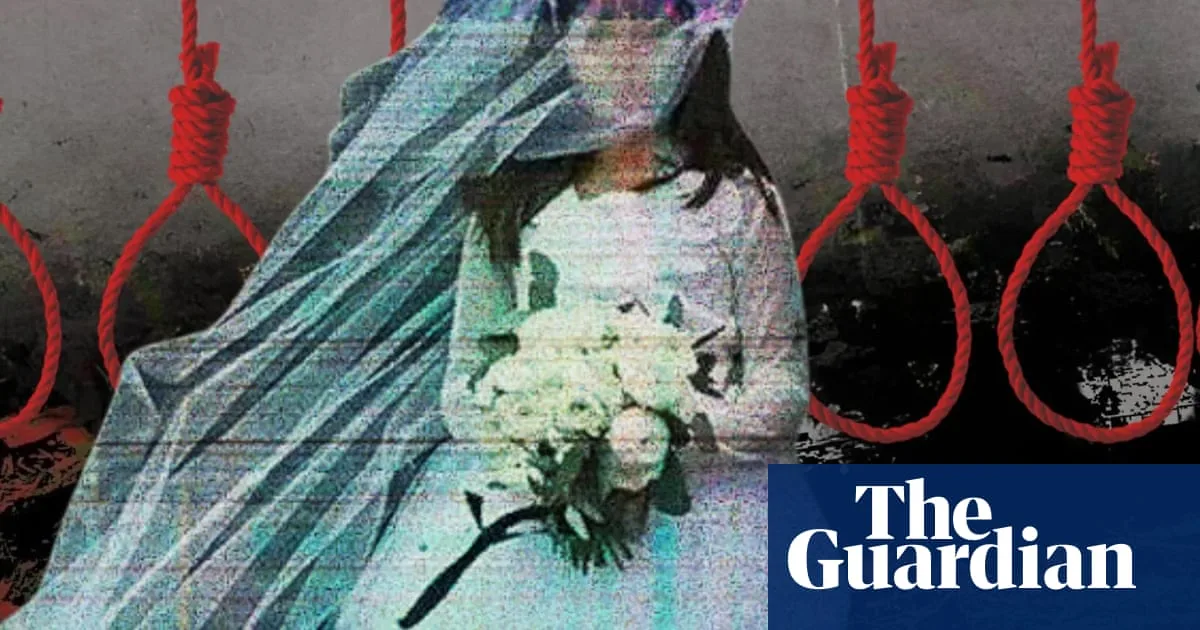
Goli Kouhkan, a 25-year-old Iranian woman who was forced into marriage at age 12, has been spared execution after her husband's parents accepted blood money. Kouhkan had been on death row for seven years for allegedly participating in the killing of her abusive husband, Alireza Abil, in May 2018. She was sentenced to qisas, or retribution-in-kind, under Iranian law.
The case drew international attention after the Guardian reported on it in November. Kouhkan, an undocumented member of Iran's Baluch minority, faced hanging unless she could raise 10bn tomans (about £80,000) to pay off the victim's family. The sum was later reduced to 8bn tomans, which was raised through donations and paid to her in-laws.
Kouhkan's lawyer confirmed the payment on Instagram on 9 December. Her parents-in-law signed documents accepting the blood money, as shown in a video published by Mizan News Agency. Under Iranian law, a victim's family can pardon someone in exchange for compensation.
Kouhkan was forced to marry her cousin at 12, became pregnant at 13, and suffered years of physical and emotional abuse. On the day of the killing, she found her husband beating their five-year-old son. She called his cousin, Mohammad Abil, for help; a fight broke out, resulting in her husband's death. Abil remains on death row.
Mehdi Ghatei, founder of the Qasim Child Foundation, who started a fundraiser for Kouhkan, said international pressure played a role in saving her life. He noted that Kouhkan's son is entitled to 2bn tomans of the blood money, which could help them start a new life. Kouhkan hopes to be reunited with her son upon release.
UN special rapporteur Mai Sato welcomed the reprieve but criticised the qisas law, calling it a violation of international standards. At least 241 women were executed in Iran between 2010 and 2024, many for killing abusive husbands. Iran executes the highest number of women globally, with at least 42 executed in 2025 so far.




