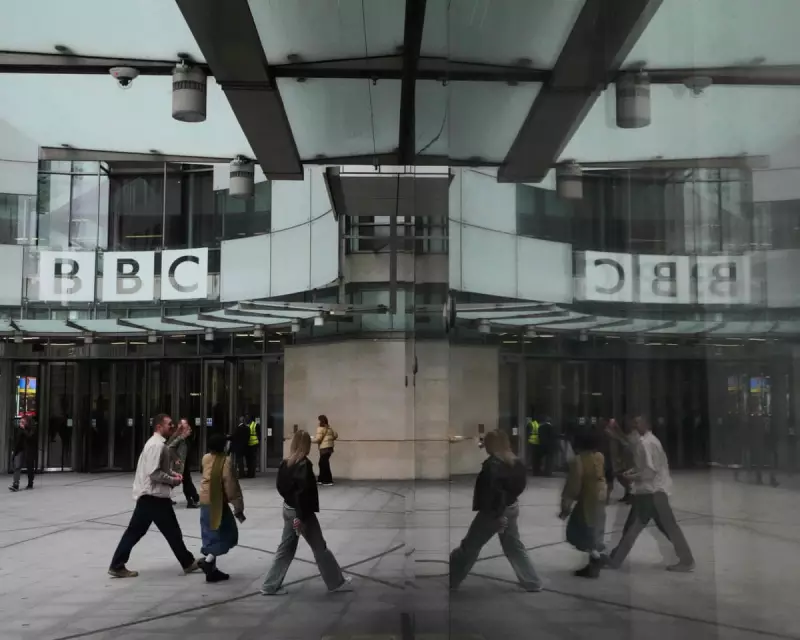
The BBC stands at a pivotal crossroads, facing immense pressure to conform to shifting political winds. The concept of 'entrumpification' – where public institutions bend to the will of a dominant political force – presents a clear and present danger to the broadcaster's core mission. This analysis explores the concrete steps the BBC can, and must, take to safeguard its editorial independence and uphold its founding principles as a public service.
The Core Challenge: Upholding Impartiality Under Fire
The central threat identified is not a distant possibility but an ongoing reality. The BBC operates in a highly charged political environment where its every editorial decision is scrutinised and often weaponised. The pressure to appease a governing party or influential media voices can subtly distort coverage, leading to what critics describe as a form of institutional caution that undermines rigorous journalism.
Key figures like former director-general John Birt have voiced profound concerns. Lord Birt has warned that the BBC's independence is under "sustained assault", a sentiment echoed by many within the industry who fear the erosion of its statutory duty to impartiality. The broadcaster's leadership, including Director-General Tim Davie, is acutely aware that the corporation's legitimacy with the entire British public hinges on its ability to resist this pressure.

A Multi-Pronged Defence Strategy
Resistance is not passive; it requires active, structural defence. First and foremost, the BBC must rigorously and transparently enforce its own editorial guidelines. This means holding its journalists and presenters to the highest standards of fairness while also having the courage to investigate power without fear or favour. Internal governance must be robust enough to identify and correct any creeping bias, whether real or perceived.
Secondly, the broadcaster must fortify its institutional independence. This involves safeguarding the appointment process for its board and key executives from overt political interference. The role of the regulator, Ofcom, is also crucial. A strong, independent Ofcom that holds the BBC accountable to its public service remit, rather than political objectives, is a vital external bulwark.
Perhaps the most powerful tool in the BBC's arsenal is its direct relationship with the British public. By demonstrably serving all audiences across the UK's nations and regions, and by clearly communicating the value of a universally-funded, impartial news service, the BBC can build a reservoir of public trust. This popular mandate is its strongest defence against those who would seek to diminish its role or compromise its funding model through the licence fee.
The Stakes: More Than Just a Broadcaster
The outcome of this struggle extends far beyond Portland Place. The BBC is a global standard-bearer for public service broadcasting and a cornerstone of the UK's cultural and democratic infrastructure. Its ability to report truthfully, to hold power to account, and to provide a common factual ground for national conversation is integral to a healthy democracy.
Failure to resist undue influence would mean a profound loss for civic society in the UK. It would signal that even the most established institutions are vulnerable to political capture, diminishing trust in media and public life overall. The broadcaster's future relevance depends on its unwavering commitment to the principles that have defined it for a century, even when – especially when – they are most inconvenient to those in power.
Ultimately, the BBC's mission is not to be popular with politicians, but to be indispensable to the public. By reinforcing its editorial spine, protecting its governance, and renewing its contract with audiences, the BBC can navigate the current pressures and emerge as a stronger, more resilient institution. The task is monumental, but the cost of failure is unthinkable for British democracy.