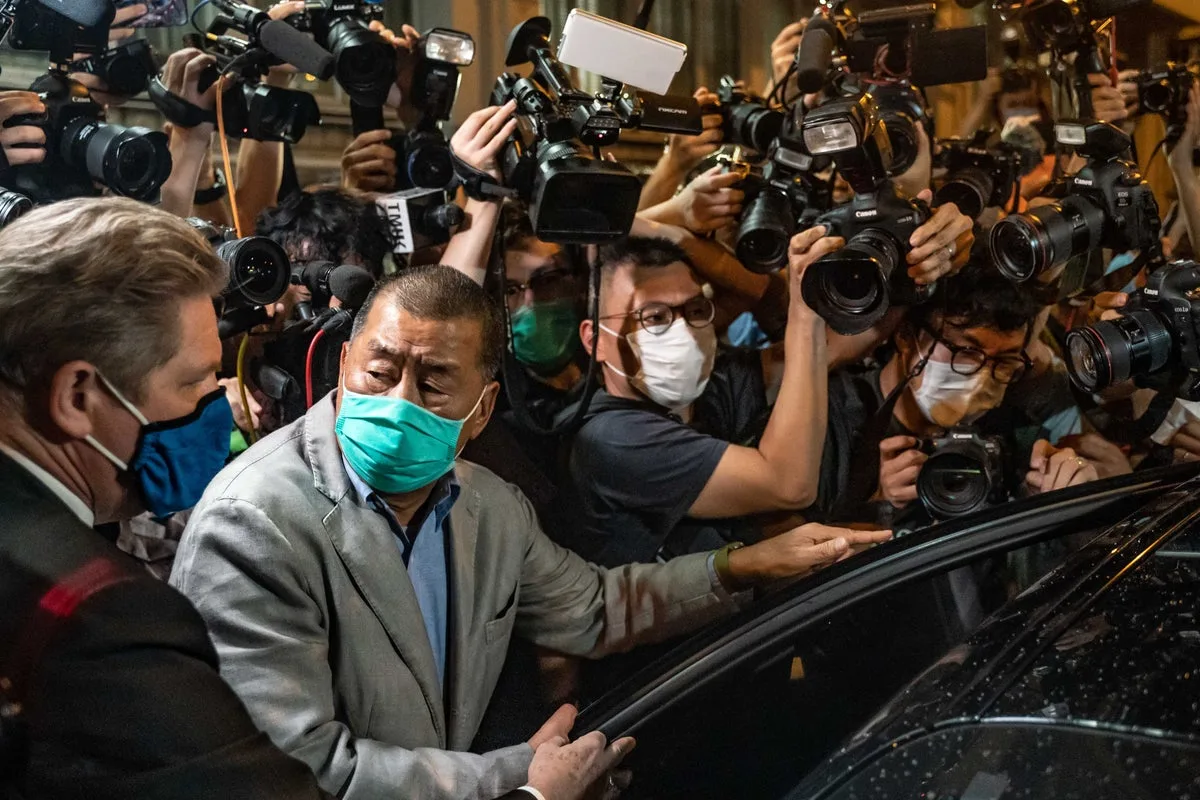
The Chilling Effect on Hong Kong's Press After Jimmy Lai's Conviction
When police stormed the Apple Daily newsroom in 2021, journalists across Hong Kong witnessed more than just the collapse of a newspaper. They were observing their own future unfolding before them. Now, over four years later, the conviction of the paper's founder Jimmy Lai on sedition charges has merely formalised that grim reality. The true impact has long since permeated daily editorial decisions about what can be published, who can speak openly, and how far journalists can push in their pursuit of truth.
Self-Censorship Becomes Standard Practice
What remains of journalism in Hong Kong involves editors identifying invisible red lines, protecting staff, and ensuring reporting doesn't expose journalists or sources to danger. Meanwhile, reporters increasingly engage in self-censorship to avoid government harassment and intimidation.
"Nothing has changed because everything has already changed. The changes are baked in," explains Tom Grundy, founding editor of Hong Kong Free Press. "Many Hongkongers, from whatever side you're on, are reluctant to speak nowadays, and there are fewer opportunities to ask questions of the authorities."
Only a handful of journalists working in Hong Kong agreed to speak about the situation, with several requesting anonymity due to fear of reprisal. Those interviewed described witnessing in real time a rapid erosion of press freedom in what was once one of Asia's most open and freewheeling media environments.
Covert Coercion Replaces Overt Crackdowns
Selina Cheng, chair of the Hong Kong Journalists Association, notes that stories questioning political power or the city's disciplinary forces have disappeared from local press, as these areas are now deemed most sensitive. On the surface, working conditions appear quiet and calm: dramatic newsroom raids, sudden journalist arrests, and overt censorship acts have diminished.
Instead, Cheng describes more covert forms of coercion:
- Anonymous letters accusing journalists of anti-China activities
- Threats of being reported to national security police
- Targeted tax audits against media organisations
- Gag orders preventing explanations for why publications have ceased
"Authorities have continued to arrest and prosecute people over speech, sometimes over quite innocuous comments on the internet criticising the government," says Cheng. "None of these used to be criminal in Hong Kong. They have moved to use other coercive methods covertly, so that people stop publishing or saying things in public."
The National Security Law's Transformative Impact
The deterioration of press freedom in Hong Kong worsened dramatically with the introduction of the national security law in 2020. This legislation, imposed directly by Beijing after bypassing Hong Kong's local legislature, criminalises acts of secession, subversion, terrorism and collusion with foreign forces using deliberately vague language.
One of its first major blows landed in June 2021 when 500 police officers raided Apple Daily offices. Jimmy Lai and senior staff were arrested, assets worth £1.64 million were frozen, and the newspaper announced its closure days later. At least 14 other media outlets have shut down since, with many individual journalists arrested according to Human Rights Watch.
A journalist working for a foreign outlet, speaking anonymously, reveals that pressure is no longer confined to local media. "International outlets are now part of the same calculation," he says, describing how the national security office called in representatives of all foreign media outlets to warn them against anti-China activity following a devastating fire in Hong Kong's Tai Po district.
"Drinking Tea" and Legal Ambiguity
Reporters from local media outlets are being approached by national security police to "drink tea" – a euphemism long used in mainland China to call in journalists for questioning or threats. "Drinking tea is framed as a polite invitation from national security police to have tea," the journalist explains. "But it is really a euphemism for a meeting in which a journalist is warned, questioned or quietly threatened."
The intimidation extends beyond journalists themselves. News sources routinely withdraw at the last minute, decline interviews, or insist on anonymity. Some media organisations allege that government representatives have contacted advertising departments to discourage certain coverage, threatening to withhold advertising budgets if they don't comply.
International Implications and Political Pressure
Jimmy Lai is due to be sentenced, likely to life imprisonment, with the looming verdict increasing pressure on Prime Minister Keir Starmer over his relationship with Chinese President Xi Jinping. Starmer raised the case during his visit to China last month – the first by a UK prime minister in eight years – but played down hopes of securing Lai a reprieve.
Critics of the Chinese government say the guilty verdict against Lai, delivered after a 140-day trial, was preordained. The elaborate courtroom performance, they argue, should not be mistaken for justice.
Robert Sirico, a US-based Catholic priest and friend of Jimmy Lai, argues that "Lai's real offence is moral, not legal. He refused to be silent. And more remarkably, he refused to leave Hong Kong, even though he holds British citizenship. He was an uncompromising advocate of human freedom, but he was never treasonous."
A Boundary Marker for Hong Kong's Press
For journalists still working in Hong Kong, Lai's case serves as a boundary marker rather than just another story – a measure of how far speech can go in the current climate. The city's global press freedom ranking has dropped from 18th in 2002 to 140th now, moving closer to mainland China's position at 178th.
As for the future of the city's press, Hong Kong Free Press's Tom Grundy remains "not very optimistic." Yet he adds: "But we are still here. For all the compromises we have to make, and for all the risks we have to face, we feel it's better to be in than out – to keep our ears to the ground and capture, with nuance, what is really happening inside the city."
The case extends beyond Jimmy Lai himself. Six former executives of Apple Daily and its parent company, Next Digital, were also tried under the national security law, all pleading guilty to conspiracy to collude with foreign forces. The crackdown on Apple Daily caused enormous damage to the industry, with hundreds of journalists losing their jobs and some no longer feeling secure living in the city.




