

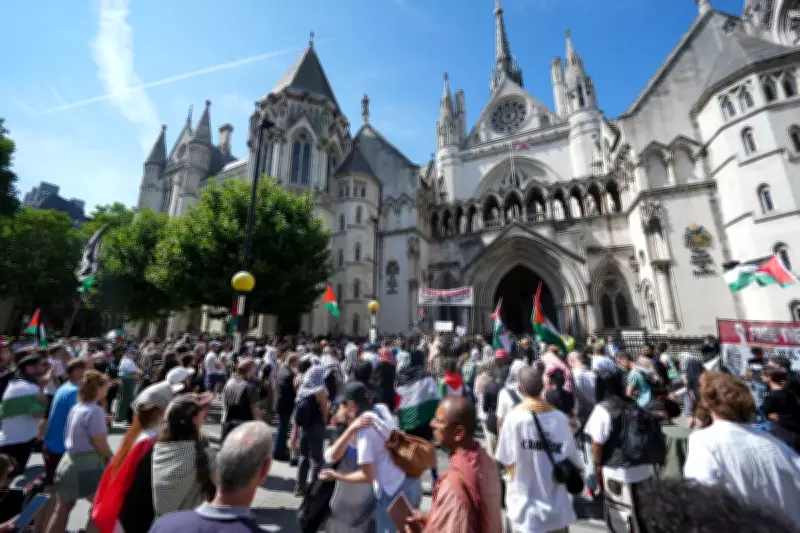
The Home Office has expended close to £700,000 in legal fees while contesting a court challenge against its decision to proscribe the activist group Palestine Action as a terrorist organisation. This significant financial outlay has been revealed through freedom of information data, sparking fierce criticism from human rights organisations who describe the government's actions as a severe misuse of state authority.
Legal Battle Over Terror Proscription
Huda Ammori, co-founder of Palestine Action, has mounted a legal challenge against the government's move to ban the group under anti-terrorism legislation. The Home Office has been charged £694,390.03, excluding VAT, for work on this case. This substantial sum covers the legal fees of the government legal department, counsel instructed in the proceedings, and various court fees.
However, these legal costs are overshadowed by the enormous expenses incurred by policing protests related to the Palestine Action ban. The Metropolitan Police informed the London Assembly in October last year that approximately £3.6 million had been spent on policing protests, making arrests, and conducting other enforcement actions associated with the proscription. This figure is expected to have increased significantly in subsequent months.

High Court Decision Imminent
A ruling from the High Court in this contentious case is anticipated imminently. Lawyers representing Ms Ammori have argued that former Home Secretary Yvette Cooper's decision to proscribe Palestine Action was both novel and unprecedented. Raza Hussain KC emphasised that Palestine Action is a direct action civil disobedience organisation that does not advocate for violence, describing any instances of serious violence as rare exceptions rather than the norm.
The terror ban came into effect in early July last year, making support for Palestine Action a criminal offence punishable by up to 14 years in prison. Government data indicates that 1,630 arrests were made in the year up to September 2025 for activities linked to supporting the group, though activists believe the actual number exceeds 2,787 arrests for displaying signs of support.
Human Rights Organisations Voice Concern
Human rights groups have strongly condemned the government's approach. Yasmine Ahmed, UK director of Human Rights Watch, stated: "The staggering costs of this court case emphasise how committed the UK government is to stifling legitimate criticism of Israel. The use of counter-terrorism legislation to proscribe Palestine Action is a grave abuse of state power."
Akiko Hart, director of Liberty, warned that the outcome of Ms Ammori's legal challenge will have profound implications for how counter-terrorism powers are applied against protesters in the future. She described the proscription as disproportionate and expressed concern about the chilling effect it has created, leaving people uncertain about what constitutes an offence once a group is banned.
Background to the Proscription
The government's decision to proscribe Palestine Action followed an incident in June last year when activists breached security at RAF Brize Norton in Oxfordshire and sprayed two military planes with red paint. Ms Cooper also cited the group's protest at a weapons equipment factory in Glasgow in 2022 and its targeting of Israeli defence technology company Elbit Systems UK in Bristol as justification for the ban.
Interestingly, Ms Cooper initially hesitated over the decision, pausing the terror ban in May last year to request additional information before confirming the proscription should proceed on 20 June.
A spokesperson for Defend Our Juries, which has campaigned to lift the ban on Palestine Action, argued that none of the costs arising from this crackdown serve the public interest. They described these as unnecessary, politically-driven expenses designed to protect companies that the UN has identified as profiting from genocide and the state of Israel itself.
The controversy continues as a woman recently appeared in court on terrorism charges for allegedly holding a placard related to Palestine Action at St Giles Cathedral in Edinburgh, highlighting the ongoing legal ramifications of the proscription.






