
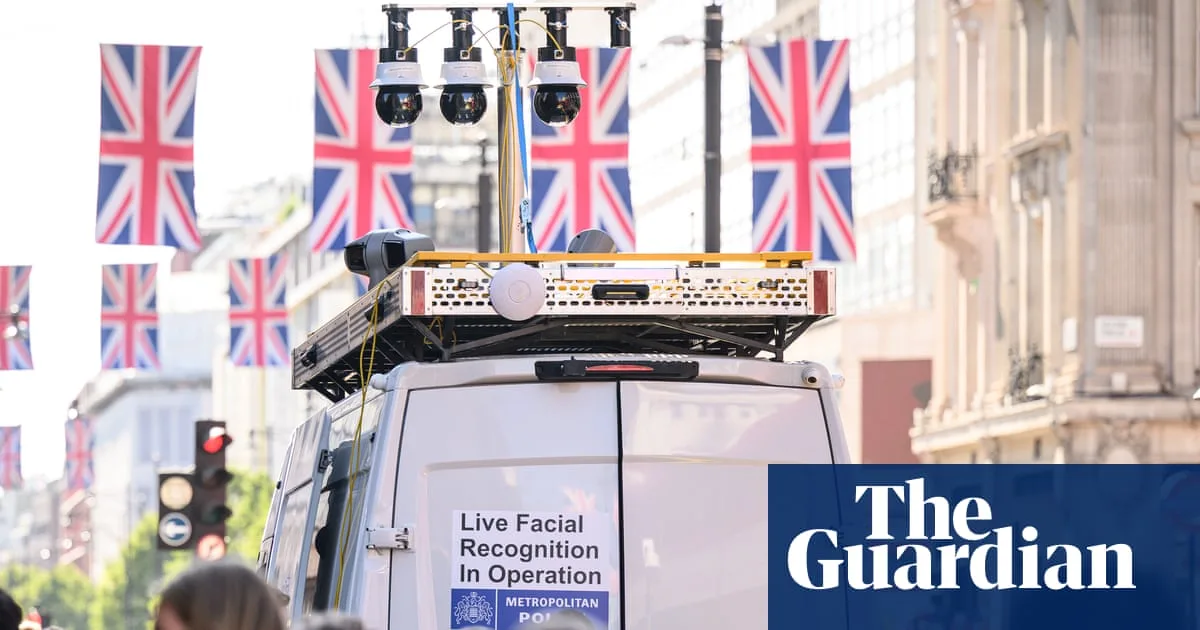
Police in England and Wales believe live facial recognition cameras may become 'commonplace', according to internal documents seen by the Guardian and Liberty Investigates. The number of faces scanned has doubled to nearly 5 million in the last year, with major funding allocated and hardware purchased.
The first fixed live facial recognition cameras will be trialled in Croydon, south London, later this summer. Police forces scanned nearly 4.7 million faces in 2024, more than double the previous year, and live facial recognition vans were deployed at least 256 times, up from 63 in 2023. A roving unit of 10 vans will be made available within days.
Retrospective facial recognition searches using the police national database almost doubled to 252,798 in 2024. The database contains custody mug shots, millions of which have been stored unlawfully of people never charged or convicted. Over 1,000 searches using the UK passport database were carried out in the last two years, and officers are increasingly using the Home Office immigration database.
Despite the expansion, facial recognition is not referenced in any act of parliament. Campaigners say police have been allowed to 'self regulate' their use of the technology. A 2020 court of appeal judgment found South Wales police's use of live facial recognition unlawful, leading to guidance on setting thresholds to minimise false alerts, but no legal framework exists.
Policing minister Diane Johnson told parliament there is a need to consider a bespoke legislative framework, but the Home Office has yet to provide details. The technology was first trialled in London and south Wales in 2016, but rollout has accelerated over the past 12 months.




