
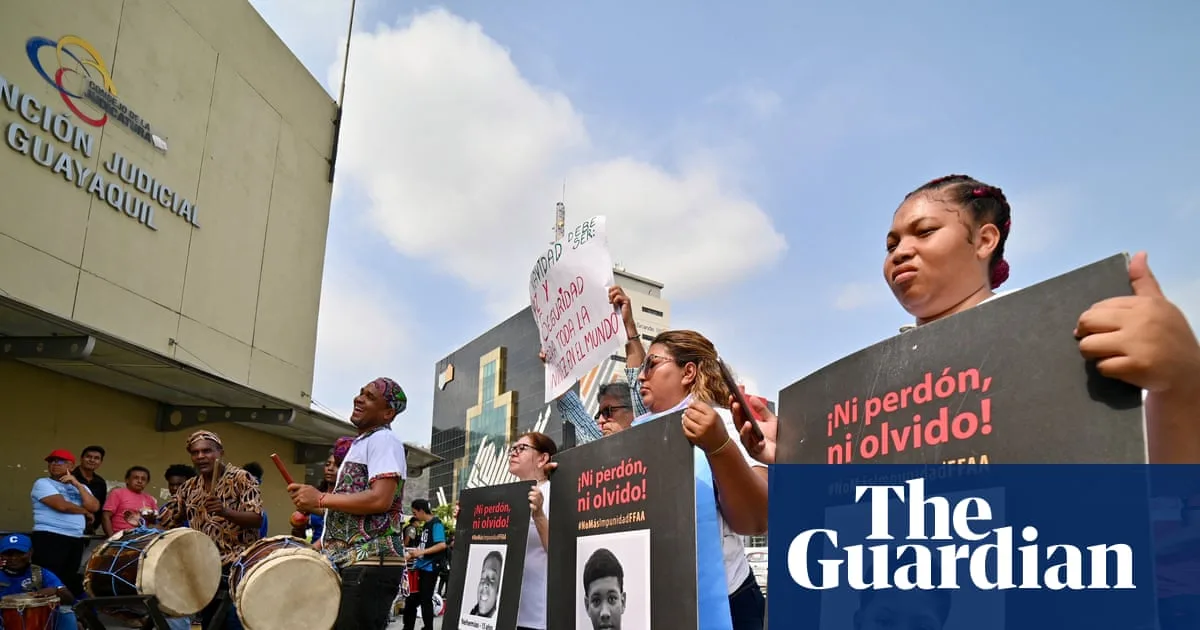
A court in Ecuador has sentenced 11 air force personnel to long prison terms over the forced disappearance of four Afro-Ecuadorian boys during security operations in Guayaquil last year. The case, known as the 'Guayaquil Four', has highlighted human rights concerns under President Daniel Noboa's tough security policies.
The 11 servicemen each received 34 years and eight months. Five others who confessed and cooperated got two-and-a-half years, and one was acquitted. The presiding judge stated that the cruelty against the minors had been proven, though it remains unclear who killed them. A separate investigation into kidnapping resulting in death continues.
The boys, aged 11 to 15, were seized on 8 December 2023 after a football match. Their families had no news for over two weeks until charred bodies were found on Christmas Eve. The defence minister initially denied military involvement, but CCTV showed the boys being forced into vehicles.
The case has been seen as an example of Afro-Ecuadorians' vulnerability to abuses. The boys were taunted with racist insults and beaten. They were stripped naked and abandoned in a dangerous area. One managed to call his father, but by the time he arrived, they were gone. Forensic exams showed they were shot at close range and then burned and dismembered.
Some soldiers confessed to taking part in the abduction and torture but denied killing them. One said troops were sent to patrol without proper training, stating he should never have been on the streets. A possible line of inquiry is that local criminals killed the boys after they were abandoned.




